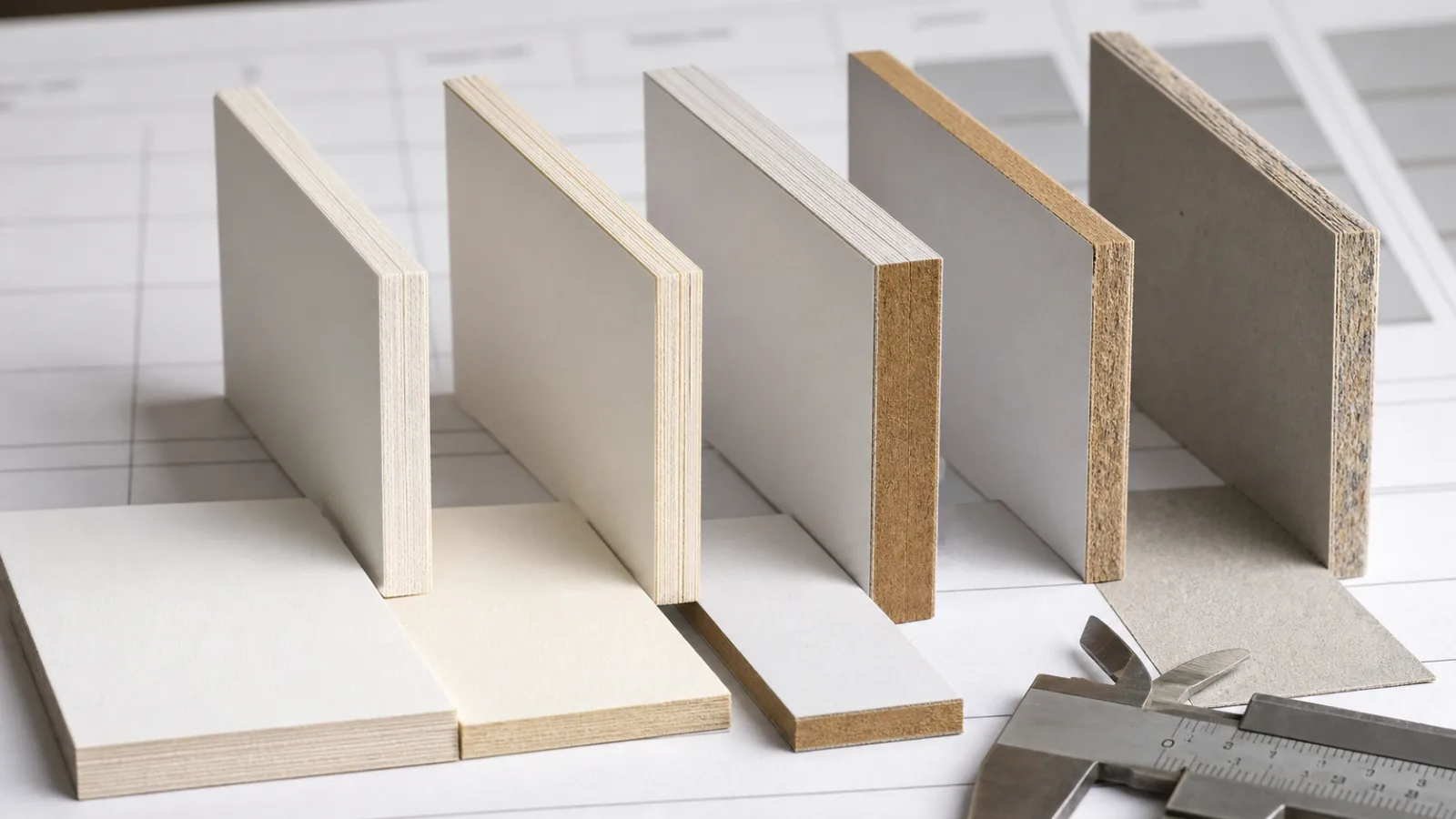


To find trusted suppliers in China, separate the decision into three questions: Is the company legally identifiable? Can it produce the specified goods consistently? Can the commercial relationship be controlled through inspections, contracts and secure payments?
A business registration answers only the first question. Marketplace badges, samples and factory photographs also provide limited evidence when considered alone. Reliable sourcing requires several checks that connect the contracting entity, production site, approved specification, inspection plan and payment beneficiary.
For paper, packaging, labels, printing equipment and other production inputs, this matters because seemingly minor substitutions can affect print performance, converting efficiency, machine compatibility, regulatory obligations and finished-product acceptance.
Define the requirement before searching
Many sourcing disputes begin with an incomplete specification. If the buyer does not define a variable, the supplier must either ask for clarification or make an assumption. That assumption may produce a lower quotation but an unsuitable product.
Prepare a request for quotation that identifies, where applicable:
- Material, component or substrate grade
- Dimensions and tolerances
- Construction, finish and colour requirements
- Required physical or functional performance
- Printing, coating, laminating or converting requirements
- Packaging configuration and shipment protection
- Label content, language and placement
- Order quantity and expected repeat volume
- Required production and delivery dates
- Inspection and acceptance criteria
- Destination-market compliance requirements
- Preferred Incoterm, such as EXW, FOB or CIF
- Required commercial documents
The specification should use measurable requirements rather than labels such as “premium,” “heavy-duty” or “export quality.” For example, a paper or board request needs more than a generic material name; a machinery request needs the required configuration and operating conditions rather than only a model category.
Compliance must be checked for the market where the product will be sold or used. If goods will be re-exported, the requirements of the final destination may differ from those of the importing country. A supplier’s general statement that a product is “compliant” does not establish the applicable regulation, test method or scope.
Fix the commercial assumptions before comparing quotations. Two prices are not comparable if one includes export clearance and delivery to port while another covers collection at the factory gate.
Build a shortlist through more than one channel
Supplier discovery channels reveal different information. None independently proves reliability.
| Channel | Useful for | Main limitation |
|---|---|---|
| B2B marketplaces | Mapping availability, indicative pricing and minimum order quantities | Listings and status badges do not replace company or factory verification |
| Trade fairs | Examining products and discussing requirements directly | A booth does not prove ownership of the production facility shown |
| Sourcing agents | Local communication, factory identification and inspection coordination | Compensation arrangements may influence supplier recommendations |
| Direct referrals | Finding suppliers with relevant product experience | Performance for another buyer or specification may not transfer to yours |
Common marketplaces include Alibaba.com, Made-in-China, Global Sources and 1688.com. The first three are oriented toward broader export sourcing, while 1688.com serves China’s domestic wholesale market. Domestic-market listings may involve different payment, language, documentation and export arrangements.
Use these channels to create a shortlist, not to make the final selection. Ask each candidate for the same specification and quotation format so that differences in material, tooling, packaging, Incoterms and payment terms remain visible.
Verify the legal entity and payment beneficiary
Request the supplier’s full legal company name in Chinese, Unified Social Credit Code, registered address and legal representative. Check these details through an official registry or a reputable verification service capable of handling Chinese-language records.
Then compare the registered identity with:
- The entity named on the quotation
- The contracting party in the purchase agreement
- The company issuing the invoice
- The beneficiary on the bank account
- The operator of the claimed production facility
Differences do not automatically prove fraud. A group may use separate manufacturing, export and payment entities. However, the relationship must be explained and documented before funds are transferred.
Treat unexplained personal accounts, unrelated third-party beneficiaries and sudden changes to bank details as significant warnings. Verify any payment-detail change through a previously established contact channel rather than replying only to the message requesting the change. Supplier impersonation and false bank-detail requests are documented payment risks in Singapore’s 2025 annual scams and cybercrime brief.
Establish who controls production
A supplier may be a manufacturer, trading company or hybrid operation. The appropriate structure depends on the order.
A direct manufacturer may offer closer access to production decisions and quality controls. A trading company can consolidate several product categories and coordinate multiple factories, but it adds another communication layer between the buyer and production floor. Neither model is inherently suitable or unsuitable; the important point is to know which party controls materials, scheduling and corrective action.
Ask operational questions that can be checked:
- Where is the production site?
- Which processes are performed there?
- Which operations are subcontracted?
- How many production lines are available for the relevant product?
- What capacity is allocated to the proposed order?
- What machinery will be used?
- Who purchases and approves raw materials?
- Who is responsible for in-process and final inspection?
- Can the facility be visited or shown through a live virtual tour?
Look for consistent answers across sales contacts, technical staff, documents and site evidence. Vague descriptions of “partner factories” may be commercially legitimate, but they reduce visibility and should affect the inspection plan.
Audit capability in proportion to the risk
For a high-value, technically demanding or recurring order, arrange an independent factory assessment. Its scope should reflect the actual product and risk rather than rely on a generic facility checklist.
The review may cover:
- Whether the claimed facility exists and performs the stated processes
- Production capacity relative to the proposed volume
- Machinery condition and suitability
- Workforce and supervision structure
- Incoming-material controls
- In-process and final inspection procedures
- Handling of rejected or non-conforming output
- Recordkeeping and traceability
- Basic financial or credit information
An audit records conditions at a particular time. It does not guarantee future quality, capacity or delivery. Use it to test supplier claims and identify controls that must appear in the purchase agreement and inspection plan.
Approve a reference before mass production
Obtain a paid pre-production sample and assess it against the written specification. Do not approve it merely because it looks acceptable.
Depending on the product, checks may include:
- Material identity and construction
- Dimensions and tolerances
- Surface, colour and finish
- Functional performance
- Print or converting compatibility
- Assembly and fit
- Packaging and labelling
- Durability under expected use conditions
Testing conditions and acceptance limits should be documented. A result from one sample does not establish the consistency of an entire production run.
Once accepted, identify and retain a “golden sample”—an approved physical reference for production. The supplier should retain a matching controlled sample where practical. Reference it in the purchase agreement, but do not use it as a substitute for numerical specifications. Physical samples can be interpreted differently, damaged or affected by storage, while measurable criteria provide clearer acceptance boundaries.
Any approved change to material, construction, process or component should be recorded. Otherwise, a supplier may treat an apparently equivalent substitution as acceptable even when it changes production or end-use performance.
Connect inspection to payment and shipment
A commonly proposed structure is a deposit before production followed by the balance before shipment, sometimes expressed as 30% and 70%. This is a commercial convention, not a universal safe formula. Appropriate terms depend on tooling, custom materials, order value, relationship history and bargaining position.
Where payment is linked to inspection, specify:
- Who appoints and pays the inspector.
- When inspection occurs.
- How samples are selected.
- Which specification and approved sample apply.
- What constitutes a major or minor non-conformity.
- Whether rework and reinspection are permitted.
- What evidence is required before the balance is released.
- Whether shipment can proceed before written acceptance.
For higher-value transactions, a letter of credit may tie payment to presentation of specified documents. Document compliance does not by itself prove physical product quality, so documentary controls and product inspection should not be treated as interchangeable.
Put the operating rules into the agreement
The purchase agreement should identify the correct legal entities and incorporate the technical and commercial requirements rather than referring loosely to emails or catalogue descriptions.
Include:
- Complete product specifications
- Approved sample references
- Inspection methods and acceptance criteria
- Quantity and permitted tolerances
- Production and delivery milestones
- Packaging, marking and labelling requirements
- Rules for material or process changes
- Required compliance documents
- Remedies for delay, defects or non-conformity
- Payment schedule and beneficiary details
- Incoterm and named place
- Governing law and dispute-resolution mechanism
The practical enforceability of a contract depends on its wording, parties and jurisdiction. Do not assume that a purchase order issued under the buyer’s usual terms will automatically provide effective recourse in China.
Control currency and payment risk
Chinese suppliers may quote in USD or renminbi. RMB is the name of China’s currency; CNY generally refers to onshore renminbi, while CNH refers to offshore renminbi. Rates and settlement arrangements can differ.
Compare quotations on total landed cost rather than unit price alone. Include currency conversion, transfer charges, possible intermediary deductions, freight, duties, taxes and inspection costs. Confirm whether bank charges are borne by the sender, beneficiary or shared.
Use internal approval controls for new beneficiaries and changed account details. Keep registration records, contracts, invoices, inspection reports and payment approvals linked to the same supplier file so discrepancies can be identified before release.
The final selection should not be the supplier with the lowest displayed price. Choose the candidate that can document its legal identity, explain its production structure, meet a measurable specification, accept proportionate inspection controls and receive payment through a verified account under clear contractual terms. Recheck these points when the product, factory, beneficiary or order risk changes.