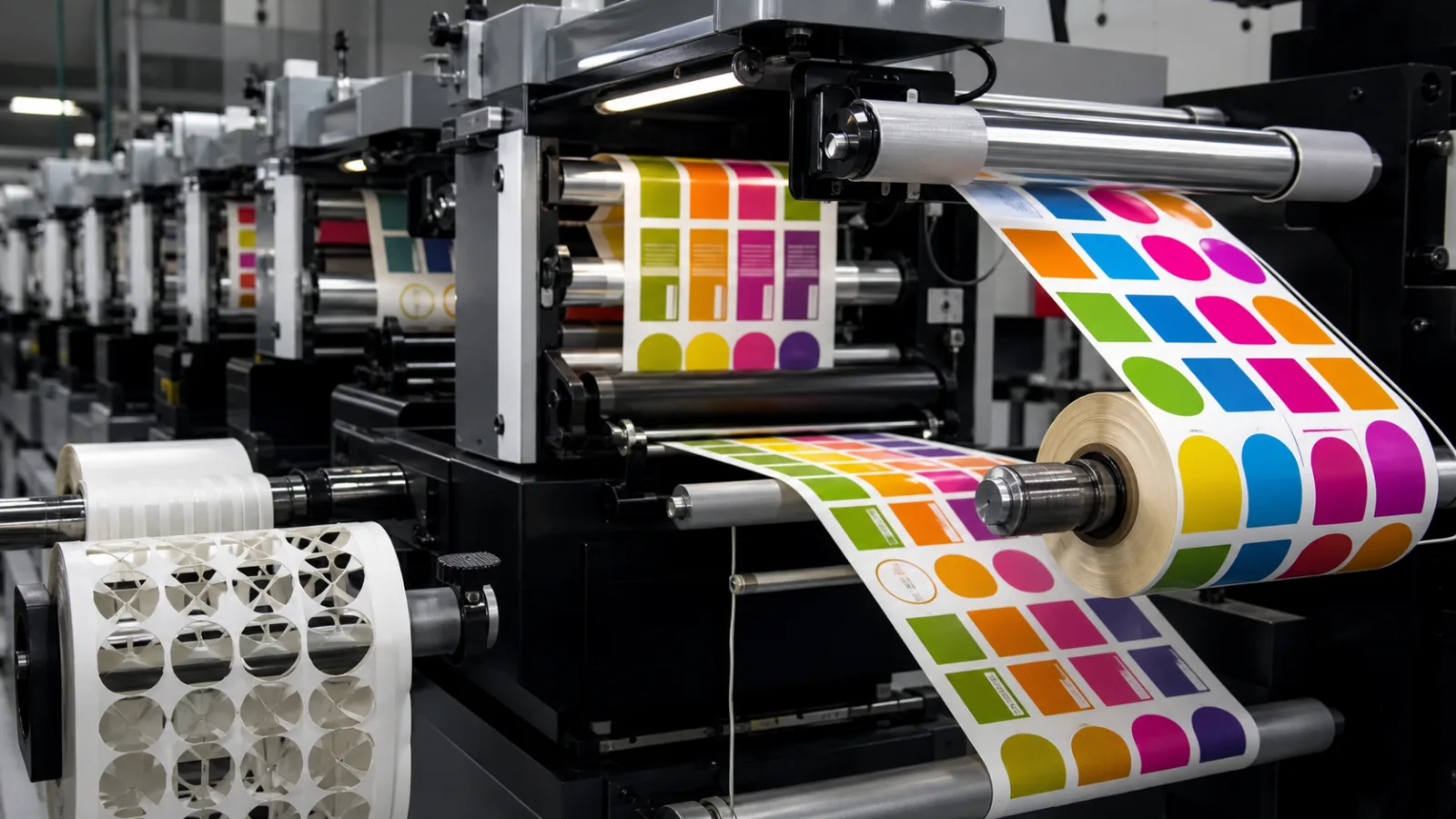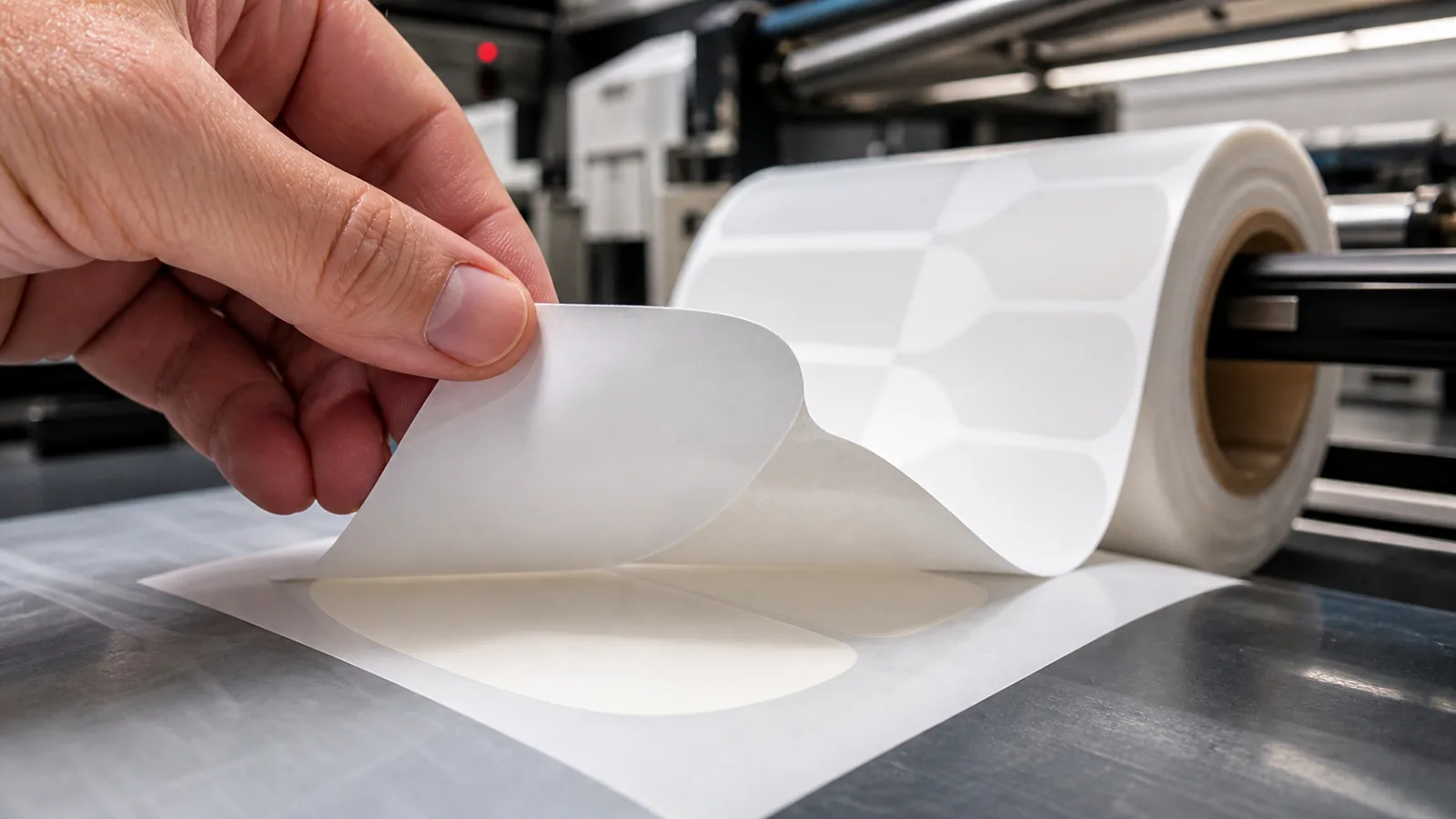

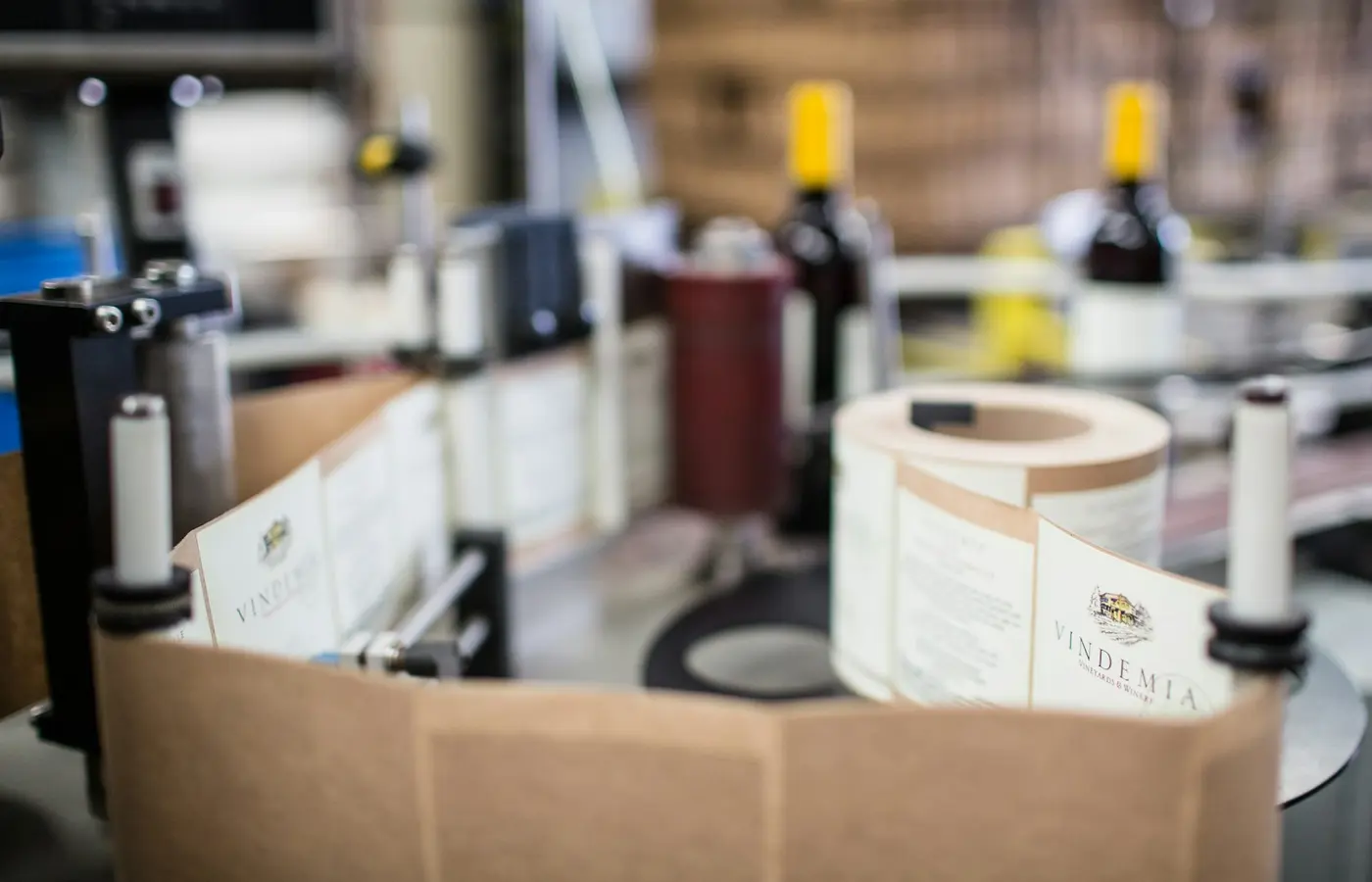
A reliable thermal transfer label specification covers more than the label stock. It defines the facestock, printable surface, adhesive, liner, ribbon, printer, settings, labeled object, service environment, and scanning requirement as one qualified system.
Thermal transfer printing uses a heated printhead to transfer an ink layer from a ribbon onto the label surface. Transfer quality and durability depend on how the ribbon formulation responds to heat and anchors to that particular surface. A ribbon described as durable cannot compensate automatically for an unsuitable coating, weak adhesion, incorrect printer setup, or an exposure it was not designed to withstand.
The practical sequence is therefore to define measurable acceptance conditions first, select compatible components second, and test the final construction under production-representative conditions before release.
Start with the application and acceptance criteria
Begin with what the finished label must do, not with a generic request for a permanent, synthetic, or high-performance label. Those terms describe broad categories rather than complete performance requirements.
Record at least:
- Label dimensions, shape, orientation, and available print area
- Material, texture, shape, and condition of the labeled surface
- Application temperature and surface condition at application
- Service temperature and expected service life
- Indoor, outdoor, refrigerated, frozen, wet, or condensing conditions
- Expected abrasion, rubbing, handling, and cleaning
- Chemicals, oils, solvents, or other liquids that may contact the image
- Required removability, repositionability, or evidence of disturbance
- Barcode symbology, dimensions, scanner environment, and acceptance method
- Printer model, printhead resolution, operating speed, and production volume
Application conditions and service conditions must be separated. A label may eventually operate at a low temperature but still need to be applied to a clean, dry surface at a higher temperature. Conversely, a label applied successfully in a warm packing area may fail after cooling if condensation, shrinkage, or differential movement affects the bond.
Identify which requirements are mandatory and which are desirable. If chemical readability is mandatory but outdoor exposure is not, qualification should reflect that priority rather than selecting a construction on the broadest marketing description.
A 2015 specification from the US National Archives and Records Administration provides a bounded example of procurement detail: it identifies housing substrates and calls for printer and ribbon models, label configuration, dimensions, facestock, adhesive, and liner requirements to be specified. Its archival storage scope does not make its material choices universal, but its level of component identification is useful.
Specify the facestock and printable surface
The facestock is the paper or film carrying the printed image. Its stiffness, conformability, tear behavior, moisture response, and dimensional stability affect both application and use.
| Facestock family | Relevant characteristics | Questions to resolve |
|---|---|---|
| Paper | Usually easy to print and economical, but may absorb moisture, tear, or lose dimensional stability | Will the label encounter water, condensation, tearing, or repeated handling? |
| Polypropylene | Generally flexible and moisture-resistant; construction details affect conformability and print anchorage | Will it wrap around a small diameter or flex during use? |
| Polyester | Generally dimensionally stable and suited to durable constructions, but may be stiffer than polypropylene | Will stiffness, container curvature, or edge lift create a problem? |
| Other films or composites | Can provide specialized conformability, strength, opacity, or environmental resistance | Is the exact surface treatment compatible with the ribbon and printer? |
These are family-level tendencies, not approval criteria. Performance belongs to the exact grade and construction.
The NARA specification, for example, prefers polypropylene for the curved storage substrates within its scope and allows polyester or polypropylene on flat surfaces. That is a useful illustration of curvature affecting selection, not a rule that polypropylene always works on curved objects or polyester does not.
Specify the printable surface separately from the base material. Thermal transfer films and papers may have topcoats or other surface treatments that change ribbon transfer, image density, anchorage, abrasion resistance, and static behavior. Two white polyester labels can behave differently if their coatings differ.
For each proposed material, obtain and record:
- Exact facestock grade and supplier code
- Material type and nominal caliper
- Surface treatment or topcoat
- Color, opacity, and finish where functionally relevant
- Machine and cross-direction properties where orientation matters
- Converter tolerances for dimensions and registration
Small cylindrical containers deserve particular attention. Facestock stiffness, label length, adhesive tack, overlap, surface energy, and dwell time can combine to produce edge lift. Calling the facestock a film does not demonstrate that the complete construction will remain applied.
Match ribbon chemistry to the surface and exposure
Thermal transfer ribbons are commonly grouped as wax, wax-resin, and resin. These names are useful starting points, but they are not fixed durability classes. Formulations vary, and their results depend on the label surface, printer, speed, energy, and exposure method.
- Wax ribbons often transfer at relatively modest energy and are commonly paired with compatible paper surfaces. Their suitability for rubbing, moisture, or chemicals must still be tested.
- Wax-resin ribbons may provide a different balance of transfer behavior and image resistance on compatible coated papers and films.
- Resin ribbons may support demanding abrasion, heat, or chemical requirements on suitable synthetic surfaces, but they can require a narrower or higher-energy operating window.
Moving from wax to resin is not an automatic upgrade. If the coating and ribbon do not match, the result may be incomplete transfer, weak anchorage, pinholes, excessive energy use, reduced speed, or distorted barcode elements.
A thermal transfer compatibility guide from Avery Dennison describes successful output as dependent on the compatibility of substrate, ribbon, and printer. Treat compatibility charts as starting points for a defined combination, not evidence that an entire ribbon family will work on every nominally similar facestock.
Product documentation can narrow the starting point. For example, Zebra names specific wax-resin and resin ribbon families for its 8000T Piggyback Clear Matte construction. That recommendation applies to the documented product; it does not establish compatibility with substitute matte polyester labels.
The ribbon specification should identify:
- Manufacturer and exact ribbon code
- Wax, wax-resin, resin, or other formulation description
- Ink-side orientation
- Ribbon width and length
- Core, winding direction, and printer compatibility
- Recommended operating window for the exact printer and media combination
Ribbon width also matters. Follow the printer and ribbon suppliers’ guidance so that the ribbon protects the intended printhead area without creating tracking or supply problems.
Specify the adhesive for the real labeled surface
Print durability and adhesive performance are separate. A readable image can remain on a label that lifts from the container, while a firmly attached label can carry an image that no longer scans.
Adhesive selection should account for:
- Substrate material and surface energy
- Roughness, porosity, coatings, and texture
- Flat, curved, flexible, or irregular geometry
- Oils, dust, mold release, plasticizers, or cleaning residues
- Condensation or moisture at application
- Application pressure and dwell time
- Minimum application temperature
- Later service temperature and cycling
- Need for permanent adhesion, removability, or clean removal
Descriptions such as permanent, removable, freezer, and high-performance are category labels. They do not demonstrate adhesion to a particular molded plastic, painted metal, corrugated board, powder coating, or chilled container.
Grade-specific sheets illustrate why the exact construction matters. Zebra documents its Z-Ultimate 4100T as a particular polyester facestock and acrylic adhesive combination. Its Z-Essentials 540T is documented as a top-coated paper with a specified adhesive and stated application and service conditions. Claims for either grade should not be transferred to another polyester, paper, adhesive, or ribbon.
Conduct adhesion trials on production-representative objects after the normal cleaning, molding, filling, cooling, or conditioning process. A clean laboratory panel may not reproduce production texture, condensation, contamination, plasticizer migration, or curvature.
Control printer setup, geometry, and ribbon handling
Even a compatible label and ribbon can print poorly if the operating conditions are wrong. Relevant controls include print speed, heat or darkness setting, printhead pressure, head condition, platen condition, media calibration, ribbon tracking, and sensing method.
Insufficient energy can cause light images, voids, incomplete transfer, or weak image anchorage. Excessive energy may spread printed elements, close small gaps, wrinkle the ribbon, or impose unnecessary stress on the ribbon and printhead. The correct settings are equipment- and material-specific; use the procedures for the exact printer, printhead, ribbon, and media rather than a universal heat value.
The converted roll must also match the printer and applicator. Confirm:
- Label width, length, corner radius, and repeat
- Gap, notch, hole, or registration-mark sensing
- Web direction and print orientation
- Liner material and release behavior
- Core size, maximum roll diameter, and winding direction
- Splice restrictions where applicable
- Ribbon width relative to the media
- Die-cutting quality and absence of adhesive contamination
Approve production samples rather than relying only on drawings. Dimensional tolerances, liner release, curl, die strikes, adhesive ooze, and roll build can affect feeding and dispensing even when the nominal label size is correct.
Test image durability and barcode performance separately
A useful qualification plan divides performance into distinct checks. Visual darkness alone is not sufficient, and a barcode that scans once with a handheld reader has not necessarily met a defined verification requirement.
Test at least the properties relevant to the application:
- Initial print quality: Inspect density, voids, edge definition, fill, fine text, and ribbon wrinkling.
- Image anchorage: Determine whether the transferred image remains bonded after the defined conditioning interval.
- Abrasion resistance: State the rubbing material, load or pressure, number of cycles, direction, and pass criterion.
- Moisture resistance: Define immersion, spray, condensation, wiping, or wet-rub conditions rather than using the word waterproof alone.
- Chemical resistance: Identify the chemical, concentration, contact method, duration, temperature, drying interval, and any subsequent wiping.
- Adhesion: Check edge lift, flagging, sliding, shrinkage, removal, and residue after defined dwell and exposure periods.
- Barcode performance: Verify the code before and after the exposures that could damage it.
Exposure sequence can change the result. A chemical contact followed by abrasion may be more demanding than either event alone. Samples should be conditioned and exposed in the same sequence expected in use where practical.
Barcode acceptance must identify the symbology, encoded data, nominal dimensions, quiet zones, orientation, verifier configuration, scanner types, test positions, and minimum customer or internal result. Do not invent a universal passing grade. Verification evaluates defined barcode characteristics, while operational scanner trials show whether the code can be read by the equipment and geometry used in practice; many applications need both.
Qualification checklist before release
Release only the combination that was actually evaluated. A controlled workflow should include:
- Freeze mandatory application, exposure, lifetime, and barcode requirements.
- Record exact facestock, topcoat, adhesive, liner, and converter construction codes.
- Record the exact ribbon code, width, ink orientation, and winding direction.
- Identify the printer, printhead resolution, firmware or configuration where relevant, and approved settings.
- Confirm roll geometry, sensing, feeding, dispensing, and application behavior.
- Print production-representative labels at intended speed and volume.
- Apply labels to real substrates using the normal surface preparation, temperature, and pressure.
- Condition samples for the specified dwell time.
- Run the written abrasion, moisture, chemical, temperature, and handling exposures.
- Check adhesion and verify barcodes before and after relevant exposures.
- Record failures, adjustments, repeat tests, and final acceptance authority.
- Retain approved material identities, settings, samples, and results under change control.
Requalification should be considered when the facestock, coating, adhesive, liner, ribbon, converter, printer, printhead resolution, settings, label dimensions, labeled surface, or service conditions change. A proposed component may look equivalent on a datasheet yet alter transfer, dispensing, adhesion, or scanning.
The bounded selection rule is straightforward: specify the operating conditions and pass criteria first, then approve the exact facestock–ribbon–adhesive–printer combination that meets them. Generic material names and ribbon families are useful for screening candidates, but they are not substitutes for a documented production-representative qualification.