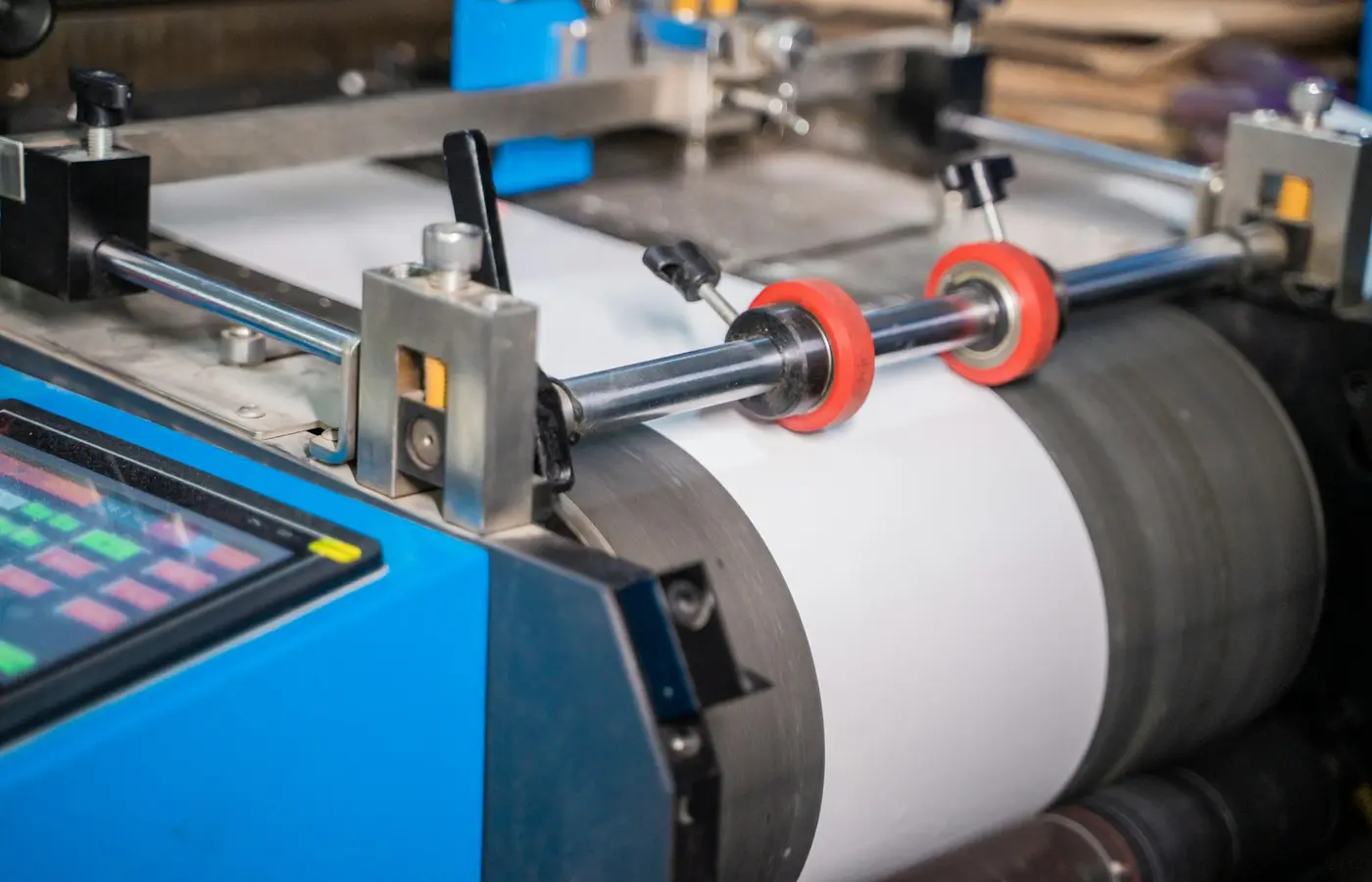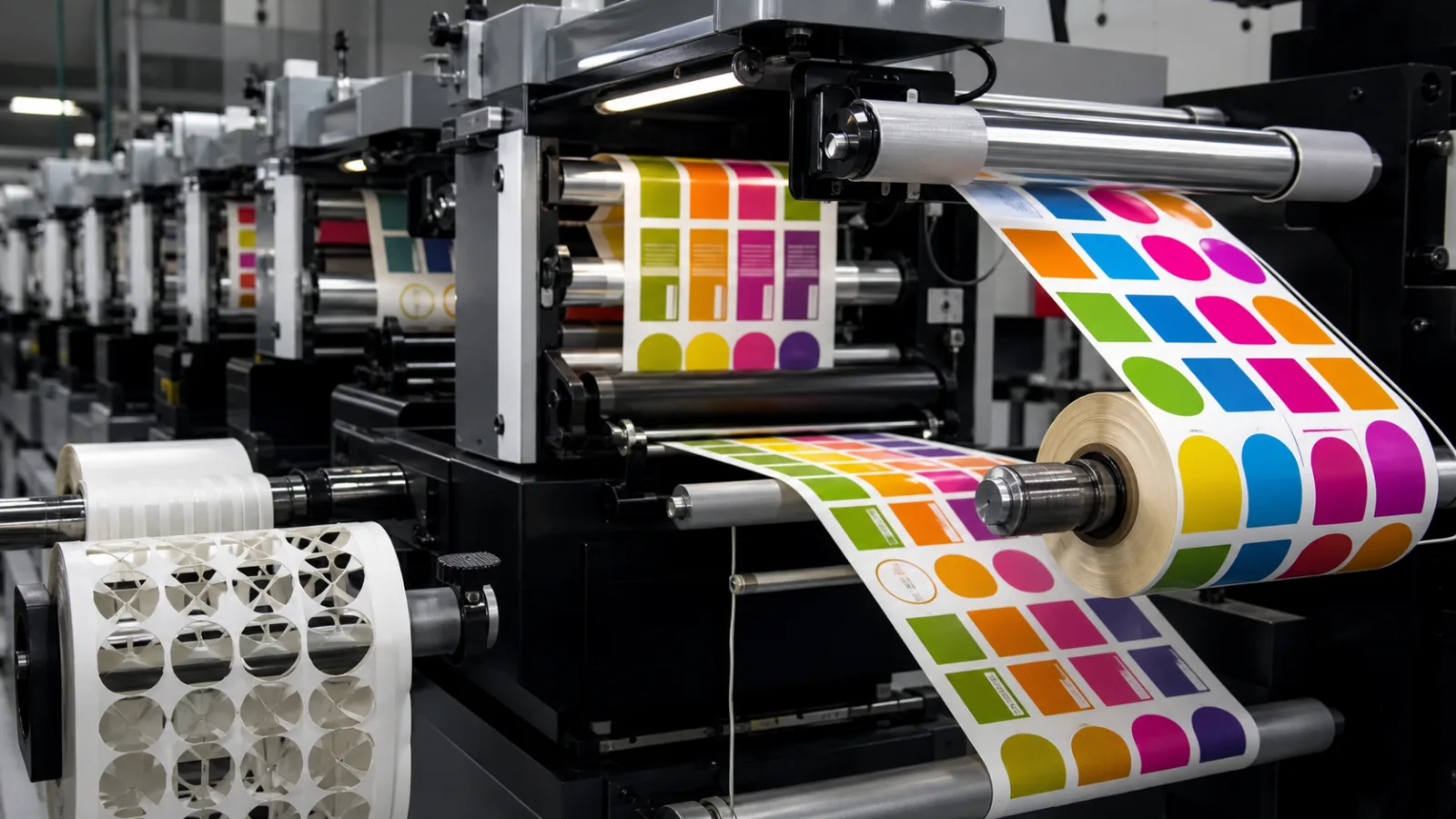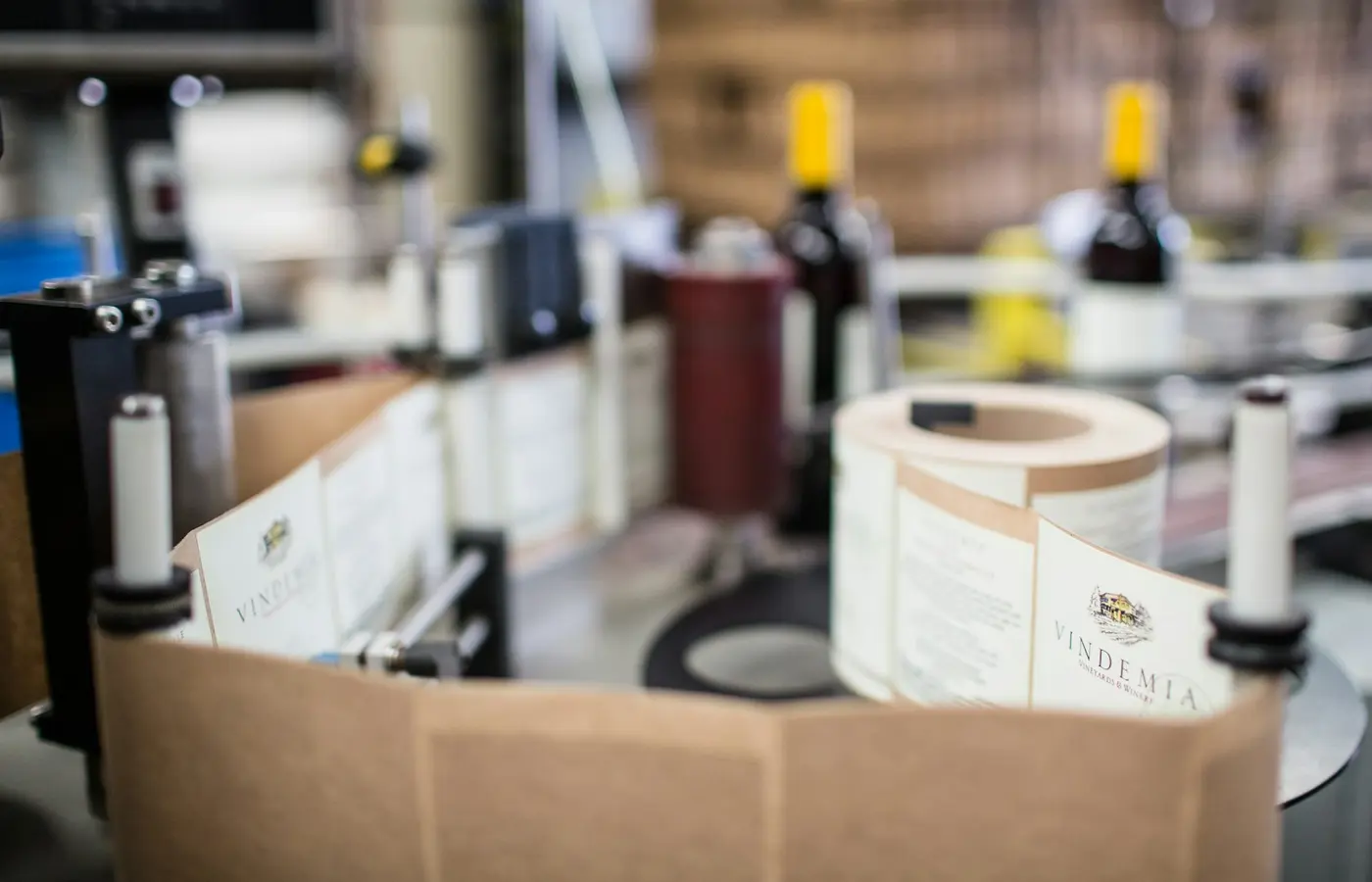


Label adhesive selection starts at the adhesive-to-product interface: the actual container, component or package surface that the label must wet out and remain bonded to. Terms such as permanent, removable, high tack and low temperature can be useful shorthand, but they do not define performance on a particular production surface.
A pressure-sensitive label construction is a system. The facestock provides the printable and visible face of the label; the adhesive forms the bond to the product; and the release liner carries the construction through converting and dispensing before application. Release-liner selection matters for die-cutting, stripping and label dispensing, but it is not the same decision as adhesive selection. For adhesive performance, the central question is whether the proposed construction can make and retain the required bond on the real product under the real application and service conditions.
That distinction matters because a label can appear satisfactory immediately after application yet lift, wrinkle, flag at the edges, leave residue or damage the surface later. A supplier recommendation is a useful starting point, not proof that an untested combination will meet production requirements.
Start with the adhesive-to-product interface
Pressure-sensitive adhesives bond when they contact and flow across the product surface under application pressure. This process is often described as wet-out: the adhesive must make sufficiently intimate contact with the available surface. Surface chemistry, texture, contamination, temperature and application pressure can all affect how well that occurs.
The label construction also influences the result. A stiff facestock may resist a tight curve. A large label may be more prone to edge lift than a small label on the same container. An embossed, textured or heavily curved item presents a different bonding challenge from a flat, smooth panel, even if both are described as plastic. Adhesive coat weight, facestock stiffness, label shape and dispensing method may therefore need review together.
Do not assume that a high initial tack reading means the label will deliver reliable retention. Initial grab, longer-term adhesion, cohesive strength within the adhesive, resistance to environmental exposure and removal behaviour are related but distinct properties. A construction intended for clean removal may use a different balance of these properties than one intended to remain attached for the life of an industrial component.
Describe the actual surface, not only the material family
A request stating “plastic bottle” or “coated carton” is usually too broad for a dependable adhesive recommendation. The supplier needs to understand the surface that will be labelled, including its variation across production batches where relevant.
Provide the following information wherever it is available:
- The substrate material or material family, including resin designation for plastic parts.
- The surface finish: smooth, matte, textured, embossed, varnished, lacquered, painted or coated.
- Whether the item is virgin, recycled-content, multilayer or subject to resin or coating changes.
- The label position, including curvature, corners, ribs, seams, mould lines and recessed panels.
- Cleaning, filling or handling processes that may leave moisture, dust, oil, release agent, silicone, wax or other contamination.
- A representative production sample or, where this is not possible, a controlled sample that accurately represents the intended surface.
Surface energy is often relevant when labelling plastics. In practical terms, some low-surface-energy surfaces are more difficult for an adhesive to wet out than higher-energy surfaces. However, low surface energy is not a complete specification. Surface texture, additives, mould-release residues, printing, coating and temperature can change the practical bonding result. A label material supplier may list an adhesive as suitable for a category such as low-surface-energy plastics, but the grade-specific data sheet and a trial on the actual part should define the decision.
Do not replace a product sample with a generic sheet of nominally similar material unless the supplier and buyer agree that it is representative. A flat plaque, for example, may not reveal the stress imposed by a curved bottle shoulder or a seam in a formed package.
Separate application conditions from service conditions
Application conditions are the conditions at the point of labelling. Service conditions are the conditions the labelled product experiences afterward. They must be specified separately.
A label applied to a warm, dry bottle may face chilled storage, condensation and repeated handling later. Conversely, a container may be labelled cold and damp, then remain indoors at a stable temperature. These are different challenges, even if the eventual service-temperature range appears similar.
For the application stage, report:
- Product surface temperature at the labeller, rather than only room temperature.
- Ambient temperature and relative humidity where these affect the line or product.
- Presence of visible moisture, condensation, frost, dust, oil or filling residue.
- Application equipment and method, such as wipe-on, tamp, blow, wrap-around or hand application.
- Line speed, label feed direction, wipe-down arrangement and available application pressure.
- Time between application and handling, packing, filling or further processing.
For service, storage and distribution, report the expected exposures:
- Temperature range and temperature cycling.
- Refrigerated, frozen, ambient or heated storage.
- Water immersion, condensation, humidity or wash-down.
- Oils, plasticisers, solvents, cleaners, fuels or other chemicals.
- Abrasion, stacking, repeated flexing or contact with adjacent packs.
- Expected labelled life before removal, reuse, disposal or recovery.
Adhesive technical data sheets may state a minimum application temperature and a service-temperature range for a specific construction. These values are not interchangeable. Minimum application temperature concerns the conditions under which the adhesive can make an adequate initial bond; service range concerns performance after application and dwell. Use the exact supplier documentation for the proposed construction, including stated substrate limitations and test conditions.
Define the required bond and removal outcome
“Permanent” and “removable” are incomplete requirements unless the timing and removal result are defined. The buyer should state what the label must do, when it must do it and what failure is unacceptable.
For a retention requirement, define the required period and exposures. Is the label expected to remain intact through filling, retail handling, outdoor storage, wash-down or the full use life of an asset? Must the label resist an attempt at removal, or simply remain attached in ordinary use? Does edge lift count as a failure before the label detaches?
For a removal requirement, specify:
- When removal occurs: shortly after application, after storage, or after the full service life.
- The surface temperature at removal.
- The removal method, including whether it is manual, automated or aided by water, heat or a cleaning process.
- Whether removal angle or speed is operationally constrained.
- The permitted level of adhesive residue, marking, fibre tear, coating damage or surface distortion.
- Whether the removed label must stay in one piece or may fragment.
Repositionability is another separate outcome. A label may need to be lifted and reapplied during packing without becoming permanently attached too early. This does not automatically mean it will remove cleanly after weeks of storage or chemical exposure.
Wash-off, recycling compatibility and food-contact suitability should not be inferred from a generic adhesive description. Each depends on the exact construction, package format, process, local collection and recovery route, and applicable requirements. Ask for documentation relevant to the intended use rather than treating the word wash-off or recyclable as a universal claim.
Build a supplier brief that supports a relevant recommendation
An adhesive recommendation improves when the supplier receives a structured brief rather than a request for “the strongest glue.” The following checklist can be attached to an RFQ, artwork handover or technical-service request.
Product and label details
- Product name, drawing or photograph, plus representative physical samples where possible.
- Product-surface material, coating, finish and known contamination risks.
- Label dimensions, shape, corner geometry and exact application position.
- Facestock requirement, including paper or film, thickness, stiffness, durability and print process.
- Print, varnish, laminate, embossing or other finishing that may affect label flexibility or edge behaviour.
Production conditions
- Label application equipment, method and approximate operating conditions.
- Product and ambient conditions at application.
- Required dwell time before handling, packing or exposure.
- Storage, transport and end-use exposures.
- Any foreseeable process variation, such as seasonal temperatures or more than one packaging line.
Performance and approval requirements
- Required retention, removability, repositionability or tamper response.
- Timing and method of removal, plus permitted residue or surface damage.
- Regulatory, brand-owner or customer requirements that apply to the complete construction.
- Defined acceptance criteria and who has authority to approve the result.
Ask the supplier to identify the exact proposed construction, not just an adhesive family. Request the applicable technical data sheet, stated intended substrates, application guidance, relevant limitations and the conditions behind any test values supplied. A generic recommendation may be useful for screening, but a named construction is needed for traceability and later change control.
Plan representative application and aging trials
A trial should reproduce the decision that production needs to make. It does not need to imitate every possible future event, but it should cover the credible conditions most likely to affect bonding or removal.
Use a written protocol before samples are applied. Record the label construction, product sample identity, application equipment, product temperature, ambient conditions, dwell period and conditioning sequence. Define inspection points and pass/fail criteria in advance, particularly where the result will be interpreted by different teams.
A practical trial sequence is:
- Apply labels to representative parts. Use the intended label size, facestock, print finish and application method. If production equipment is unavailable, record the alternative method and its limits.
- Inspect initial application. Check placement, wrinkles, bubbles, immediate edge lift, bridging across texture and conformance around curves or seams.
- Allow the specified dwell period. Do not judge long-term performance solely from an immediate application check.
- Condition samples through relevant exposures. This may include the anticipated storage state, moisture exposure, temperature changes, product contact or handling conditions. The selected sequence should reflect the actual product lifecycle, not a generic extreme test.
- Inspect retention and appearance. Look for flagging, edge lift, tunnelling, adhesive squeeze-out, facestock damage, print damage and movement from the intended position.
- Assess removal where required. Use the defined temperature, timing and method. Record residue, surface damage, tearing and variation between samples.
- Retain records and samples. Photographs, batch details and retained samples make later investigation possible if a material, line or product condition changes.
A passed trial validates the tested label construction on the tested surface and conditions. It does not automatically cover a different bottle resin, coating supplier, cleaning process, fill temperature, label geometry or application line. This boundary should be explicit in the approval record.
Common reasons labels lift after apparently successful application
Late lifting is often a system issue rather than proof that an adhesive is simply “not strong enough.” Start by checking whether the product surface was colder, wetter or more contaminated than assumed at application. Then compare the actual facestock, label geometry, application pressure and product curvature with the approved configuration.
Also review whether the product later encountered a condition absent from the qualification trial: condensation, chemical contact, temperature cycling, flexing, abrasion or a longer dwell period before removal. If the construction and process match the approved record, send retained samples and line information to the material supplier for a grade-specific review.
Use a bounded approval rule
Approve a label adhesive construction only when two conditions are met: its documented intended range covers the actual application, service and removal requirement, and representative trials meet the agreed acceptance criteria.
Revalidate when the product surface, coating, cleaning process, label geometry, facestock, application line, fill temperature or exposure profile changes in a meaningful way. The right adhesive is therefore not a generic permanent or removable grade. It is a traceable construction approved for a defined surface, process and product lifecycle.
Sources
- Pressure Sensitive Label Adhesives Selection Guide
- Label Industry Trends 2026: What Adhesive Manufacturers Need to Know
- Pressure Sensitive Label Adhesives & Release Liners
- Industrial Label Materials Guide | Facestocks & Adhesives
- Label Adhesive Guide: Types, Selection & UAE Climate | Asas Label
- Label Adhesive Guide: Types, Selection & UAE Climate | Asas Label