
Digital and flexographic label printing solve different production problems. Digital printing images directly from a file and avoids conventional printing plates; flexography uses plates, ink delivery components and press setup that can be efficient when a job is stable and repeated. Neither route is automatically the lower-cost, faster or higher-quality option for every label.
The useful decision is not “digital or flexo?” in isolation. It is whether a specific label programme suits the available press, material, finishing line, approval process and delivery schedule. Quantity per SKU, artwork stability, version count, substrate construction, decoration and inspection requirements can all change the practical choice.
Start with the label programme, not a universal run-length crossover
A universal crossover quantity between digital and flexographic label printing is not reliable. The economical point can move with label size, number of SKUs, substrate, finishing, press configuration, waste allowance and the amount of setup work needed for each version. A converter may also schedule several designs together on a press or finishing line, changing the effective production conditions.
This distinction matters when a purchase order combines very different requirements. A programme with one million labels may sound like a flexographic job, but it may consist of dozens of regional, seasonal or language variants with modest quantities per SKU. Conversely, a relatively short order may require complex die-cutting, foil, embossing, inspection or special material handling that dominates the production route.
Start by separating total demand from demand per SKU and per release. Ask for the following information before requesting a recommendation:
- Quantity for each design, language, flavour, market or pack size.
- Expected reorder frequency and whether the artwork is likely to change.
- Label dimensions, repeat length and number of labels across the web.
- Face stock, adhesive and liner construction rather than only a generic description such as “white film label.”
- Required varnish, laminate, foil, embossing, tactile finish or other decoration.
- Delivery format, including roll diameter, core size, unwind direction, label pitch and splice policy.
- Allowable setup and running waste, lead time and whether stock can be held for later releases.
A supplier source on digital label production makes the same core point: the crossover depends on substrate, finish and SKU count together, rather than one published quantity threshold. That is a useful framing, but the actual decision still needs to be estimated on the converter’s proposed equipment and workflow.
How the two label-printing routes differ in production
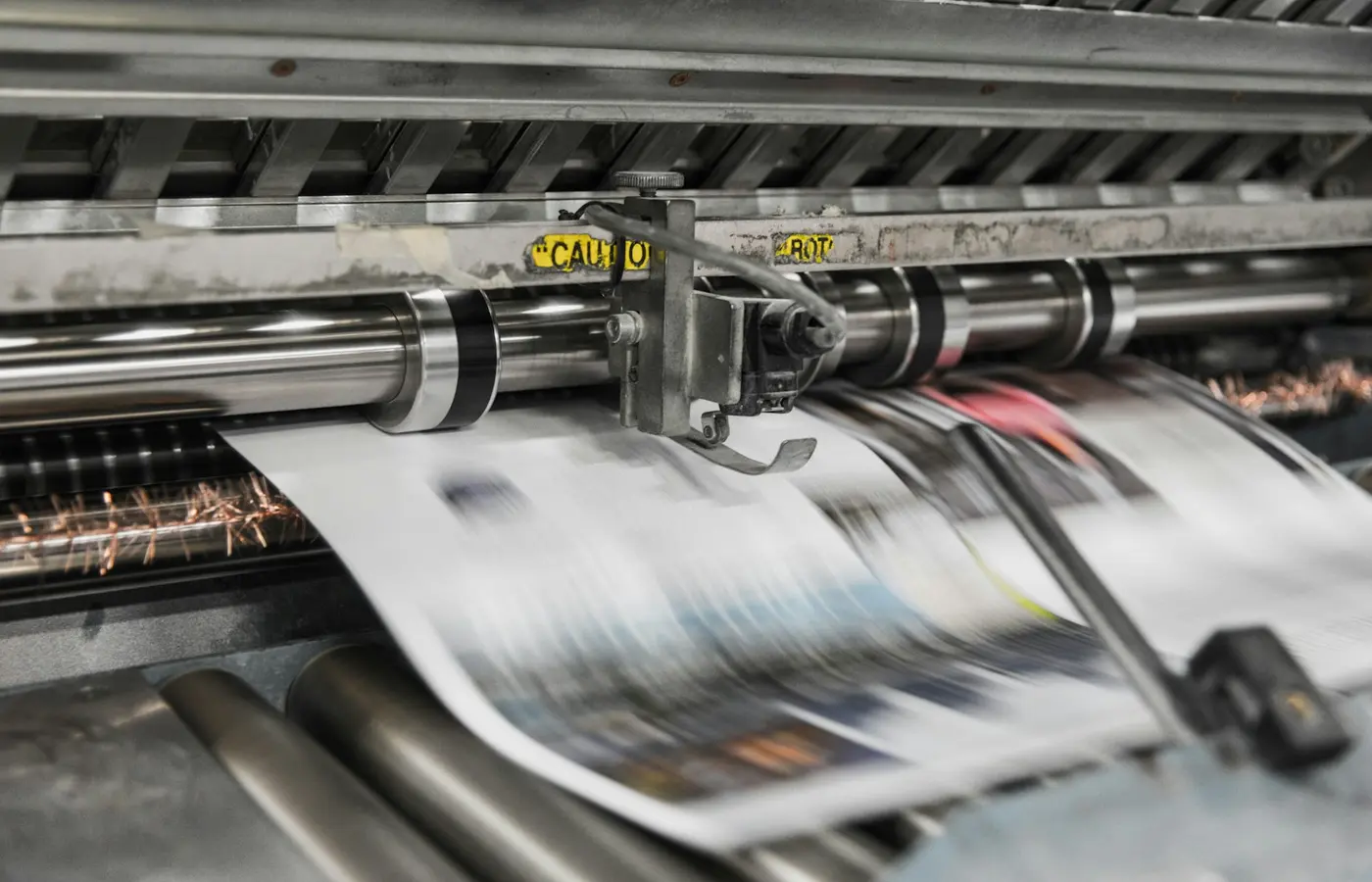
In flexography, ink is metered through an anilox roll and transferred through a printing plate to the substrate. The press may use water-based, solvent-based or radiation-curable ink systems, depending on the application and equipment. Plates, anilox selection, ink control, drying or curing, registration and press setup are therefore part of the job definition.
For a stable design that will run repeatedly, this setup work can be spread across a larger quantity. Flexography can also be integrated with web handling and converting operations in a dedicated production line. The suitability of that arrangement depends on the actual press and finishing configuration, not on flexography as a general label.
Digital label presses image from approved digital artwork without conventional printing plates. Depending on the machine, the imaging process may use toner, liquid electrophotographic technology, inkjet or another digital method. Artwork changes generally occur through the job file and workflow rather than through a replacement set of printing plates.
That can reduce the physical setup associated with a design change and can make versioned work more manageable. It does not eliminate setup. Operators still need to prepare files, select the approved media settings, establish colour controls, manage web handling, set up finishing, and inspect output. Digital production also has machine-specific maintenance, curing, cleaning and media-compatibility requirements.
The production question is therefore broader than print engine speed. Compare the complete route from approved file through printing, decoration, die-cutting, inspection, rewinding and packed rolls.
Run length, versions and variable data
Run length per SKU is important because flexographic artwork changes commonly require plate-related preparation and press setup. When one design is stable, repeated often and produced at substantial volume, those fixed activities may be easier to amortise across the order.
Digital printing can be practical where individual SKU quantities are lower, where artwork changes frequently, or where a programme includes many related versions. Typical examples include regional language variants, limited editions, promotional labels and frequent packaging updates. The absence of conventional plates can also simplify replacement of an outdated version, provided the workflow prevents obsolete files from being released.
Variable-data printing is a separate requirement. A digital workflow may print sequential numbers, unique codes, changing text or personalised information from a controlled data source. That capability does not by itself prove that a code is fit for use.
For any variable label programme, define:
- The data owner and approved source file.
- The rules for sequence, range, duplication, check digits and version control.
- The required barcode symbology, size, contrast and verification method, where applicable.
- How missing, duplicated or unreadable records will be detected and reconciled.
- The inspection point: during printing, during finishing, before shipment or at multiple stages.
- The retained production records and reference samples required by the customer or regulator.
Flexography can also produce changing information through suitable workflows or later operations, but the method, complexity and cost need to be established for the exact job. Do not treat “variable data” as a generic capability without reviewing the press, data system and inspection route.
Colour, brand control and image expectations
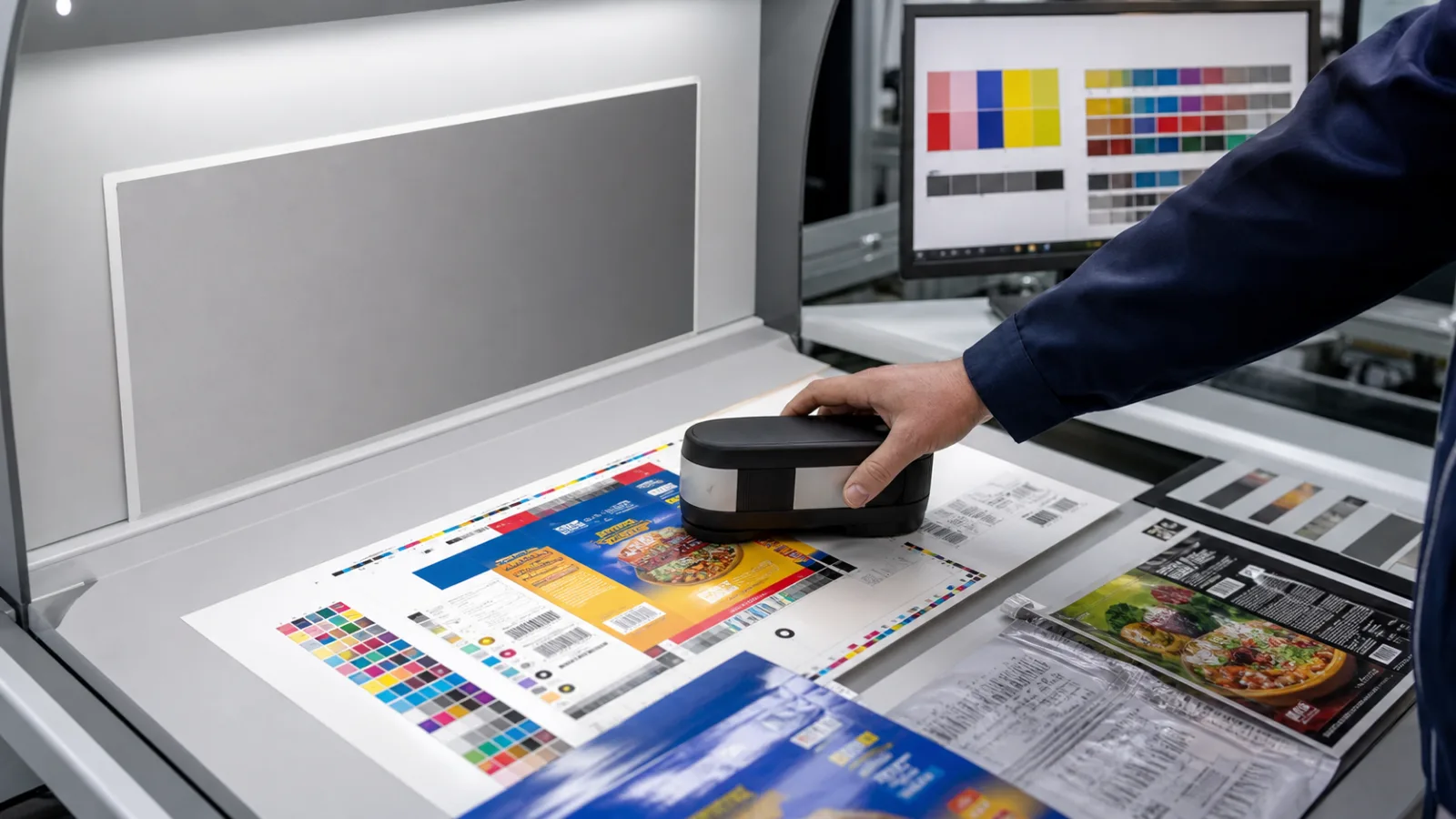
Neither route should be assumed to produce better colour without defining the colour target and approval method. Colour appearance depends on the ink or toner system, substrate colour and texture, opacity, surface treatment, print sequence, white ink or underprint, coating, curing, viewing conditions and measurement method.
Flexographic jobs may use process colours, spot colours or expanded-gamut configurations. A dedicated spot colour can be valuable where a brand specification requires a particular ink formulation, but repeatability still depends on ink control, anilox condition, plates, substrate and press settings. Digital presses may reproduce colours through their configured process set, optional colours or white, subject to the machine’s documented capabilities and the approved media.
Ask these questions during colour planning:
| Approval question | Why it matters |
|---|---|
| Is the target defined by a physical standard, colour values or a previous approved label? | A verbal description such as “deep blue” is not a measurable target. |
| Are spot colours mandatory, or is an approved process conversion acceptable? | This affects separation, press configuration and proof expectations. |
| Is opaque white required beneath colour or metallic film? | White coverage and opacity can materially affect the final appearance. |
| What substrate will be used for the approval sample? | A proof on a different material may not predict the production label. |
| Which lighting and measurement conditions apply? | Visual agreement can change with viewing conditions and instrument settings. |
| What tolerance and sign-off process are required? | The production team needs a defined acceptance basis before running. |
Where metallic, fluorescent, tactile or highly opaque effects are required, establish whether they will be printed, applied as a separate decoration, or created by the face material. The available solution can differ between presses and finishing lines.
Substrates, adhesives and finishing determine whether the route is practical
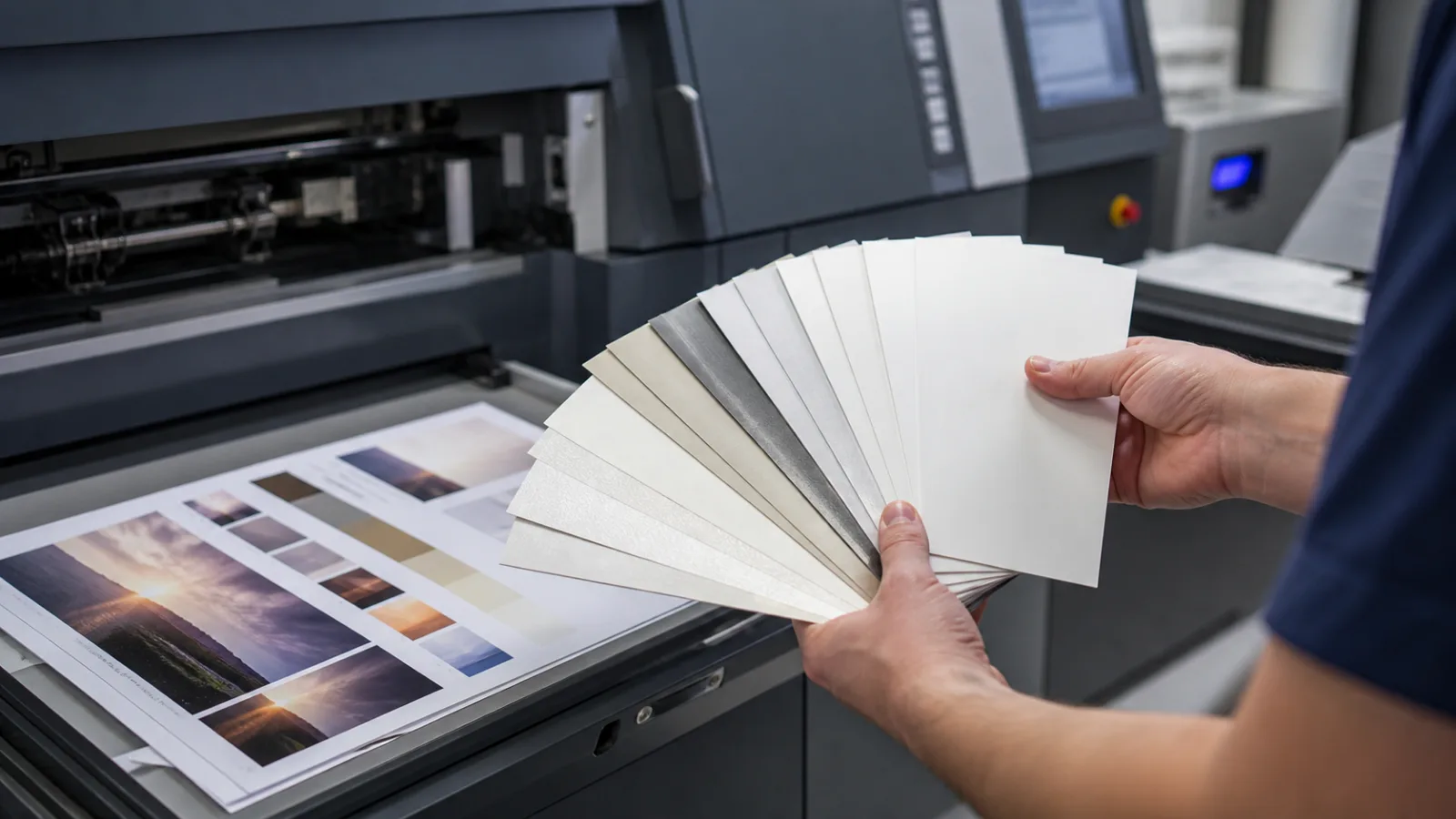
A label is a construction, not simply a printable surface. The face stock, adhesive, liner, coating, web width, caliper, stiffness and release behaviour can all affect printing and converting. A print route that works well on one paper labelstock may require different settings, treatment or finishing on a filmic, textured or sensitive material.
Confirm the exact material construction using the labelstock supplier’s technical documentation and the converter’s media guidance. Important checks include:
- Approved substrate range, thickness and web-handling limits for the proposed press.
- Need for surface treatment, primer, precoat or special media profile.
- Ink, toner, varnish and laminate adhesion on the actual face stock.
- Adhesive and liner behaviour during die-cutting, matrix stripping and rewinding.
- Risk of curl, tunnelling, edge lift, scuffing, blocking or poor release in the intended application.
- Suitability of the finished roll for the customer’s dispensing, labelling or packing equipment.
Finishing often decides whether a route is practical. Die-cutting, slitting, rewinding, varnishing, lamination, cold foil, hot foil, embossing and inspection may be inline, nearline or separate operations. “Inline” should not be treated as a promise unless it is documented for the specific press, finishing unit and label construction.
For example, a digitally printed web may still require conventional converting after printing. A flexographic line may combine printing and finishing efficiently for one configuration but require a different route for another decoration. Request a process map that identifies every operation, handoff and inspection point rather than assuming that a label is complete when it leaves the print station.
Approval, compliance and repeat-order controls
Label errors are often expensive because the label carries product identity, instructions, regulatory information, traceability data or brand assets. A route should be selected only after agreeing what will be approved and how that approval will be transferred to repeat production.
Before release, confirm the following items in a controlled specification:
- Approved artwork file, revision number and ownership of the master file.
- Die-line, label dimensions, corner treatment, gap, repeat and allowable positional tolerance.
- Face stock, adhesive, liner and any laminate, varnish or overprint coating.
- Colour targets, spot-colour requirements, proof type and production sign-off method.
- Variable-data rules, data file version and code-verification requirements.
- Embellishment placement, registration expectations and tactile or gloss requirements.
- Unwind direction, roll diameter, core, maximum roll weight, splice limits and pack quantity.
- Defect definitions, inspection method, sampling or acceptance criteria and retained reference sample.
A material name or printing route does not establish food-contact suitability, migration performance, pharmaceutical suitability, durability, recyclability or legal compliance. Those questions require product-specific documentation for the inks, coatings, adhesive, labelstock and end use, as well as confirmation against the applicable market requirements. If the label will contact food packaging, chemicals, medical products or other controlled applications, involve the brand owner, material suppliers and compliance specialists before production approval.
A job-selection checklist for buyers and converters
Use a route-specific quotation and approval process rather than asking for a generic price for “digital labels” or “flexo labels.” A practical workflow is:
- Break demand down by SKU and release date. Identify stable high-volume designs separately from short, changing or versioned designs.
- Freeze the current artwork and identify expected changes. Record language variants, promotions, legal text changes and variable-data requirements.
- Specify the label construction. Name the face stock, adhesive, liner, coating and required end-use conditions.
- Define the converting route. Include die-cutting, matrix removal, varnish, laminate, foil, embossing, inspection, slitting and rewinding.
- Set colour and appearance approvals. State the target, proof method, viewing conditions and acceptance process.
- Request route assumptions in writing. Ask the converter to identify proposed press type, finishing operations, setup assumptions, waste allowance, lead time and any material restrictions.
- Approve a representative sample or proof. Use the actual substrate and intended finishing where appearance, adhesion or converting performance is critical.
- Retain the approved specification for reorders. Repeat orders should reference the approved construction, revision, colour controls and roll format rather than a descriptive purchase-order line alone.
Choose digital printing when the actual programme benefits from file-driven version changes, controlled variable data or modest quantities per SKU and the proposed press-plus-finishing route supports the material and appearance requirements. Choose flexography when stable volume, repeat demand and the configured press route justify the setup and tooling involved. For mixed programmes, it may be reasonable to split work by SKU rather than force every label through one production method.
The final check is simple: approve the route for the exact label construction, artwork version, finishing sequence and delivery format—not for a broad category such as “short-run labels” or “high-volume labels.”
Sources
- Digital Label Printing | Short Runs & Variable Data
- Digital vs Flexographic Labels: Which Fits? - Miles Label Company
- Flexographic vs Digital Label Printing: Which Is Best?
- Flexography Versus Digital Printing
- Digital or Flexo? How To Choose The Right Product Label Printing Method (And Not Regret It Later) - The Label Link
- Hybrid Flexo vs Digital Printing: The Right Fit