
Folding carton board grades should be compared against the work the finished carton must do: carry graphics, run through printing and converting, protect the product, close reliably on the packing line, and suit the intended recovery route. A broad label such as virgin, recycled, premium, or kraft is not enough to specify that result.
The useful comparison is between named grades at a stated basis weight and caliper, with the same carton design, print process, finishing sequence, distribution conditions, and product requirements. Board construction can influence surface appearance, stiffness, creasing response, and strength, but no grade family is automatically best across all of those criteria.
Start with the carton’s production and protection job
Before requesting board samples, define the carton as a production system rather than a printed sheet. The same board can perform differently when carton geometry, crease pattern, ink coverage, varnish, packing speed, glue pattern, humidity, or transport loads change.
Establish the following requirements before comparing grades:
- Product and pack format: product mass, dimensions, number of units per carton, required internal fit, and whether the pack carries, displays, dispenses, or merely contains the product.
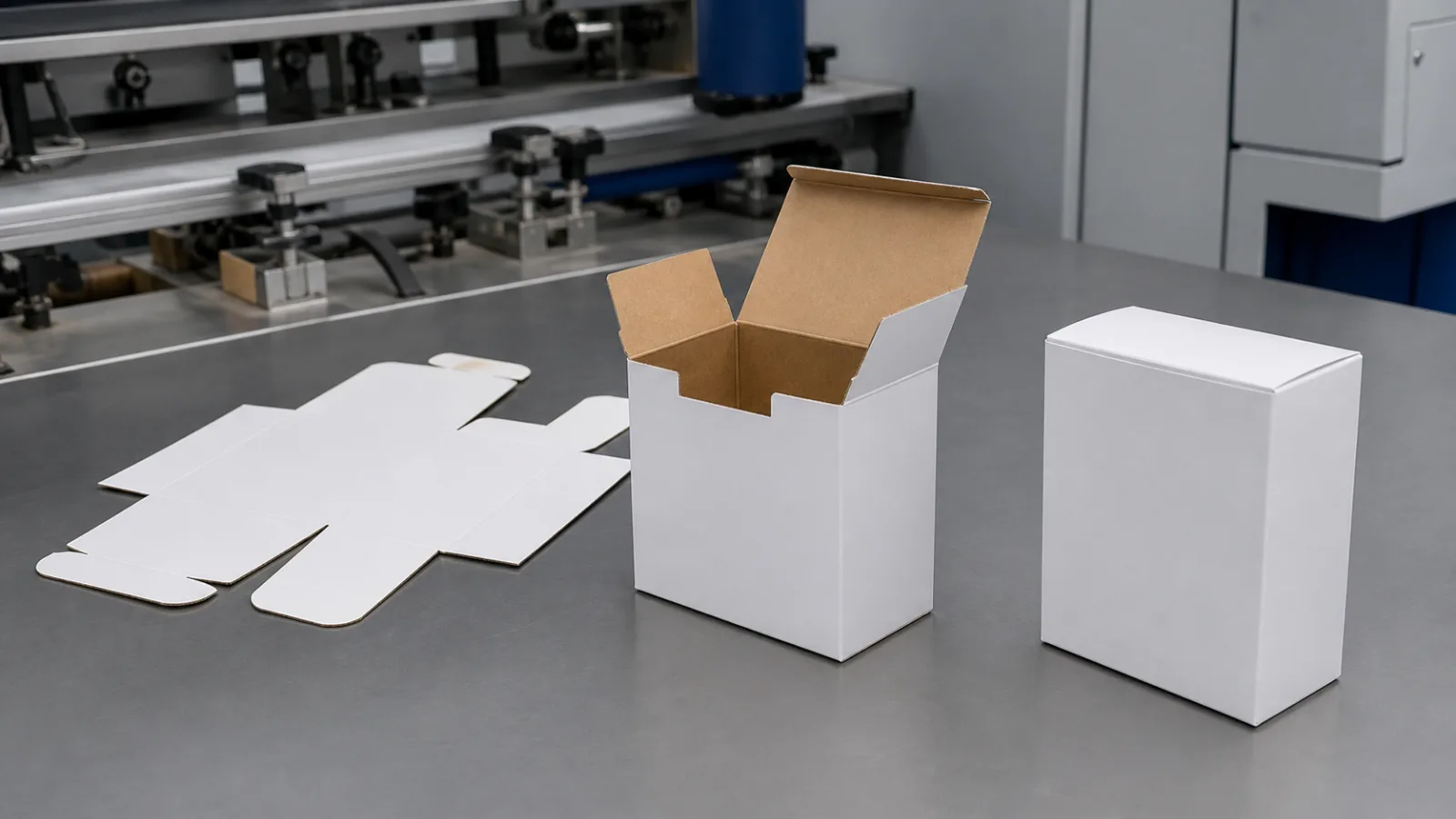
- Carton geometry: panel sizes, depth, locking features, window cut-outs, hang tabs, tear-open features, and the number and direction of folds.
- Graphics and finish: solid ink coverage, fine type, halftones, metallic inks, embossing, debossing, foil, spot varnish, aqueous coating, UV coating, or lamination.
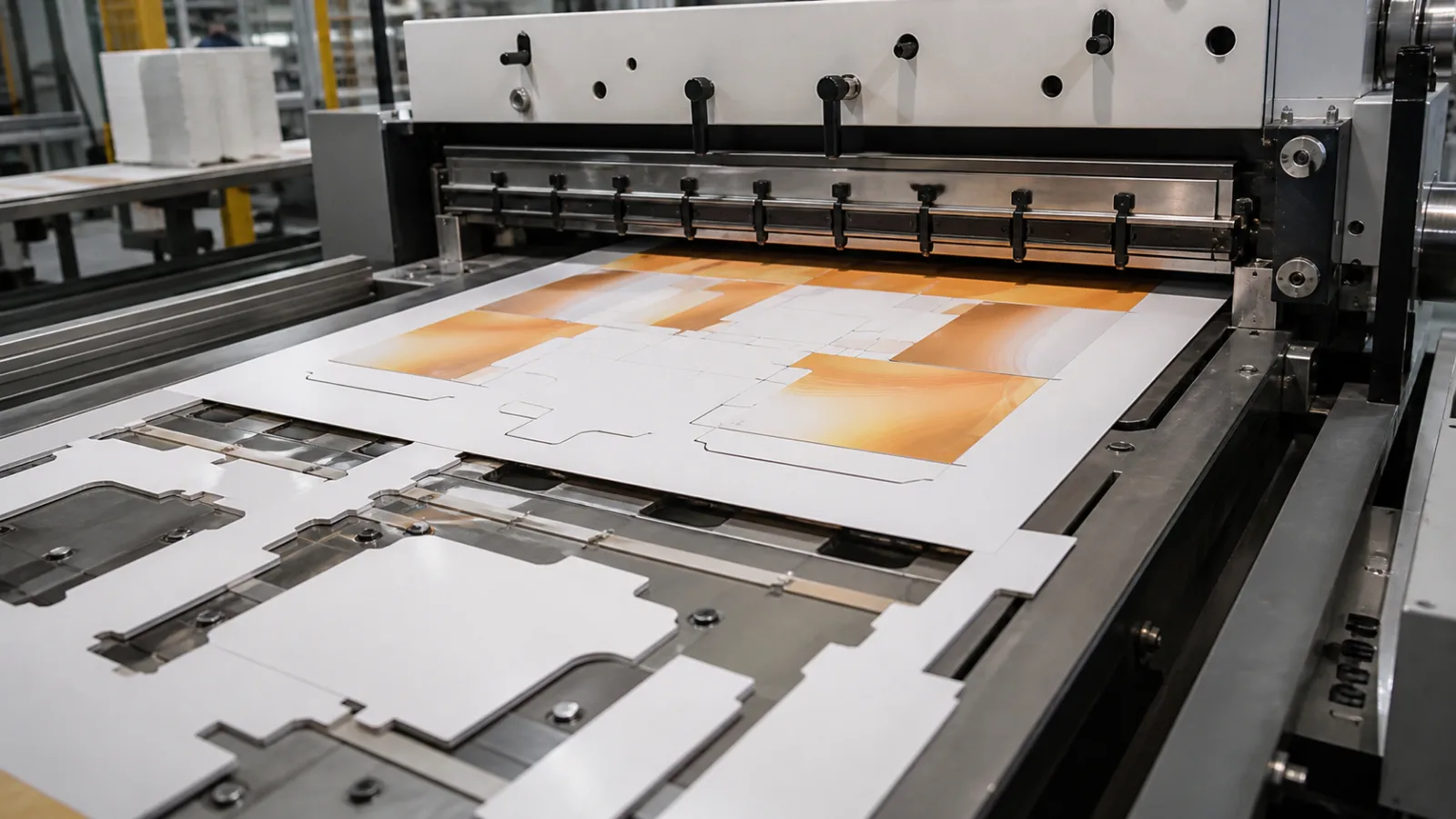
- Production route: sheetfed or web printing, press type, die-cutting method, crease rule arrangement, folder-gluer configuration, filling equipment, and target line speed.
- Distribution exposure: stacking, abrasion, temperature changes, humidity, chilled storage, handling frequency, and the role of secondary and transport packaging.
- Use and regulatory constraints: direct or indirect product contact, food, pharmaceutical, cosmetic, or other controlled applications. Do not infer suitability from fiber type alone; verify the exact grade, end use, jurisdiction, and supporting documentation.
- End-of-life requirements: the full carton construction, including coatings, barriers, adhesives, windows, and labels, plus the collection and sorting route available in the target market.
This information makes the comparison measurable. A carton for dry, lightweight retail goods may prioritize graphics and economical conversion. A deeper carton carrying a heavier product may need more attention to panel stiffness, compression performance, and crease design. A carton exposed to chilled or humid conditions may require a construction and barrier system evaluated for that specific environment.
Identify the grade family and board construction
Grade names differ by region, mill, and supply chain. Abbreviations should therefore be treated as a starting point, not a complete specification. The Paperboard Packaging Council’s overview of paperboard types illustrates common North American terminology, while supplier documents may use different names or constructions for comparable applications.
The grade families commonly considered for folding cartons include the following.
| Grade family | Typical construction concept | Selection questions |
|---|---|---|
| Solid bleached sulfate (SBS), sometimes called solid bleached board | Predominantly bleached virgin fiber, often with a coated print side and a white reverse | Is the required print surface, reverse-side appearance, stiffness, and approved end use available at the chosen caliper? |
| Folding boxboard (FBB) | Multi-ply board commonly engineered with layers that can combine stiffness, bulk, and printable surfaces | Which side is coated, what is the reverse-side appearance, and how does the grade behave at the selected basis weight and carton geometry? |
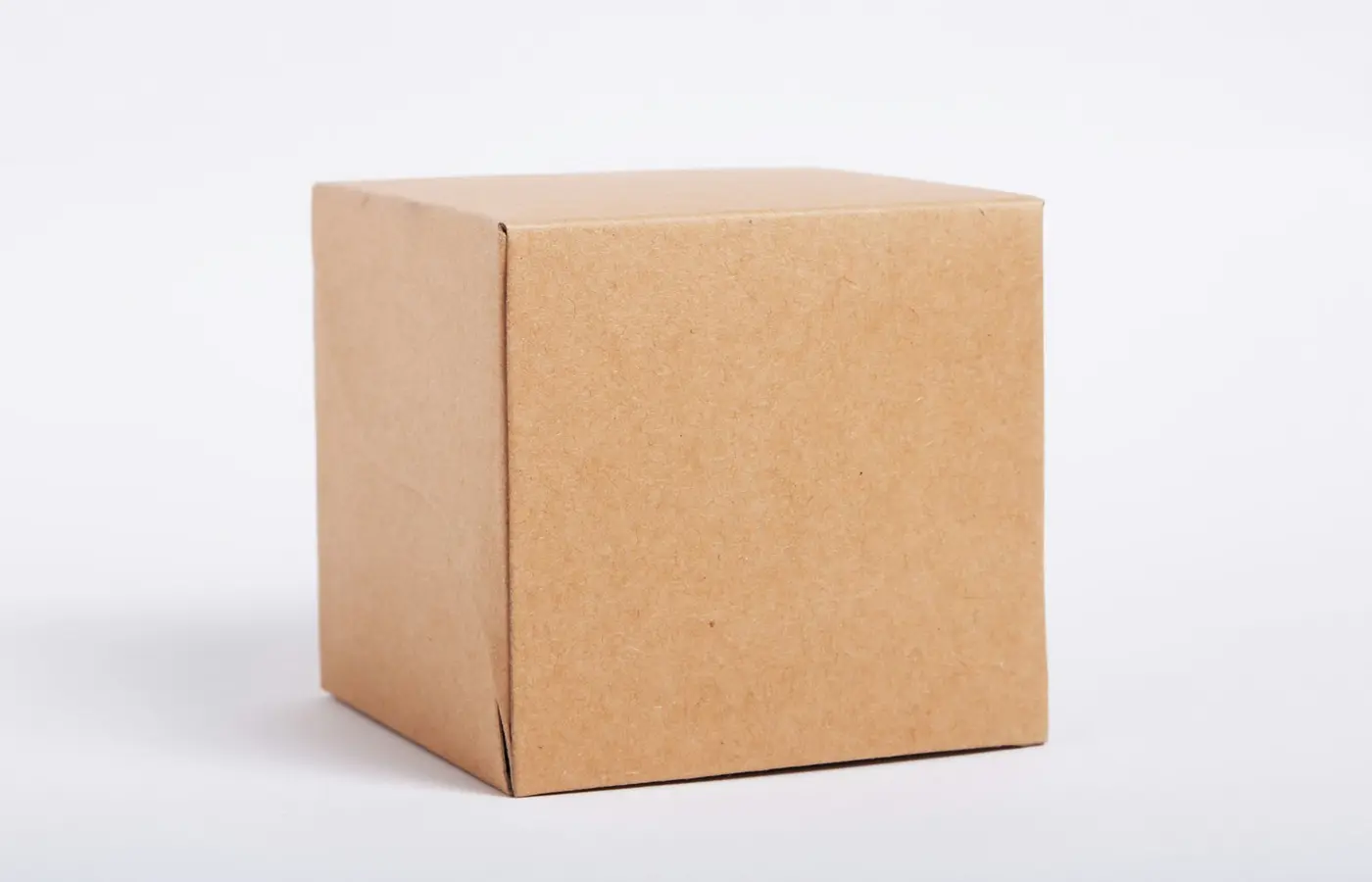
| Solid unbleached sulfate (SUS) or coated unbleached kraft (CUK) | Predominantly unbleached virgin fiber, often with a coated print side and a natural-toned reverse | Is the desired visual effect compatible with graphics, protection needs, and any required barrier or finish? |
| Coated recycled board (CRB) | Board containing recycled fiber, commonly with a coated print side; construction varies substantially by supplier and market | What are the grade-specific surface, stiffness, odor, cleanliness, end-use, and reverse-side requirements? |
These descriptions are not performance rankings. A named SBS, FBB, SUS/ CUK, or CRB grade may have a different coating arrangement, furnish, bulk, moisture target, optical profile, or available basis-weight range from another board sold under the same family name.
For example, a white coated face can support a particular print objective, but it does not by itself establish how the board will foil, emboss, resist scuffing, or fold. Likewise, recycled fiber content does not independently establish print performance, protection, product-contact status, or recovery performance. Ask for the mill, grade name, construction description, and current datasheet rather than approving a generic family label.
Compare the properties that drive print and shelf appearance
Print appearance begins with the surface presented to the press. Coating formulation and coverage, surface smoothness, porosity, shade, gloss, and sheet uniformity can all affect ink transfer, dot reproduction, drying, varnish appearance, and visual consistency between cartons.
A smooth, coated face may support fine detail and even ink lay in a given process, but the result remains dependent on press settings, ink system, fountain solution where relevant, drying conditions, coverage, trapping, and finishing sequence. A grade that performs well in offset lithography may need separate confirmation for flexography, gravure, digital print, or a specific inkjet primer system.
Compare supplier values only where the reported test method, units, conditioning, and sample orientation are known. Useful data may include:
- nominal basis weight and caliper, with stated tolerances;
- surface roughness or smoothness, using the named method;
- brightness, whiteness, shade, or gloss where those properties matter to the approved artwork;
- opacity, particularly where reverse-side graphics, dark product visibility, or show-through are concerns;
- moisture specification and conditioning basis;
- coating arrangement on print and reverse sides;
- available reverse-side grades, including white, cream, or unbleached appearances.
Do not treat brightness as a universal proxy for print quality. It can affect perceived contrast and color reproduction, but it does not replace an approved press proof or production trial. The same applies to caliper: it can change tactile feel, embossing depth, and carton bulk, yet does not on its own predict graphics quality.
Where the pack uses foil, embossing, tactile varnish, or heavy ink coverage, request samples that represent the final process order. A foil applied before embossing may create different visual and folding risks from foil applied after printing and coating. High build finishes can also affect scoring, folding, glue adhesion, carton nesting, and abrasion resistance.
Compare stiffness, creasing, folding, and carton strength
Stiffness is often one of the most useful board properties, but it must be interpreted carefully. Board is directionally anisotropic: its behavior in the machine direction (MD) may differ from the cross direction (CD). The relationship between grain direction, carton panels, major folds, and load-bearing features can influence both converting performance and the feel of the finished pack.
Ask for stiffness in both directions, together with the test method, sample span or test conditions, and the basis weight or caliper tested. Do not compare values from different methods as though they were interchangeable.
Caliper and basis weight matter, but carton performance is not a simple linear result of either value. A thicker board may provide more bulk and can alter bending resistance, but it can also require changes to crease rule, channel width, die-cutting pressure, folding settings, and pack-line clearances. The completed carton’s performance further depends on panel dimensions, glue seams, locking design, product fit, and load path.
Creasing creates a controlled hinge by compressing and disrupting the board structure along a defined line. A crease that is too shallow may resist folding or spring open. A crease that is too aggressive can weaken the panel, create visible cracking, or damage a coated or printed surface. Rule width, rule height, channel dimensions, counter material, make-ready, grain direction, and ambient moisture all influence the result.
Evaluate the selected board through the actual die-cutting and folding route. Inspect for:
- cracking or whitening along printed, coated, foiled, or unprinted fold lines;
- fiber rupture or delamination at scores and cut edges;
- inconsistent folding resistance between panels or across production lots;
- poor carton squareness, panel bowing, or spring-back after erection;
- glue skips, weak bonds, adhesive staining, or glue applied over incompatible coatings;
- blank feeding, stripping, stacking, and carton-opening problems at expected production speeds.
A sheet-level stiffness value is useful for comparison, but it is not a substitute for a carton-level approval. The carton may fail because of a narrow panel, an oversized window, a poorly oriented grain direction, or an unsuitable crease layout even when the board meets its published sheet specification.
Match the board to the required level of product protection
Folding carton board is frequently one layer in a wider protection system. Primary packaging, dividers, inserts, shrink film, corrugated cases, pallets, and distribution controls may contribute more to a particular risk than the cartonboard alone.
Identify the actual hazards before specifying strength or barriers. Typical questions include:
- Does the carton support a meaningful stacking load, or is it protected by a corrugated shipper?
- Will product corners, closures, or internal components abrade the carton from inside?
- Is shelf scuffing likely during retail handling or automated packing?
- Will the carton experience cold, humidity changes, condensation, grease, oil, or splashing?
- Does the product require an odor, moisture, grease, light, or migration-control solution?
- Is the carton intended to remain functional after repeated opening and closing?
A coating, extrusion layer, laminate, varnish, or barrier treatment may improve a specified resistance property, but it can also change folding behavior, glue selection, print sequence, material yield, and recovery options. It should be assessed as part of the complete construction, not described as an automatic improvement.
Similarly, natural-looking unbleached board is not automatically more robust, and white coated board is not automatically unsuitable for demanding applications. Protection depends on the named board, carton design, product, barrier system, secondary pack, and environmental exposure.
Request comparable supplier data and run a converting trial
A useful supplier comparison request should require equivalent information from every candidate. Avoid a selection process in which one supplier provides stiffness data in two directions while another provides only basis weight and a marketing description.
Request the following for each proposed grade:
- Exact mill, grade name, board family, and intended end-use statement.
- Nominal basis weight, caliper, and stated tolerances.
- Stiffness in machine and cross directions, including method, units, and conditioning conditions.
- Moisture target or range and any storage, acclimatisation, or converting guidance.
- Surface, optical, and coating information relevant to the graphics specification.
- Print-side and reverse-side construction, appearance, and approved orientation.
- Grain direction options, sheet size, reel format where applicable, and sheeting tolerances.
- Relevant strength data, with test methods and limits clearly identified.
- Grade-specific documentation for any claimed food-contact, pharmaceutical, barrier, wet-strength, or other controlled-use status.
- Information needed to assess the complete pack in the intended recovery market.
Then run a controlled trial using production-representative material. The trial should cover printing, drying or curing, finishing, die-cutting, creasing, stripping, folding, glueing, packing, and representative handling. Use approved artwork with realistic ink coverage and include the most demanding structural features rather than a simplified blank.
Record the board lot, conditioning time, plant temperature and humidity where relevant, press and converting settings, adhesive, coatings, tooling, pack-line conditions, and observed defects. Compare results against agreed acceptance criteria: color and surface appearance, score integrity, dimensional accuracy, glue bond, carton erection, pack-line efficiency, product fit, and performance after the expected distribution exposure.
Choose a grade only after comparing the same functional requirement
The sound selection rule is simple: compare candidate boards at the same required carton function, not by a single headline attribute. A brighter face does not settle a stiffness question. Higher caliper does not settle carton strength. Recycled content does not settle print performance or recovery outcome. A virgin-fiber description does not settle product-contact compliance.
Approve a named board grade only after its documentation, sample conversion, and representative production trial support the required graphics, converting route, protection level, regulatory status, and recovery pathway. If any of those requirements changes—particularly carton geometry, finishing, product weight, storage environment, or market—the approval should be reviewed against the changed condition.
Sources
- The Ultimate 2026 Material Guide for Folding Cartons - Bailipack
- Grades of Folding Carton Board Explained - JohnsByrne
- Paperboard Grades for Folding Cartons | SBS, SUS, FBB | Netpak
- Choosing the Right Paperboard for Folding Cartons
- Folding Carton: Why Choosing the Right Substrate is Critical. | SupremeX Packaging & Envelopes
- 4 Types of Paperboard - Paperboard Packaging Council