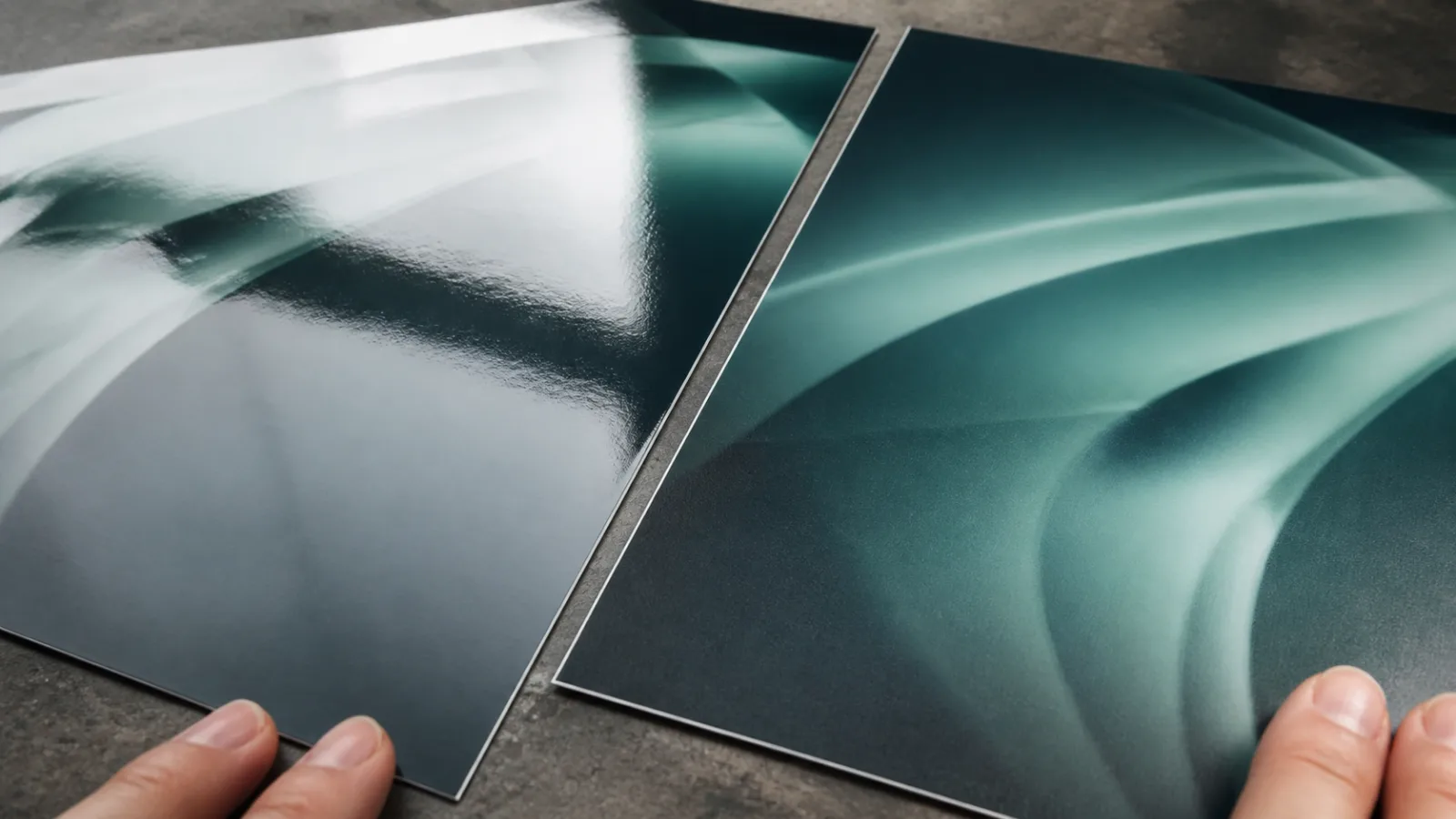

Coated vs uncoated paper is a surface decision, not a simple ranking of print quality. A coated sheet generally offers greater ink holdout and a smoother printing surface, which can support stronger apparent contrast and cleaner reproduction of fine detail. An uncoated sheet generally has less surface glare, more apparent fibre character, and better compatibility with ordinary pens and pencils.
Those tendencies are useful starting points, but they do not specify a job. Gloss, roughness, opacity, shade, brightness, basis weight, caliper, print process, ink coverage, grain direction, and finishing can all change the result. A smooth premium uncoated paper may reproduce detail better than a heavily textured grade, while a matte coated sheet may be easier to read than a high-gloss one.
The right choice is therefore the surface that supports the intended image, reading, writing, handling, and converting requirements on the actual production equipment.
What coated and uncoated actually describe
Coated printing paper has a surface layer commonly formulated from mineral pigments and binders. The coating fills or covers part of the underlying fibre structure and can be finished to alter smoothness, gloss, ink interaction, and appearance.
Uncoated paper does not have that pigment-coating layer. It is not necessarily untreated: an uncoated grade may be sized to control liquid penetration, calendered to increase smoothness, coloured, embossed, or otherwise engineered for a particular printing or converting process.
The terms do not establish all the other properties of the sheet:
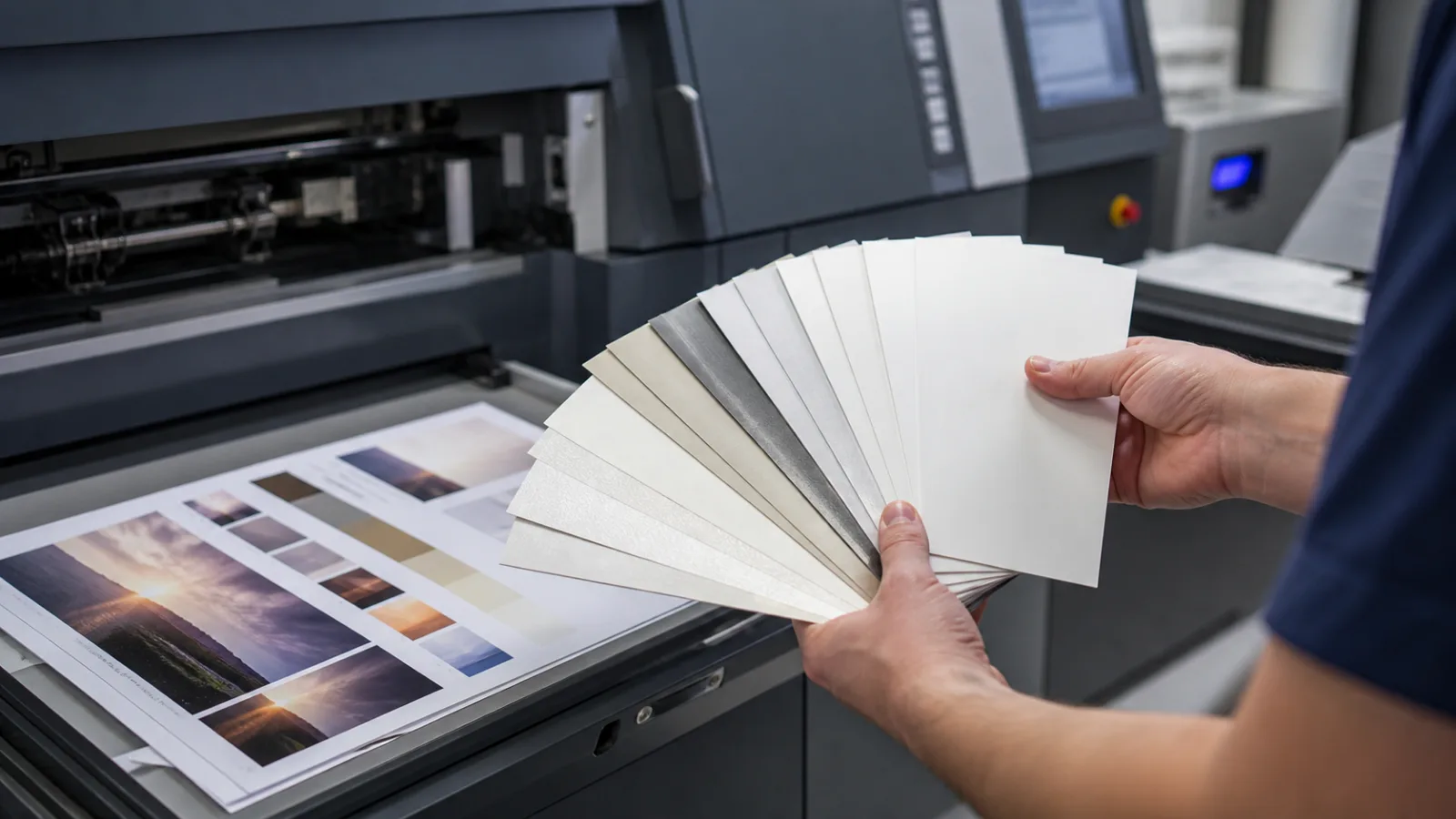
- Gloss level: Coated papers include gloss, silk, dull, and matte finishes. Terminology varies by supplier, as illustrated by Domtar’s discussion of coated finish categories.
- Texture: Uncoated grades range from very smooth to strongly felted, laid, or embossed surfaces.
- Brightness and shade: Either category may be offered in different whites, creams, or colours. Brightness is a measured optical property, not a synonym for coating.
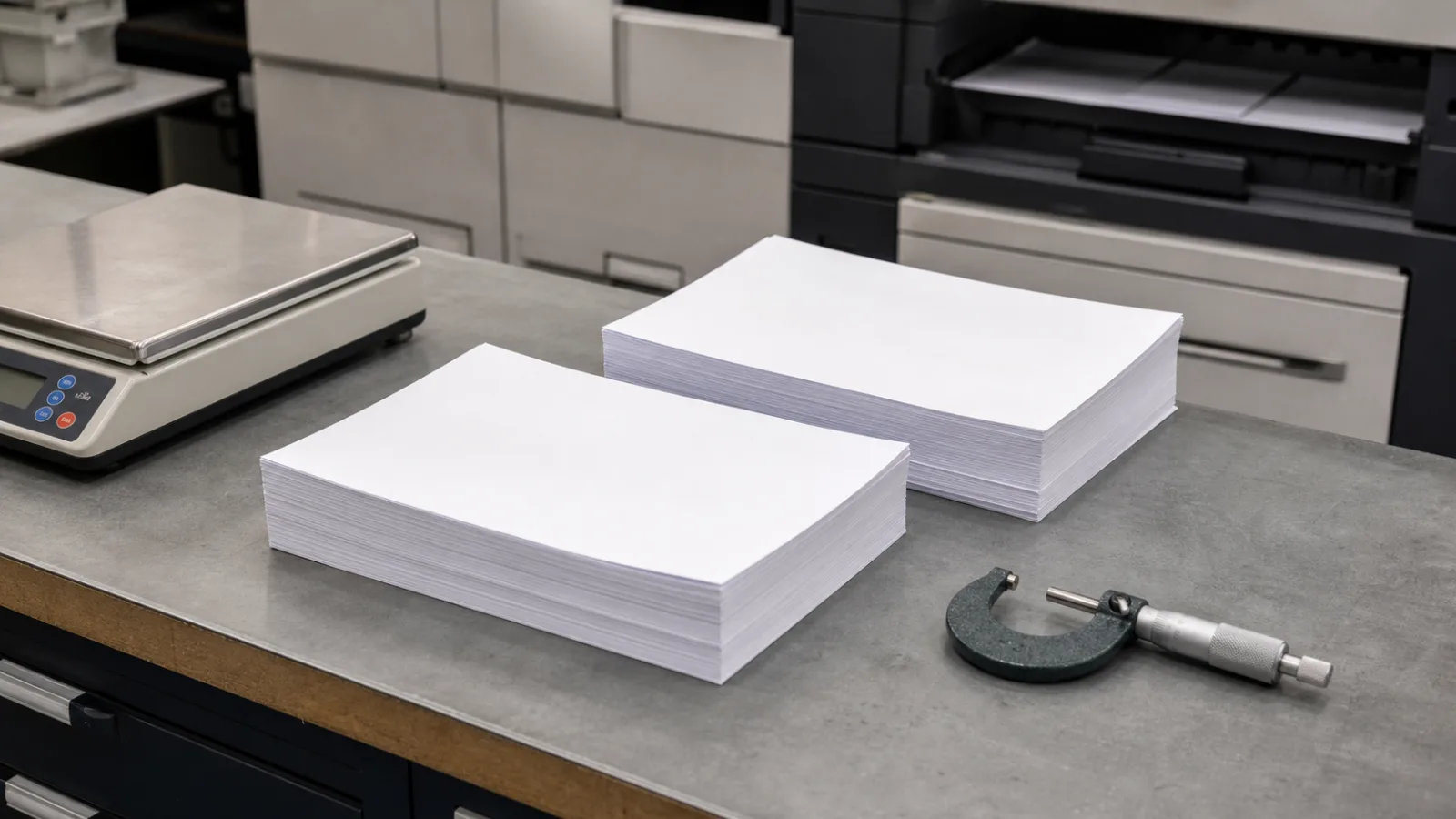
- Opacity: Coating can contribute to sheet construction, but opacity also depends on basis weight, fibre and filler composition, caliper, shade, and formation.
- Weight and stiffness: A paper’s grammage or basis weight does not by itself define its thickness, bulk, or bending behaviour.
- Coating configuration: Some sheets are coated on both sides, while others are coated on one side for labels, covers, packaging, or other applications.
Terms such as silk, satin, smooth, and premium are not reliably interchangeable between mills or merchants. Use the named grade and finish, then check its datasheet for measurable properties relevant to the job.
How the surface changes ink holdout, colour, and fine detail
Ink holdout describes the extent to which ink components remain near the paper surface rather than penetrating the pore structure. On a smooth coated sheet, the printed film usually remains more concentrated at the surface. This can produce cleaner edges, stronger apparent density, and better retention of small halftone dots and fine image detail.
On uncoated paper, ink interaction with the more open and irregular surface can change dot shape and edge definition. Light also scatters differently through the printed surface and exposed fibre structure. The result may appear softer or less saturated, even when the same nominal ink colour is specified. The Smartpress comparison of coated and uncoated stocks describes this qualitative difference in absorption and image sharpness.
This does not mean that uncoated paper cannot reproduce photography or fine design work. Its performance depends heavily on surface smoothness, sizing, press condition, screening, ink system, colour separation, and the printer’s process control. A deliberately softer result may also be part of the design rather than a defect.
Several production controls matter:
- Use a colour profile or press curve appropriate to the nominated paper and printing condition.
- Check small type, fine reverses, gradients, neutral greys, shadow detail, and large solids on the intended surface.
- Do not expect a colour approved on coated paper to look identical on uncoated paper.
- Treat coated and uncoated spot-colour references as surface-specific appearance guides, not guarantees of a press match.
- Approve colour under defined viewing light and against an agreed proof or printed reference.
Ink formulation and press adjustment can compensate for some surface differences, but they cannot make unlike papers interact with ink and light in exactly the same way.
Readability depends on more than coating status
High surface gloss can create specular reflections: concentrated highlights that obscure text or images at certain viewing angles. This may be distracting in books, catalogues, menus, or brochures read beneath strong directional lighting. Matte coated and uncoated papers usually produce more diffuse reflection, although their measured gloss and visual behaviour still vary by grade.
Lower glare does not automatically make every uncoated sheet more readable. A rough surface can soften the edges of small type, thin rules, fine serifs, and reversed text. Low-contrast typography or small white text reversed from a heavy colour may be particularly sensitive to surface and registration variation.
Opacity is another separate decision. Low opacity allows content on the reverse side to remain visible as show-through. Heavy ink coverage may also create visual interference even when ink does not physically penetrate the sheet.
Check opacity using the actual construction because it can be affected by:
- basis weight and caliper;
- fibre, filler, coating, and formation;
- paper shade and brightness;
- ink density and image coverage;
- whether one or both sides are printed;
- the contrast and alignment of content on opposing pages.
For text-heavy books or two-sided direct mail, inspect imposed pages rather than isolated swatches. A production dummy can also reveal whether page count, bulk, binding, and handling are acceptable. For a glossy brochure, view representative spreads under the lighting expected at the point of use.
Drying, setting, and press behaviour must be specified by process
Statements that one category always dries faster are unreliable because ink setting and final drying are not the same event.
In conventional offset lithography, penetration into the sheet can contribute to initial setting, while the remaining ink film may continue drying through oxidation and other mechanisms. Excessive penetration can weaken apparent colour, but limited penetration is not proof that the film has fully dried. Ink formulation, coverage, fountain solution, coatings, temperature, humidity, pile conditions, and the time before backing up or finishing all affect the outcome.
Other print processes behave differently:
- Dry toner depends on suitable toner transfer and fusing rather than conventional ink absorption.
- Production inkjet may depend on rapid liquid management, primer or treated surfaces, drying capacity, and grade approval for the specific press.
- UV-curable ink requires adequate exposure and compatible chemistry; curing at the surface does not establish suitability for every later adhesive or finish.
- Water-based systems depend on evaporation, absorption, film formation, and available drying energy.
Practical failures can include set-off, blocking, marking, picking, mottling, weak rub resistance, or damage during folding and trimming. Powder may help control set-off in some offset workflows, but its use and level are press-specific and can affect later coating or lamination.
Before fixing the schedule, ask the printer how the exact paper, ink or toner system, coverage, environmental conditions, and finishing sequence affect the required wait time. Do not base a delivery plan on the word coated or uncoated alone.
Writing and finishing consequences
Many uncoated papers accept graphite and common ballpoint, rollerball, or felt-tip pens more readily because their surfaces provide both tooth and liquid receptivity. Coated paper may feel slippery, cause slower pen drying, or reject some writing fluids. However, a matte coating can behave differently from a gloss coating, and pens also vary substantially. The general writing distinction is noted in the Smartpress stock guidance, but a job-specific test remains necessary.
Test writable areas when producing forms, appointment cards, reply devices, bookplates, packaging fields, or direct mail intended for handwritten responses. Include the writing instruments users are likely to choose and check for smearing after a realistic handling interval.
Surface choice also interacts with converting:
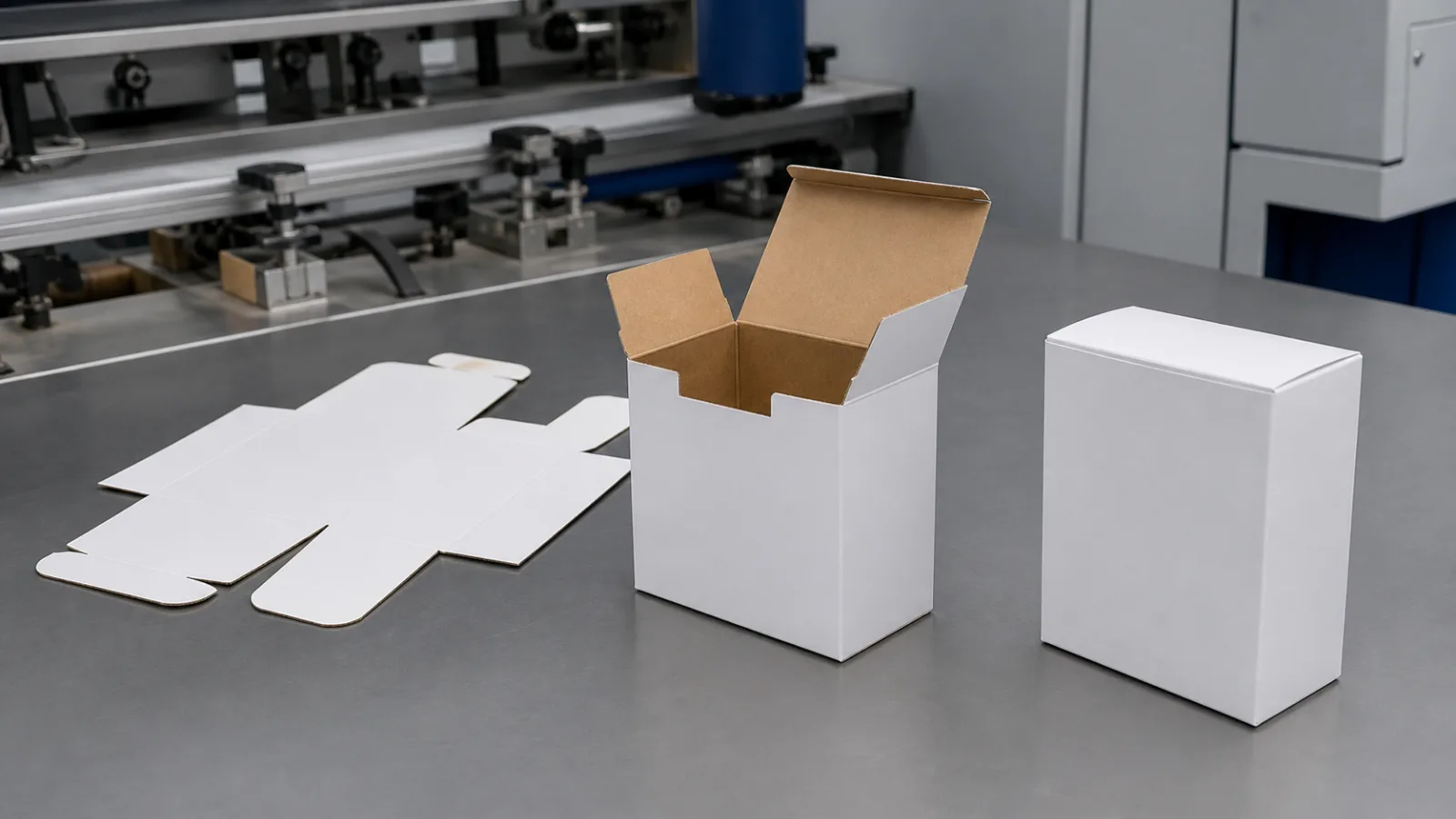
- Folding and scoring: Grain direction, caliper, basis weight, fibre structure, coating flexibility, and heavy ink coverage influence cracking risk. A score may be required, especially for heavier stocks or folds crossing the grain.
- Lamination and overprint coating: Adhesion depends on the printed ink film, paper surface, coating or film chemistry, contamination, cure state, and application conditions.
- Glue: Adhesives may bond to exposed paper, coating, ink, varnish, or laminate. Each interface needs compatible materials and sufficient bond area.
- Foil and embellishment: Surface smoothness can affect foil definition, but temperature, pressure, dwell time, foil type, printed layers, and die condition are also consequential.
- Embossing and debossing: Paper construction, moisture, fibre direction, depth, die geometry, and register affect definition and the risk of cracking.
- Rub and scuff resistance: Neither category is automatically durable. Dense dark solids, metallic inks, coatings, laminates, and handling conditions require separate evaluation.
Finishing should be treated as a sequence. A sheet that prints successfully may still fail when coated, laminated, folded, glued, or packed. Where failure would be costly, run a converter trial using the intended paper, print coverage, consumables, and equipment.
Choosing by application rather than a quality ranking
| Application need | Common starting point | Conditions to verify |
|---|---|---|
| Image-led brochure or catalogue | Smooth coated paper | Gloss under intended light, colour proof, fold cracking, rub resistance |
| Long-form book or report | Uncoated or low-gloss coated paper | Type definition, opacity, bulk, binding, two-sided show-through |
| Writable stationery or response piece | Uncoated paper | Pen and pencil tests, drying, feed performance, suitable surface sizing |
| Dense colour and fine photographic detail | Coated paper | Press profile, screening, solid ink behaviour, finishing compatibility |
| Tactile premium piece | Grade chosen for intended texture | Detail loss, foil or embossing trial, folding, glue, mailing durability |
| Direct mail with images and writable fields | Mixed design or carefully selected surface | Variable-print compatibility, writing test, folding, postal format, scuffing |
These are starting points, not fixed prescriptions. Matte coated paper can combine controlled image reproduction with relatively restrained glare. A smooth uncoated paper can reproduce considerable detail while retaining a more apparent fibre character. Premium appearance can be created with either category; it depends on the relationship between design, material, print, and finishing.
Job-brief checklist for approval
Record the following before requesting a quotation or approving production:
- Exact paper: Name the mill or supplier grade, finish, colour, grammage or basis weight, sheet size, and coating configuration.
- Construction: Confirm caliper, grain direction, opacity, and any roughness, gloss, brightness, or shade values that affect acceptance.
- Print process: Identify offset, digital toner, inkjet, UV, flexographic, screen, or another process, including the specific press where consequential.
- Image demands: Mark colour-critical images, fine screens, gradients, small type, reverses, large solids, and metallic or special inks.
- Colour reference: Define the proof, spot-colour reference, profile, viewing condition, and acceptable tolerances. Do not rely only on an on-screen simulation.
- Writing requirement: Identify writable areas and test representative pens, pencils, markers, stamps, or overprinting devices.
- Two-sided performance: Review opacity, show-through, backing-up schedule, ink coverage, and content alignment across both sides.
- Finishing sequence: List varnish or coating, lamination, foil, embossing, scoring, folding, die-cutting, gluing, binding, trimming, and packing in production order.
- Handling constraints: Check bulk, stiffness, page turn, binding, insertion, mailing format, transport, and expected abrasion.
- Approval sample: Request the appropriate combination of contract proof, printed stock sample, ink drawdown, imposed dummy, press sheet, or production trial.
Frequently asked questions
Is matte paper coated or uncoated?
Matte commonly describes a low-gloss coated finish, but suppliers do not use surface terminology uniformly. Some uncoated papers are also informally described as matte because they are not glossy. Confirm whether the named grade has a pigment coating and check its exact finish description.
Why does the same colour look different on coated and uncoated paper?
The surfaces differ in ink holdout, roughness, absorption, and light scattering. These factors change apparent density, saturation, edge definition, and sometimes hue. Use surface-appropriate colour management and approve a representative printed sample.
Can you write on coated paper?
Often yes, but performance depends on coating gloss and chemistry as well as the pen or marker. Ink may smear, bead, or dry slowly on some coated surfaces. Test the actual combination rather than specifying a generic writable coating.
Does uncoated paper always take longer to dry?
No. Initial setting, evaporation, oxidation, curing, and toner fusing are different mechanisms. Drying behaviour depends on the print process, paper grade, ink or toner, coverage, press conditions, and finishing schedule.
Choose coated or uncoated paper only after defining the required colour, detail, reading conditions, writing areas, opacity, and finishing route. Final approval should rest on a representative printed and converted sample—not a generic swatch or coating label.
Sources
- Coated Paper Stocks vs. Uncoated Paper Stocks | Support
- Printing on Coated vs. Uncoated Paper - Disc Pro Graphics Commercial Printing Houston
- Coated vs Uncoated Paper – When To Use Which - Domtar
- Paper Types Explained - A Guide to Print Finishes
- Paper Primer: A practical Guide to Understanding Fine Printing Paper | UVU
- Choosing the right paper stock can make a big difference in how …