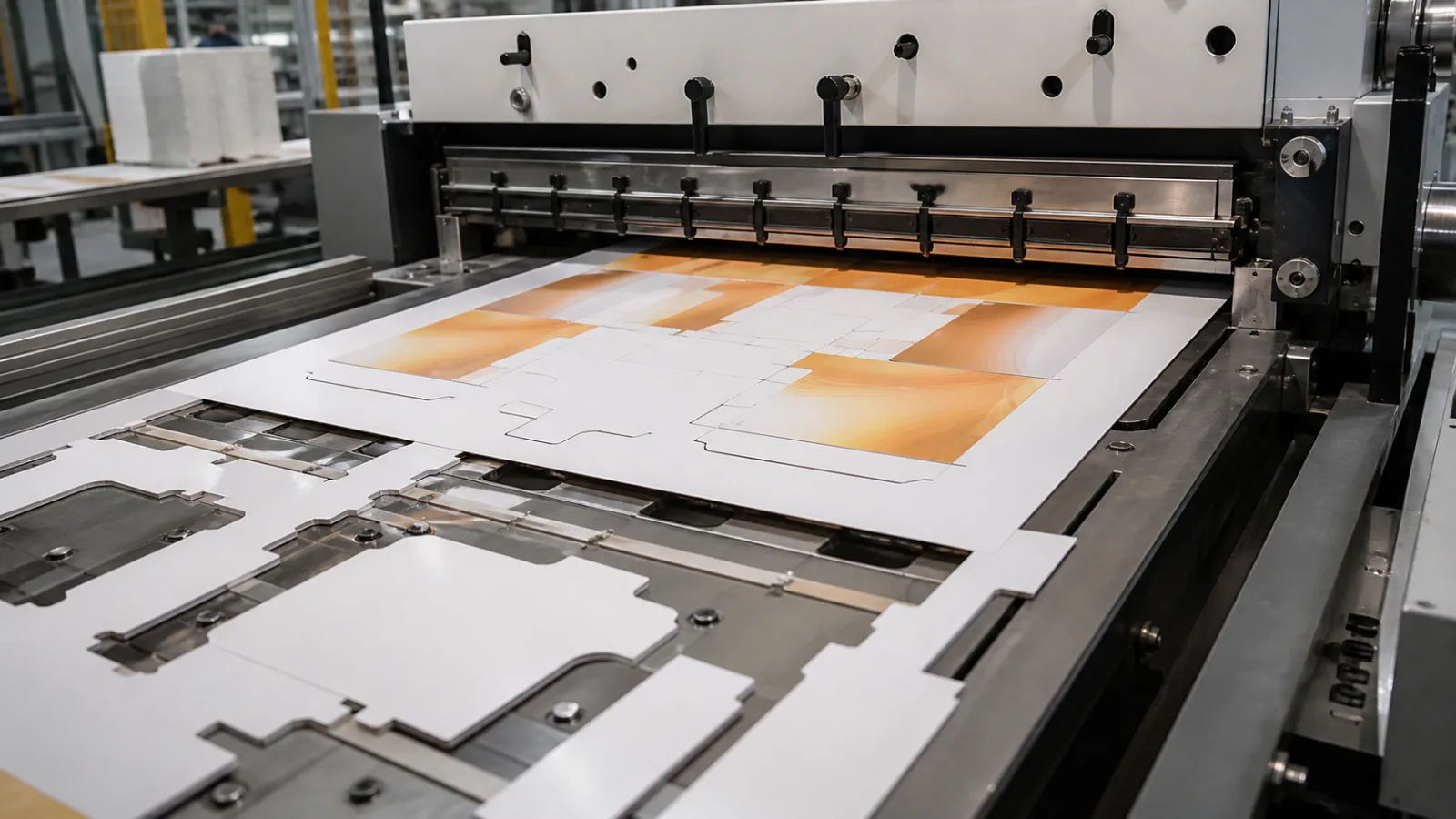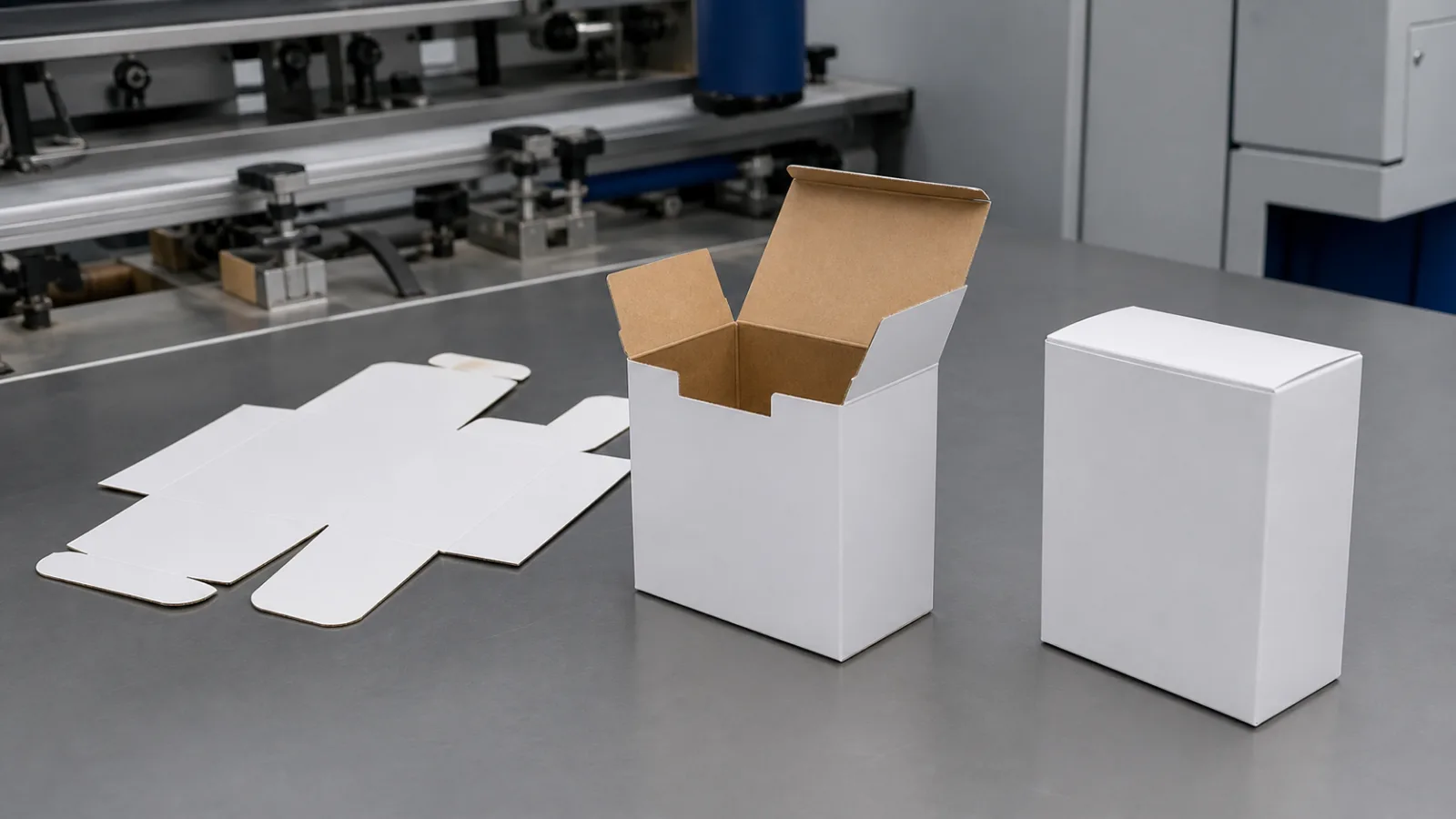


A folding carton line trial is a controlled production check of whether a specified carton, product and packing-line setup work together under representative conditions. It is not simply an artwork approval, a converter’s dimensional inspection, machinery commissioning exercise or distribution test.
The trial should answer a bounded question: can this carton revision run through this identified line, with this product and packing configuration, at agreed operating conditions and against agreed acceptance criteria? That boundary matters. A carton that feeds reliably on one cartoner with one set of change parts may not behave the same way on another line, after a board or glue change, or at a different production site.
A useful trial record gives the buyer, converter and line operator a common reference before production approval. It should also make clear what the trial did not establish, particularly transit, warehouse and climatic performance.
Define what the trial is approving
Start with the approval decision, not with a vague request to “run some cartons.” Identify the carton SKU, drawing revision, artwork revision, intended product, line and production location. State whether the result is expected to support a first production order, a carton revision, a new line recipe, a site transfer or a format change.
The carton should be production-intent material where possible. That means the same specified board grade, construction, print process, finish, adhesive application, score pattern and blank dimensions proposed for production. If a pre-production substitute is necessary, record exactly how it differs. A trial using hand-glued samples, a different coating, or a short-run digital print may still be useful for early machine learning, but it should not automatically approve the production construction.
The trial should include the pack components that influence handling. Depending on the format, this may include the product, leaflet, insert, label, coding, tamper-evident feature, shrink bundle and outer case. Guidance on folding-carton sampling and production trials usefully treats the packing sequence as a system rather than judging the carton in isolation.
Before the run, document the intended operating conditions covered by the decision. These might include the normal speed range, product orientation, carton magazine loading method, operator work instructions, inspection system and case-packing arrangement. Do not imply that a trial at a single speed proves operation at the machine’s maximum rated speed.
Agree acceptance criteria before cartons reach the line
The most important preparation step is agreeing what pass, fail and conditional approval mean. Without this, a team can observe the same run and reach different conclusions: the operator may see a manageable adjustment, while the buyer may regard that adjustment as unacceptable for a routine production shift.
Set criteria jointly with the responsible brand or buyer representative, converter and line operation. Site quality procedures and equipment instructions should take precedence where they apply.
A practical trial plan should define:
- the trial output basis or run duration;
- the operating speed or stated speed range to be assessed;
- setup allowance, planned stops and conditions that count as evidence-producing running;
- definitions for rejects, interruptions, jams, rework and operator intervention;
- carton appearance limits, including scuffing, cracking, window damage or visible glue issues where relevant;
- requirements for erection, bottom closure, top closure and product retention;
- product orientation, leaflet placement and insert presence where applicable;
- code, label or inspection requirements, including what counts as readable and correctly positioned;
- case-packing, discharge and pallet-handling requirements within the trial scope; and
- decision owners and the process for recording open items.
Acceptance criteria should be measurable enough to apply consistently. For example, instead of requiring “good feeding,” define the observed defect, how it will be detected, the response expected and how it will be recorded. The same approach applies to finished-pack integrity, repeatable positioning and inspection behaviour. The guidance on folding carton inspection and verification makes this distinction clearly: a defect, a test method and a response need to be specified together.
Do not prescribe a universal carton quantity, jam rate or acceptable reject rate. A suitable basis depends on line speed, carton format, product value, process risk, shift pattern and the consequence of failure. A short trial may establish basic mechanical compatibility; it may not provide enough evidence for a high-volume release decision.
Prepare representative cartons, products and machine information
A trial is only reproducible if the materials and machine setup can be identified later. Create a trial sheet before loading the carton magazine, and retain it with the approval record.
Carton and pack identification
Record the following as applicable:
- carton SKU, drawing number and revision;
- artwork revision and approved colour or finish reference;
- board grade, specified basis weight or caliper where these are part of the specification;
- coating, varnish, laminate, window film or other finish;
- glue system and pattern, if identified by the converter;
- blank dimensions, erected dimensions, score and crease details;
- carton lot, converter production date or inspection reference where available;
- product SKU, batch, dimensions, fill condition and orientation;
- leaflet, insert, label, code and tamper-evident components; and
- outer case, divider or bundling configuration.
Board caliper, stiffness, coating friction, score quality and adhesive placement can all affect machine handling. However, none should be assigned as the sole cause of a fault without controlled evidence. A double feed, for example, may involve carton separation, magazine pressure, vacuum settings, static, blank curl, operator loading practice or a combination of factors.
Machine and operating setup
The record should also identify the machine model, line number, change parts, recipe, guide settings and inspection configuration. Note the relevant machine condition and product condition if they influence the trial, such as product temperature, variation in product dimensions, or carton storage conditions.
A packaging machinery sample and product trial guide recommends separating setup cycles from evidence cycles and recording the machine configuration and recipe. This is good practice because a carton that becomes acceptable after adjustment has not demonstrated that the original settings passed.
Where practical, retain approved reference samples: flat blanks, erected empty cartons and completed packs from the accepted condition. Label them with the carton revision, product setup and date. Photographs or video can help explain events, but they should be linked to the correct sample and machine recipe rather than stored as unlabelled evidence.
Run the full packing sequence
A carton should be assessed across the actual stages it is expected to encounter. A successful hand erection or one manually packed sample is not evidence that the carton will run reliably in an automated sequence.
Use site-approved operating and safety procedures. Do not bypass guards, disable safety systems or make adjustments outside the equipment manufacturer’s instructions simply to force a trial through.
A typical workflow is:
- Receive and stage materials. Confirm carton identification, condition, quantity and storage state. Check that the correct product and associated components are present.
- Load the magazine and feed blanks. Observe blank separation, pick-up, transfer and alignment. Watch for double feeds, incomplete pick-up, skewing or reluctance to release from the stack.
- Open or erect the carton. Check that the carton forms correctly and remains stable through transfer. Incomplete opening can create later faults at filling or closure.
- Form and secure the bottom closure. Confirm that lock tabs, crash-lock features or glued closures engage as intended and do not create unacceptable resistance or distortion.
- Load the product and inserts. Check product entry, orientation, leaflet placement and clearance. Note any catching, carton deformation or damage to the product.
- Complete top closure. Assess tuck engagement, glue application where used, flap alignment and closure resistance. A closure that works only after repeated operator intervention may not meet the agreed process requirement.
- Apply codes, labels and inspection checks. Confirm placement, legibility and inspection response according to the approved coding and quality requirements.
- Discharge, case pack and inspect finished packs. Observe transfer stability, case-packing orientation, pack appearance and any damage generated after cartoning.
Allow the line to stabilize before judging normal running performance. Keep setup activity distinct from the evidence-producing part of the trial. If credible starts, stops, replenishment or product interruptions are within scope, run and document them deliberately. They should not be treated as random noise if they occur routinely in production.
Record failures without hiding the cause
The trial record should capture both output and events. Count good packs, rejects and interruptions against the agreed trial basis. A single successful cycle may demonstrate feasibility, but it does not demonstrate repeatability.
For each material or process issue, record:
- time, output count or batch position;
- fault description and affected station;
- carton and product sample identification;
- machine speed and relevant recipe or setting;
- the suspected mechanism, clearly marked as an observation or hypothesis rather than a proven cause;
- corrective action taken;
- result after the adjustment; and
- whether samples, photographs or measurements were retained.
Common observations include incomplete opening, double feeds, jams, skewed cartons, product catching, wrong orientation, closure resistance, scuffing, window damage, unreadable codes, false inspection rejects and unstable case packing. These observations should be described precisely. “Carton jammed” is less useful than “blank entered the erection station skewed after a double pick from the magazine at the recorded guide setting.”
Where safe and permitted, change one controllable variable at a time. Multiple simultaneous adjustments can conceal the original cause and make the accepted setup difficult to reproduce. The same principle is emphasised in the carton inspection guidance: controlled changes make troubleshooting more credible than a sequence of undocumented interventions.
A successful adjusted run should be reported honestly. It may support approval of the revised recipe, guide position or carton adjustment, but it does not prove that the initial condition was acceptable. If the carton construction changes during troubleshooting, identify the revised carton as a new condition requiring its own review.
Make a bounded approval decision
At the end of the trial, compare the recorded results with the pre-agreed criteria. Classify each condition as approved and unchanged, open, or changed before scale-up. This type of status separation is also useful in folding-carton scale-up approval guidance, because it prevents an earlier result from being carried forward after unrecorded changes.
The release record should state:
- the carton, artwork and product revisions approved;
- the line, site, machine configuration and recipe covered;
- the speed range and operating conditions observed;
- accepted deviations or required controls;
- open actions, owners and completion requirements;
- retained reference samples and associated records; and
- the limits of the approval.
Approval should be conditional when significant variables remain unresolved: for example, a new board source, revised coating, alternative glue pattern, different product batch condition, another line or a planned speed increase. These may justify a targeted confirmation trial rather than assuming equivalence.
Keep line compatibility separate from distribution performance
A successful folding carton line trial can show that a documented pack configuration handled acceptably through a specified packing process. It does not, by itself, establish that the packed product will tolerate warehouse stacking, vibration, drops, temperature and humidity exposure, parcel handling or a particular transport route.
Distribution testing needs its own objective, route assumptions, palletization or case configuration, conditioning requirements, sampling plan and acceptance criteria. If a customer requires a named protocol, verify the exact standard, edition and scope from the original requirement before relying on it. References to ISTA or ASTM in general guidance are not substitutes for the applicable test plan.
Approve the carton only for the configuration actually demonstrated, retain the recipe and reference samples, and reopen the decision when a material, machine, product or operating condition changes materially.