
A useful corrugated board specification connects the board to a defined product, box design, printing process, packing operation, pallet pattern, and distribution route. A flute letter, paper weight, burst value, or edge crush result alone does not establish whether a finished box will protect its contents or retain sufficient stacking strength.
Begin with the loads and conditions the pack will encounter. Then specify the construction, converting details, relevant test methods, conditioning, tolerances, and acceptance criteria. Calculations and material-level tests can support development, but representative finished boxes and packed-load trials remain necessary where failure would be consequential.
Define the product and distribution route first
A request for a strong board is not measurable. Before asking a converter to recommend a construction, record the conditions that create the strength, protection, and print requirements.
At minimum, document:
- maximum packed mass and permitted variation;
- internal and external box dimensions;
- product orientation, fragility, rigidity, and load-bearing ability;
- void space, headspace, dividers, fitments, and cushioning;
- box style, erection method, closure, and opening requirements;
- cases per pallet layer, number of layers, and maximum stack height;
- column-aligned or interlocked pallet pattern;
- stacking duration, including warehouse dwell and transport delays;
- parcel, pallet, rack, container, or mixed distribution route;
- manual and mechanical handling events;
- expected temperature, relative humidity, condensation, and direct-wetting exposure;
- retail display, barcode, graphics, and unpacking requirements.
Product support matters because a rigid, close-fitting product may carry part of the vertical load, while a flexible bag or partly filled container may leave the corrugated box to carry substantially more of it. That support can also change during storage if the product settles, softens, loses pressure, or changes shape.
The distribution route determines which hazards deserve specification. The scope of ASTM D5639/D5639M-25 describes selecting corrugated fiberboard and box attributes in relation to packing and distribution needs. Its stated principle is important: specify the attributes and tests required by the intended operations and distribution cycle, rather than accumulating unrelated requirements.
Translate the route into a complete board construction
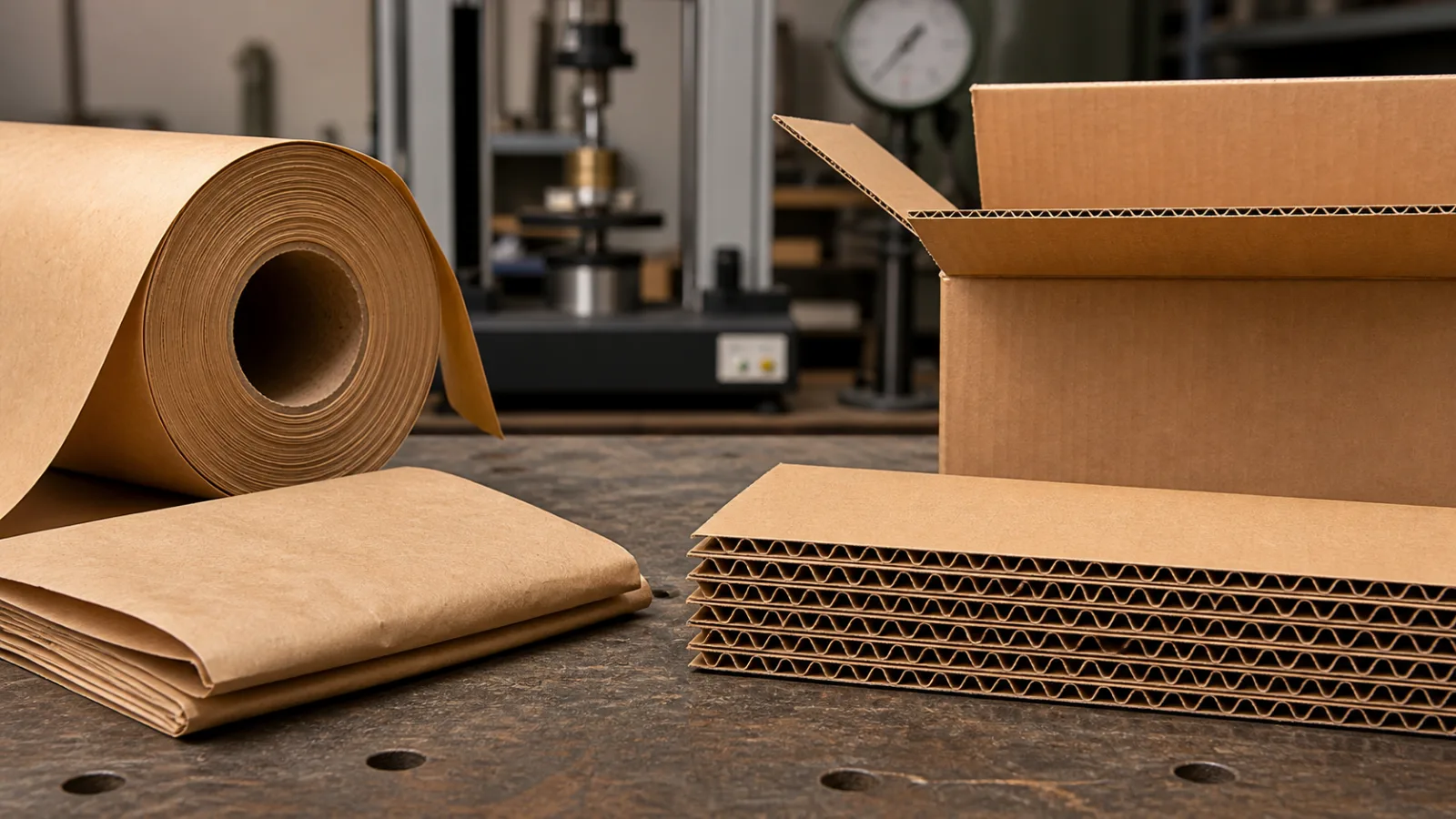
Corrugated board combines flat liners with corrugating medium formed into flutes. The liners provide the inner and outer surfaces, while the fluted medium separates them and contributes to panel stiffness, cushioning, and edgewise load resistance. Adhesive bonds transfer forces between these components; poor bonding or local crushing can prevent the structure from working as intended.
A complete construction description should identify:
- single-face, single-wall, double-wall, or another agreed construction;
- flute profile or flute combination;
- outer liner, each medium, intermediate liner, and inner liner in order;
- paper grade and basis weight, or the applicable market-specific designation, for every component;
- nominal caliper and its stated tolerance, where relevant;
- outside face and flute direction;
- white, coated, recycled-fibre, or other specified surfaces;
- adhesive system and any moisture-resistant formulation required;
- coatings, barriers, treatments, or laminated layers;
- converter grade code and the legend needed to interpret it.
Flute profile affects more than nominal thickness. Its geometry can influence bending stiffness, surface smoothness, cushioning, scoring behaviour, fold quality, space consumption, and sensitivity to crushing during printing and die-cutting. Flute letters are therefore construction identifiers, not a universal strength ranking. Profiles and tolerances can vary among producers, machinery, and markets.
Similarly, moving from single-wall to double-wall board changes the structural options but does not by itself guarantee better finished-box performance. Paper selection, flute combination, bonding, box geometry, converting damage, environment, and load alignment remain relevant.
Supplier notation is not necessarily transferable between converters. The DS Smith technical guide hosted by Antalis, for example, illustrates an ordering sequence that identifies material type, flute profile, liner order, and liner designation. It is a useful example of the information a code can contain, but buyers should obtain the proposed converter’s own code legend and confirm which liner faces outward.
Connect box design to stacking and compression
Material tests describe selected properties of paper or board under stated methods and conditions. Finished-box performance also depends on the geometry and condition of the converted container.
Variables that can alter compression performance include:
- box length, width, and depth;
- regular slotted, die-cut, wraparound, or other box style;
- flute direction and panel proportions;
- score placement and score quality;
- slot depth and slot alignment;
- manufacturer’s joint design and bonding or stitching;
- hand holes, ventilation openings, tear strips, and access cut-outs;
- printing or die-cutting pressure that crushes the flute;
- top and bottom closure method;
- product support and internal fitments;
- pallet gaps, overhang, and deck-board spacing;
- column alignment, interlocking, and mixed case sizes;
- top loads, strapping pressure, stretch wrap, and pallet instability;
- humidity, stack duration, repeated handling, and prior damage.
Edge crush, burst, flat crush, bending, and component-paper results answer different questions. None should be treated as interchangeable with finished-box compression. If one of these properties is required, name the exact method, edition, units, specimen orientation, conditioning procedure, sampling plan, and acceptance rule. Avoid accepting a value copied from a quotation when its method and conditions are unknown.
The required finished-box compression level should start with the actual load imposed on the lowest cases in the intended stack. Any design calculation must disclose its assumptions about geometry, load sharing, duration, humidity, handling damage, pallet pattern, and product support. Such a calculation is a development estimate, not proof that production boxes will perform throughout distribution.
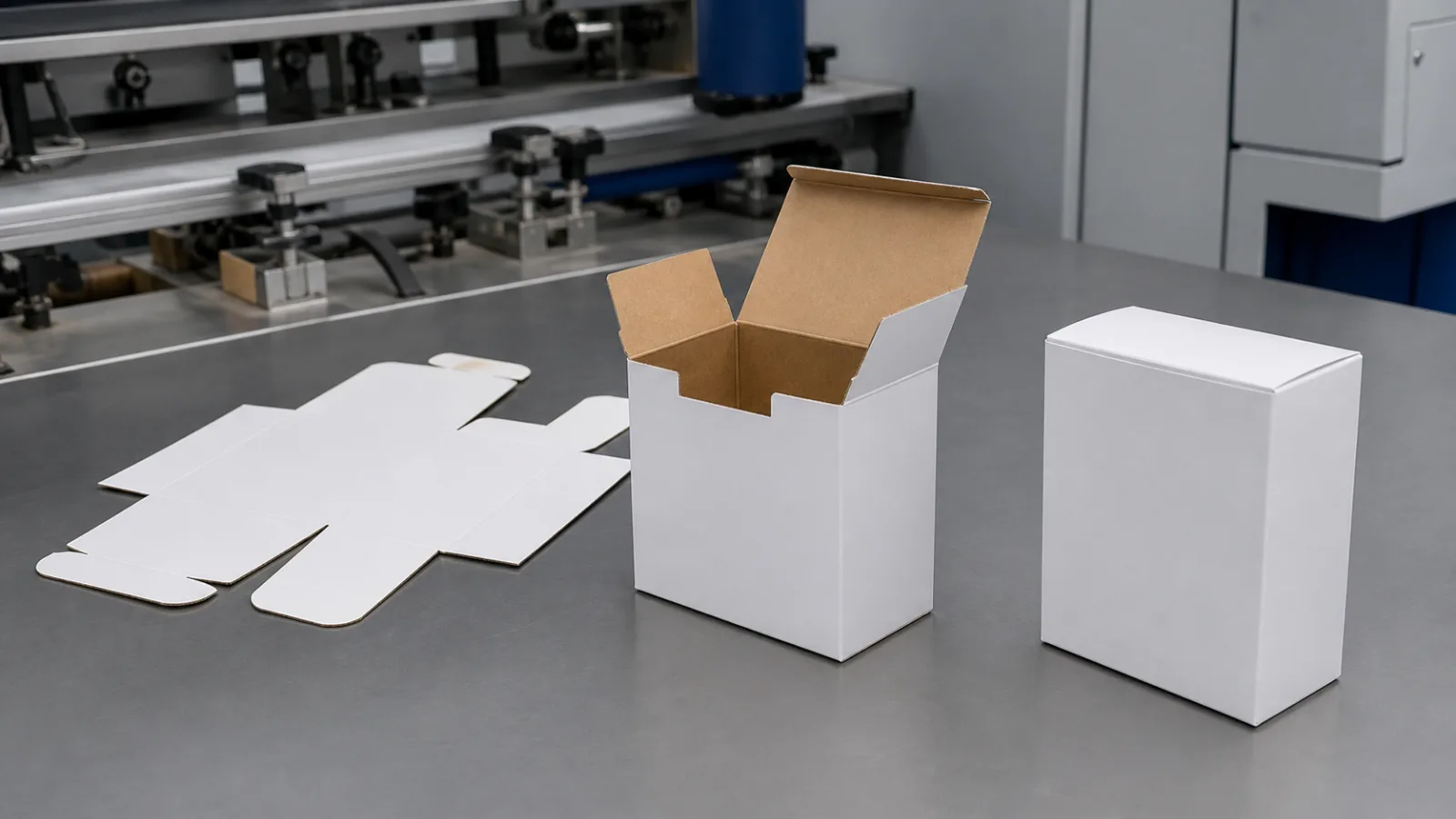
Use the approved dieline and pallet drawing as controlled specification documents. They should show dimensions, flute direction, scores, slots, joint, openings, closures, cases per layer, layer count, orientation, and allowed overhang. A seemingly minor revision to a handle, vent, panel dimension, or stacking pattern can change the load path and should trigger review.
Specify print and converting with the structure
Print requirements can change the appropriate outer liner, flute profile, caliper, press route, and finishing sequence. They should be agreed before the board construction is frozen.
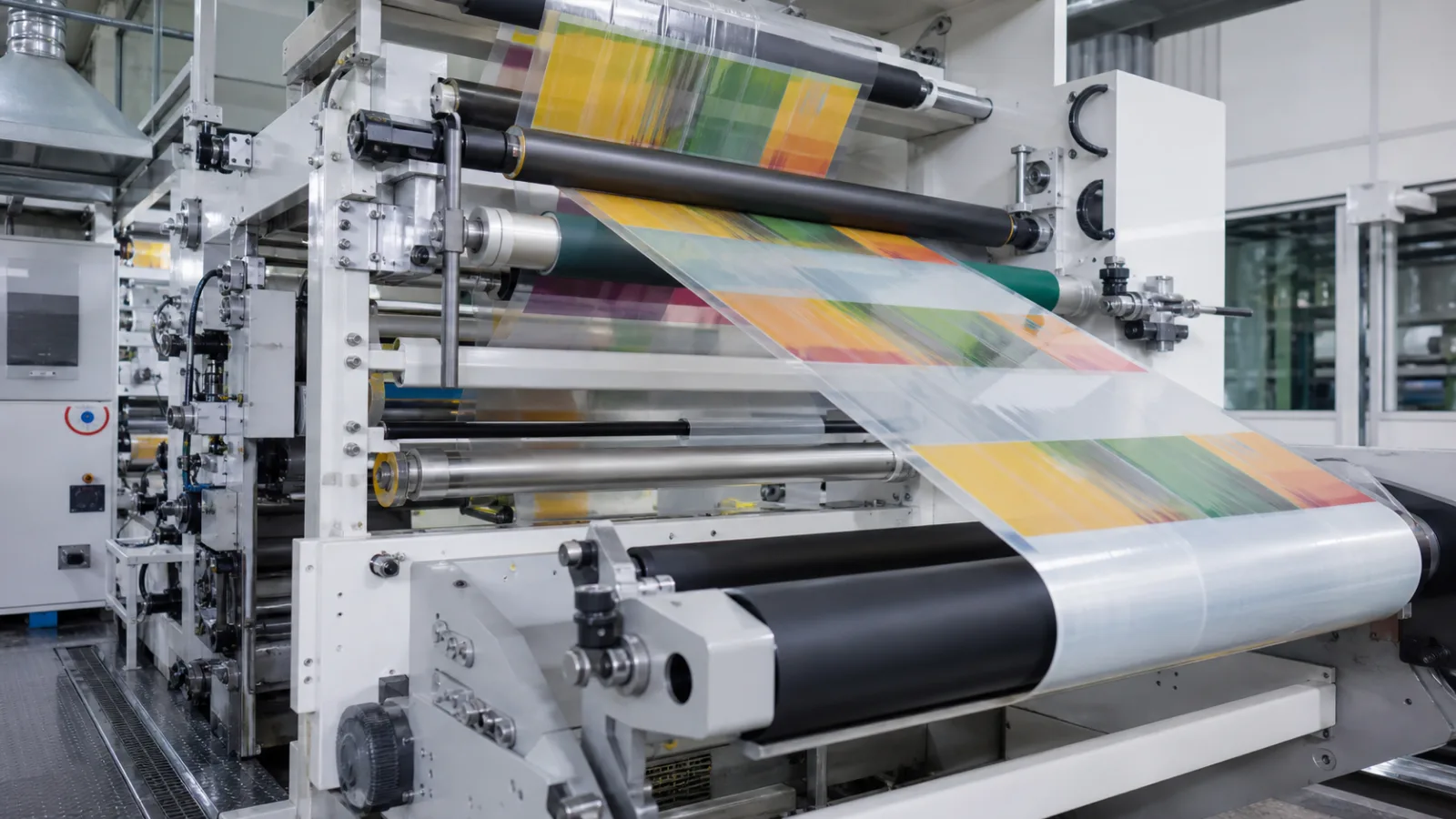
Direct printing applies ink to the assembled corrugated board. The result depends on liner surface, absorbency, board flatness, flute profile, press configuration, ink system, plate and impression settings, and artwork. Excessive pressure may improve apparent ink transfer while crushing the flute or producing visible washboarding, where the fluted structure influences the printed surface.
An alternative route prints a separate sheet or web before it is laminated to the corrugated structure. This may support different levels of detail or surface control, but it adds its own materials, bonding, registration, moisture, dimensional, and converting considerations. Neither route is universally superior.
The print specification should state:
- intended print and lamination process;
- controlled colour references and permitted tolerances;
- process colours, spot colours, coverage, and overprints;
- minimum line, text, and reversed-feature requirements;
- barcode type, size, quiet zones, location, and verification criteria;
- varnish, coating, glue, tape, and non-print areas;
- registration requirements relative to cuts, scores, and panels;
- viewing and measurement conditions for approval;
- rub, handling, or other resistance requirements relevant to the route.
Approve graphics on the proposed liner and complete board construction using the intended press and finishing route. An unprinted board sample cannot demonstrate colour, fine-detail reproduction, barcode performance, fold appearance, or the structural effect of production impression and die-cutting pressure.
Converting trials should also examine score cracking, liner fracture, spring-back, dimensional accuracy, slot alignment, joint formation, folding, glue adhesion, and flute crushing. Board caliper and stiffness affect machine settings and packing-line behaviour, so substitutions can create problems even when a replacement carries a similar commercial grade name.
Account for moisture, storage, and the unit load
Corrugated board is sensitive to its moisture history. Elevated humidity, condensation, or direct wetting may reduce stiffness and compression performance, affect dimensions, weaken bonds, and change print appearance. The magnitude depends on the exact papers, adhesive, treatment, exposure, duration, and construction.
Map conditions across the entire route rather than assigning one general label such as humid distribution. Consider:
- board storage before conversion;
- printing and converting conditions;
- empty-box transport and storage;
- packing-room temperature and humidity;
- product temperature or moisture release;
- cold-room and freezer transitions;
- condensation during loading or unloading;
- outdoor staging and weather exposure;
- vehicle, container, warehouse, and destination storage;
- time spent under pallet load at each stage.
If a moisture-resistant adhesive, treated liner, coating, film, or other barrier is proposed, obtain documentation for the exact construction and intended exposure. Moisture resistance, wet strength, and waterproof performance are not equivalent claims.
Keep functional performance separate from compliance and recovery. A generic board description does not establish suitability for food contact, migration control, dangerous goods, or another regulated application. Likewise, recyclability or repulpability cannot be inferred from the word corrugated. Coatings, laminates, inks, adhesives, labels, tapes, product contamination, collection practices, and the destination market can all affect acceptance. Confirm the complete pack with the responsible local scheme, collector, recycler, or mill where that claim matters.
Unit-load materials are part of the system. Pallet design, stretch-wrap force, strapping, corner protection, slip sheets, and top caps can redistribute case loads, restrict ventilation, or deform panels. Test conditions should therefore state whether boxes were empty or filled, closed or open, individual or palletised, and conditioned before testing.
Issue a measurable specification and validate production packs
A procurement specification should allow the converter, printer, testing party, and receiving inspector to identify the same construction and determine whether it is acceptable.
Use this workflow:
- Freeze the design inputs. Record the product, maximum packed mass, dimensions, support characteristics, distribution route, environmental limits, handling cycle, stacking duration, and pallet pattern.
- Approve the box design. Control the box style, dieline, internal and external dimensions, flute direction, joint, openings, closures, and dimensional tolerances.
- Describe the board fully. List every liner and medium in sequence, flute profile, wall construction, paper designations, nominal caliper where needed, adhesive, treatments, and outside face.
- Define production processes. State the print method, ink and coating system, converting route, closure materials, packing-line method, and pallet containment system.
- Select relevant tests. Identify exact methods and editions, conditioning, specimen preparation, sample size, units, tolerances, variability rules, and acceptance criteria. Do not add tests that have no defined relationship to the distribution need.
- Review calculations. Require the converter to disclose model inputs, environmental allowances, pallet assumptions, product support, and other loss factors rather than supplying only a predicted result.
- Trial representative packs. Use production-intent board, tooling, printing, closures, product or a justified equivalent load, and the intended pallet pattern.
- Approve against recorded criteria. Check packing-line fit, erection, filling, closure, graphics, barcode verification where applicable, handling, stacking, pallet stability, opening, and product condition.
- Control changes. Require review before changing a liner or medium, basis weight, flute, adhesive, coating, manufacturing plant, press, tooling, dimensions, closure, or pallet pattern.
Test reports should name the responsible party, date, material and box identity, sample size, method and edition, conditioning, equipment, units, individual or summary results, variability, and deviations. A report for a nominally similar grade from another plant or construction is not automatically evidence for the proposed pack.
Supplier-document and approval checklist
Before placing a production order, confirm that the file contains:
- product and distribution assumptions;
- converter quotation tied to a controlled revision;
- full board-combination declaration and code legend;
- datasheets for the exact papers, board, treatments, and coatings where applicable;
- approved dieline and box-style drawing;
- print specification and approved production-representative proof or trial;
- closure and packing-line requirements;
- pallet pattern and load-containment drawing;
- calculation output with assumptions disclosed, if calculations were used;
- relevant material and finished-box test reports;
- documented trial observations and acceptance decision;
- substitution and change-control requirements.
Frequently asked questions
Is an edge crush value enough to specify a corrugated shipping box?
No. Edge crush testing describes an edgewise compression property under a defined method and condition. Finished-box performance also depends on dimensions, style, flute direction, scores, openings, converting damage, closure, product support, humidity, pallet alignment, and handling. Use the result only as one controlled input where it is relevant.
Does a larger flute always provide greater stacking strength?
No. Flute profile affects caliper, stiffness, cushioning, print surface, scoring, and space use, but the finished result also depends on paper properties, bonding, wall construction, box geometry, conversion, and environment. Compare complete constructions under the intended conditions rather than ranking flute letters in isolation.
When should finished-box compression testing be specified?
It is particularly useful when stacking failure is a material risk, when design calculations rely on uncertain assumptions, or when openings, humidity, long dwell times, unusual pallet patterns, or limited product support complicate the load path. Specify the finished condition, conditioning, closure, contents or simulated load, and acceptance criterion rather than requesting an undefined compression test.
How should corrugated board be approved for humid or cold-chain distribution?
Document the actual temperature and humidity sequence, exposure duration, condensation risk, direct-wetting risk, and pallet dwell. Condition and test representative finished packs accordingly, including proposed adhesives or barriers. Confirm regulatory and recovery claims separately for the complete construction and destination market.
The final selection rule is straightforward: approve the least complex construction that meets documented product, production, print, handling, environmental, and stacking requirements under representative conditions. Control the complete specification and its assumptions, not just the grade name printed on the purchase order.