
Paper grain direction is the dominant orientation of fibers formed as the paper web travels through the paper machine. It can affect how a sheet folds, creases, curls, binds, die-cuts, and responds to finishing. For that reason, grain should be specified from the finished format outward—not inferred from the sheet dimensions or left for the printer to resolve after the paper has been ordered.
The practical rule is narrower than “always fold with the grain.” Grain is an important variable, but it does not independently predict every production result. Caliper, coating, moisture condition, ink coverage, scoring or creasing, construction, adhesive, and machine setup can materially change the outcome. The safest specification identifies the finished fold, spine, die-cut, and finishing requirements, then confirms the actual production sheet and approves a representative trial.
What paper grain direction means in a production specification
During papermaking, fibers tend to develop a directional orientation associated with the travel of the paper web. The direction of web travel is commonly called machine direction (MD); the direction across the web is cross direction (CD). The resulting sheet is therefore not necessarily mechanically identical in both directions. Paper Dimensions explains the relationship between machine direction, cross direction, and grain.
For cut sheets, suppliers and printers often use two plain-language descriptions:
- Long grain: the grain runs parallel to the longer dimension of the sheet.
- Short grain: the grain runs parallel to the shorter dimension of the sheet.
These descriptions are useful, but they are not a complete production specification. A sheet’s proportions do not always reveal its actual grain, and a generic grade name does not guarantee the same orientation across every sheet size, mill, or supply format. A cut-down sheet may also have a different relationship between its edges and the original machine direction.
A specification should therefore state the sheet size, the required grain orientation, and the finished layout. If grain matters to the job, ask the supplier or printer to identify it on the quotation, technical sheet, packaging label, or approval sample. Confirm the actual production sheet rather than relying only on a catalog description.
Map grain direction to the finished format before ordering paper
Start with the product as it will be folded, bound, or converted. Do not begin with the press sheet and attempt to fit the finished format afterward.
A useful planning sequence is:
- Draw the finished format at the size and orientation in which it will be used.
- Mark every fold, score, crease, spine, glue flap, die-cut, and major finishing feature.
- Add the proposed sheet grain direction to the same drawing.
- Review the complete folding or converting sequence, not only the first fold.
- Ask the printer or converter whether the layout can run on the required sheet and equipment.
- Record the agreed orientation in the job specification and approval proof.
For bound books and booklets, grain is commonly planned parallel to the spine. This can reduce the tendency of pages to resist the binding structure and can support more predictable opening behavior. GelatoConnect gives a plain-language explanation of long grain, short grain, and the usual spine relationship. The correct choice still depends on the binding method, page construction, caliper, and equipment.
For folded leaflets, folders, inserts, and cartons, the usual starting point is to assess whether the principal fold can run with the grain. However, multiple folds may point in different directions, and a layout that benefits one fold may impose a less favorable orientation on another. The answer may require a compromise, a different sheet size, a changed panel arrangement, or a scoring operation.
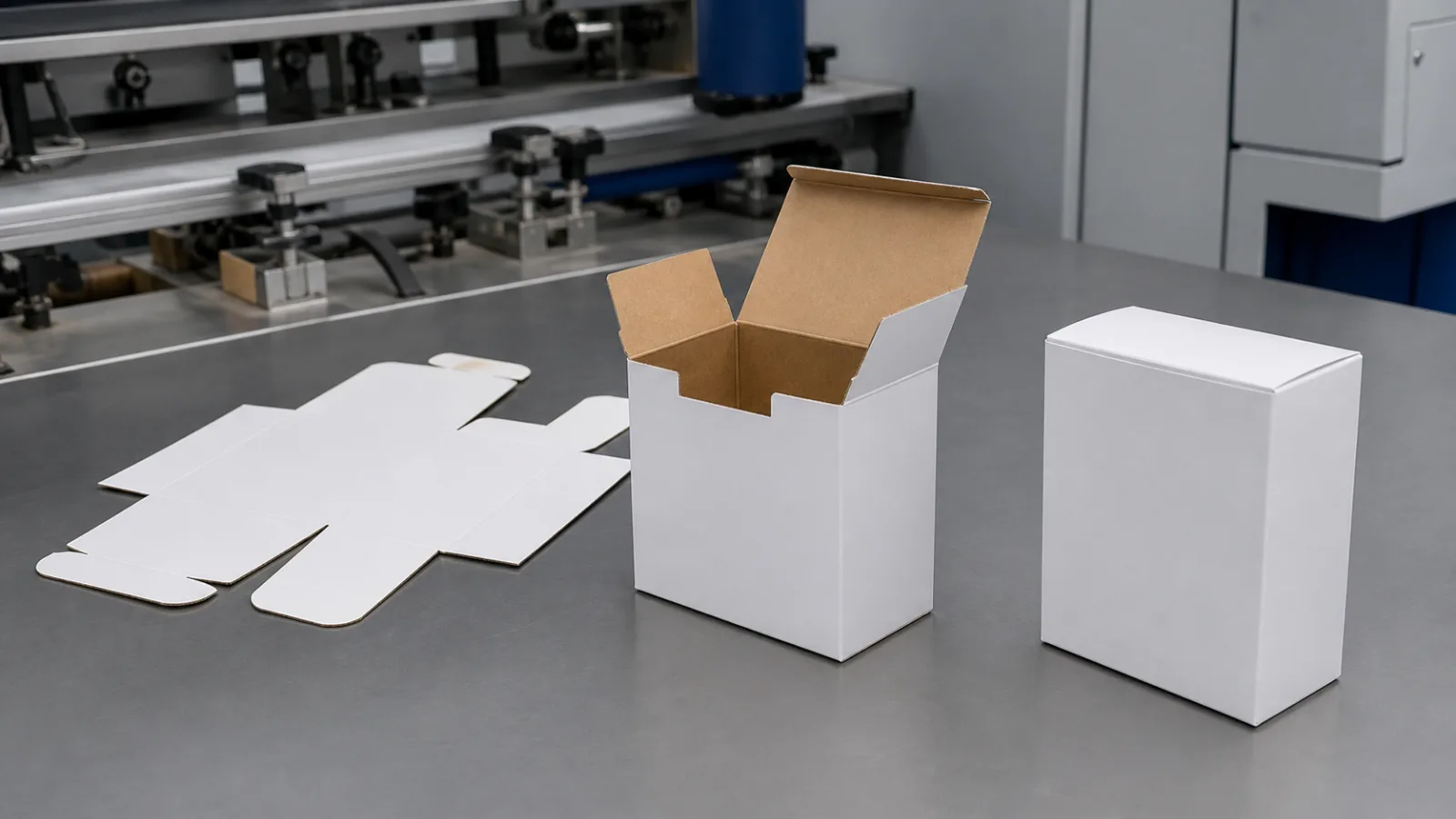
For cartons and other converted structures, grain also needs to be reviewed against panel geometry, crease lines, glue flaps, locking features, and the direction in which the finished item must stand or flex. Educational guidance from PAPNOX discusses the relationship between grain, folding, creasing, die-cutting, and gluing, but those relationships should be treated as general guidance rather than a universal construction rule.
A layout drawing that overlays the grain arrow and all fold lines is more useful than a note saying only “long grain paper.” Paper Index recommends this type of fold-and-grain review and stresses verification on the actual production sheet.
How grain can change folding, creasing, and cracking
Paper bends through a combination of fiber movement, sheet stiffness, compression, tension, and surface strain. Because the sheet has directional structure, bending in one direction can feel different from bending in the other. A fold across the dominant grain may create more resistance or surface stress in some constructions, while a fold with the grain may be easier to form. The actual result depends on the paper and process.
Cracking is not caused by grain direction alone. Risk can increase when several demanding conditions occur together, such as:
- high caliper or a stiff multi-layer construction;
- a heavily coated or varnished surface;
- dense ink coverage at or near the fold;
- a fold made without suitable scoring or creasing;
- dry or otherwise unsuitable moisture conditions;
- a tight fold radius or aggressive folding sequence;
- incorrect folding-machine setup or worn tooling.
A favorable grain orientation may reduce one source of resistance, but it cannot compensate for unsuitable scoring, excessive surface stress, or an inappropriate folding setup. Conversely, a less favorable orientation may still produce an acceptable result on a lighter sheet with suitable scoring and controlled equipment.
For heavier, coated, laminated, highly printed, or highly finished sheets, approve a production-representative fold and crease trial. A hand-folded desktop sample can indicate obvious problems, but it does not reproduce the pressure, speed, tooling, sequence, and material handling of the converting line. PostPress also treats grain, folding, scoring, and binding as related production variables.
The acceptance criteria should be defined before the trial. They might include no visible surface cracking under agreed lighting, panel alignment within the job tolerance, a specified finished size, acceptable opening behavior, or a glue bond that survives the intended handling. Do not use a vague instruction such as “fold cleanly” when the job has a visible or functional risk.
Binding, curl, die-cutting, and finishing implications
Binding
In a bound product, grain orientation affects how pages bend around the spine and how the book opens. Grain across the spine may make the page block resist opening or place additional stress near the binding edge. This is a reason to review grain early, especially for thicker books, covers, case-bound work, and products expected to open repeatedly.
The binding method matters. Perfect binding, saddle stitching, sewn binding, and case binding impose different stresses and use different materials and equipment. Grain direction is not a substitute for confirming spine construction, adhesive, cover stock, page count, sewing or stitching, and trimming requirements.
Curl and dimensional behavior
Paper can respond differently in its machine and cross directions to moisture changes, drying, coating, printing, and storage. This means grain may be relevant to curl or dimensional movement, but the direction and severity are not fixed from the grain label alone. Paper grade, coating, ink coverage, press conditions, storage history, and environmental conditions also matter. Paper Dimensions describes grain as one part of the sheet’s directional behavior.
If curl affects feeding, registration, stacking, or automated insertion, define the condition being checked. A curl observation on an unprinted sheet may not predict the behavior of the printed and finished product.
Die-cutting, creasing, and gluing
Grain can interact with die geometry, crease direction, narrow features, cut edges, and the way a carton or insert is opened. It may also influence how an edge behaves during folding or whether a glued panel stays aligned. These are useful reasons to include grain in a converter’s review, but they are not proof that grain is the sole cause of a warped edge, weak bond, or poor cut.
Confirm the die layout, rule and matrix selection, crease depth, adhesive type, adhesive application, coating, lamination, foil, embossing, and machine sequence separately. The supplied paper and finishing guidance does not establish universal limits for those combinations.
Ways to identify grain on the actual sheet
Use more than one indication where grain is important, and record what was checked. Practical methods include:
- Supplier or mill documentation: Check the technical sheet, ream or pallet marking, delivery paperwork, or a supplier-confirmed grain arrow. Ask whether the stated direction applies to the exact sheet size and lot.
- Directional bend comparison: Gently bend equal-sized samples in both directions and compare resistance. The difference can indicate grain, but it is not a standardized measurement for every grade.
- Controlled tear comparison: Tear samples in both directions and observe whether one tear is relatively straighter or more predictable. This is only an indication and can be affected by paper construction and handling.
- Fold or crease comparison: Make equivalent test folds in both directions under controlled conditions. Compare cracking, edge quality, and resistance, while recognizing that a hand test does not reproduce production equipment.
- Layout confirmation: Mark the observed direction on the physical sheet and compare it with the supplier’s documentation and the converter’s planned layout.
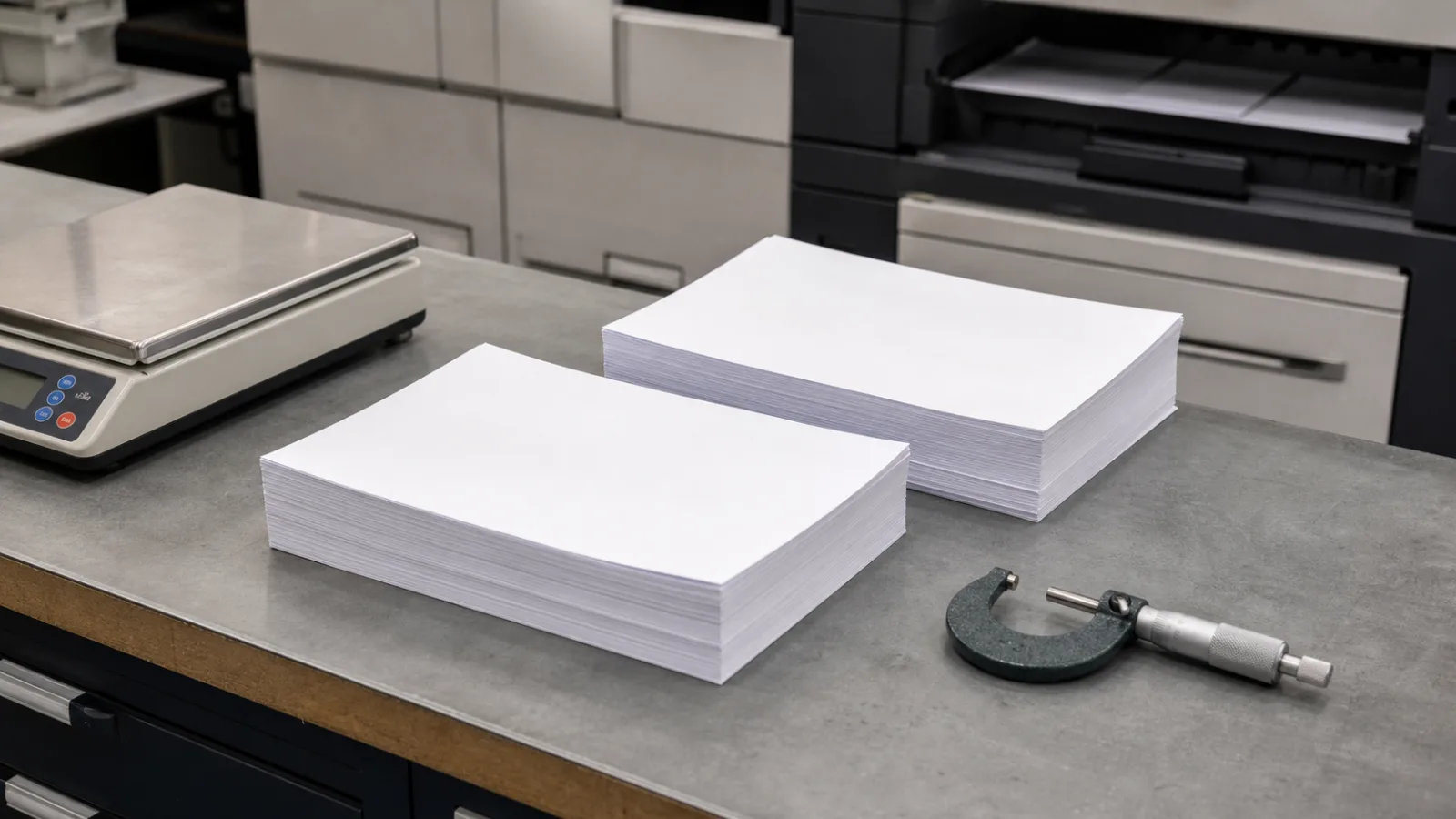
Avoid treating a single hand test as definitive. When approving a sample, record the grade, basis weight, caliper, sheet size, grain direction, lot or delivery reference, storage or conditioning history, test method, and observed result. If any of those conditions changes, the previous approval may no longer apply.
Supplier, printer, and converter approval checklist
Before committing to a full run, ask the relevant parties:
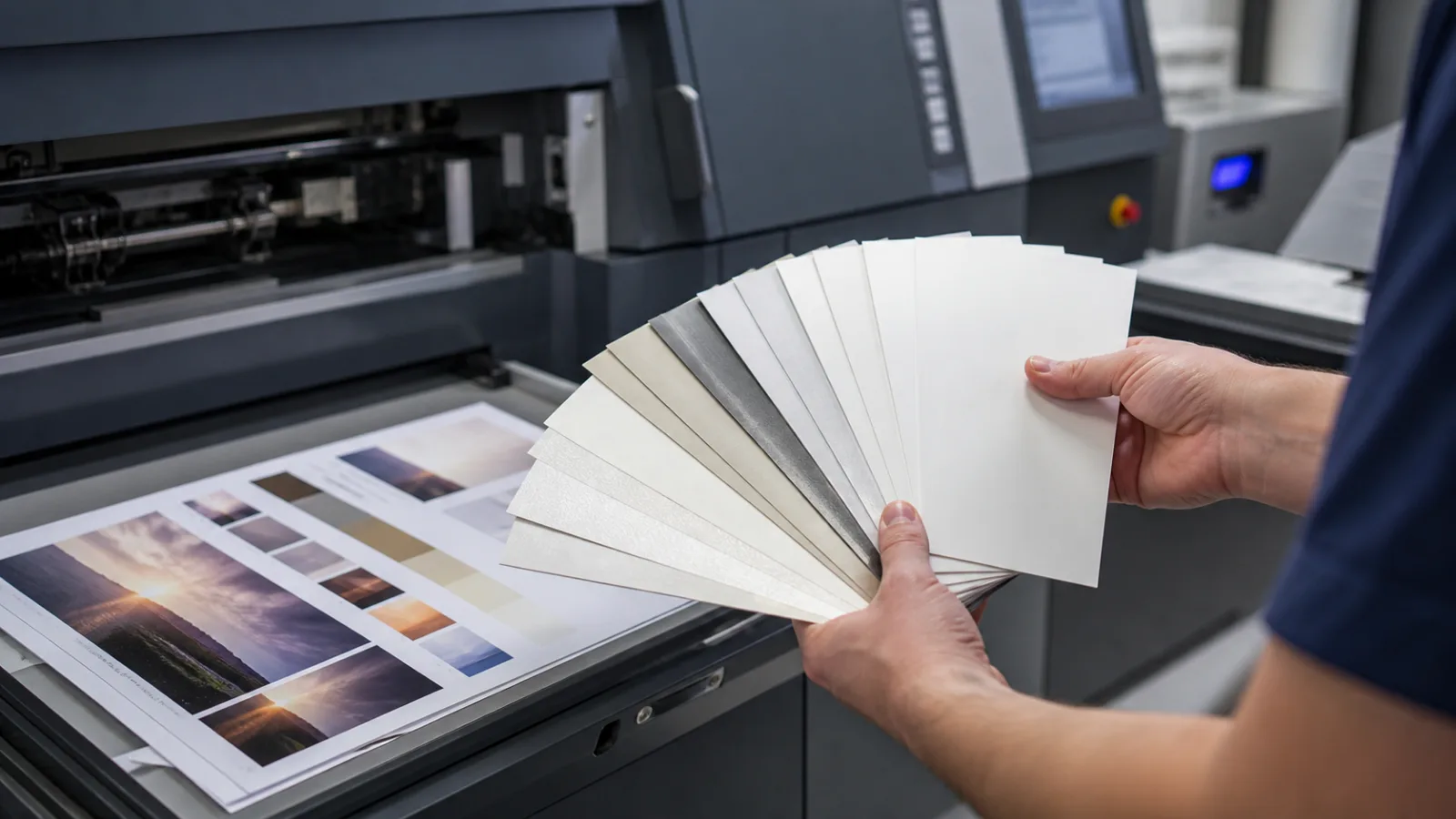
- What is the exact paper grade, basis weight, caliper, coating, and sheet size?
- How is grain identified on this specific production sheet?
- Is the quoted grain direction based on the original sheet, a converted size, or an assumed long- or short-grain format?
- Can the supplier mark the grain direction on the quotation, packing label, or sample?
- Where are the finished folds, spine, scores, glue flaps, die-cuts, and major finishing features?
- Which fold or binding requirement controls if the layout creates conflicting grain directions?
- Will scoring or creasing be used, and with what production method and equipment?
- What press, folder, die-cutter, binder, laminator, or gluing line will run the job?
- What moisture, storage, and conditioning conditions apply before converting?
- What visible and functional results define acceptance?
- Which changes—paper lot, caliper, coating, ink coverage, scoring, equipment, or finishing sequence—require a new trial?
The approval sample should use the actual or production-representative paper, sheet layout, print coverage, scoring, folding sequence, and finishing conditions wherever practical. Record what was tested and what was observed rather than approving only the paper name or a screen proof.
Grain direction also does not establish food-contact suitability, archival performance, recycling acceptance, machine safety, or any other regulatory or environmental claim. Those questions require their own material documentation, test methods, market requirements, and recovery or compliance review.
The bounded selection rule is simple: specify grain against the finished fold or binding geometry, confirm it on the actual sheet, and approve the complete paper-and-process combination. If the job is heavy, coated, highly printed, laminated, die-cut, glued, or mechanically demanding, treat grain as one input to a representative trial—not as a guarantee of the final result.
Sources
- How Grain Direction Affects Folding and Creasing | Client Education: How to Choose the Right Paper PAPNOX ERP
- Offset Paper Grain Direction and Fold Performance: What to Check Before Running Packaging Inserts
- Grain Direction | GelatoConnect | Help Center
- Grain Direction: What It Is and When Converting Buyers Should Care | Paper Dimensions LLC
- Grain Direction: The Long and Short of It
- Which Paper Specs Matter on Press? Linking Moisture, Caliper, Opacity, and Grain to Run Results