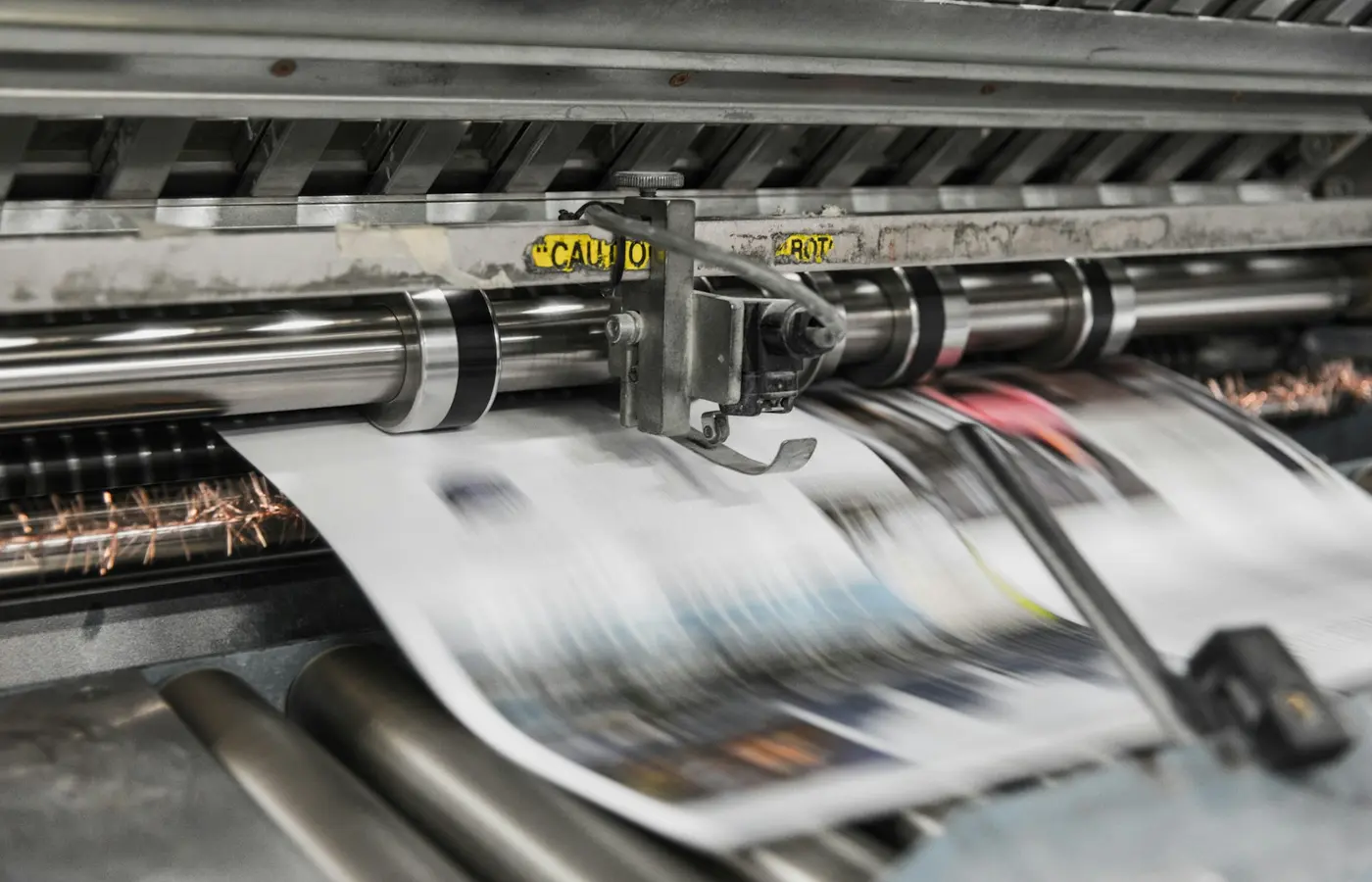

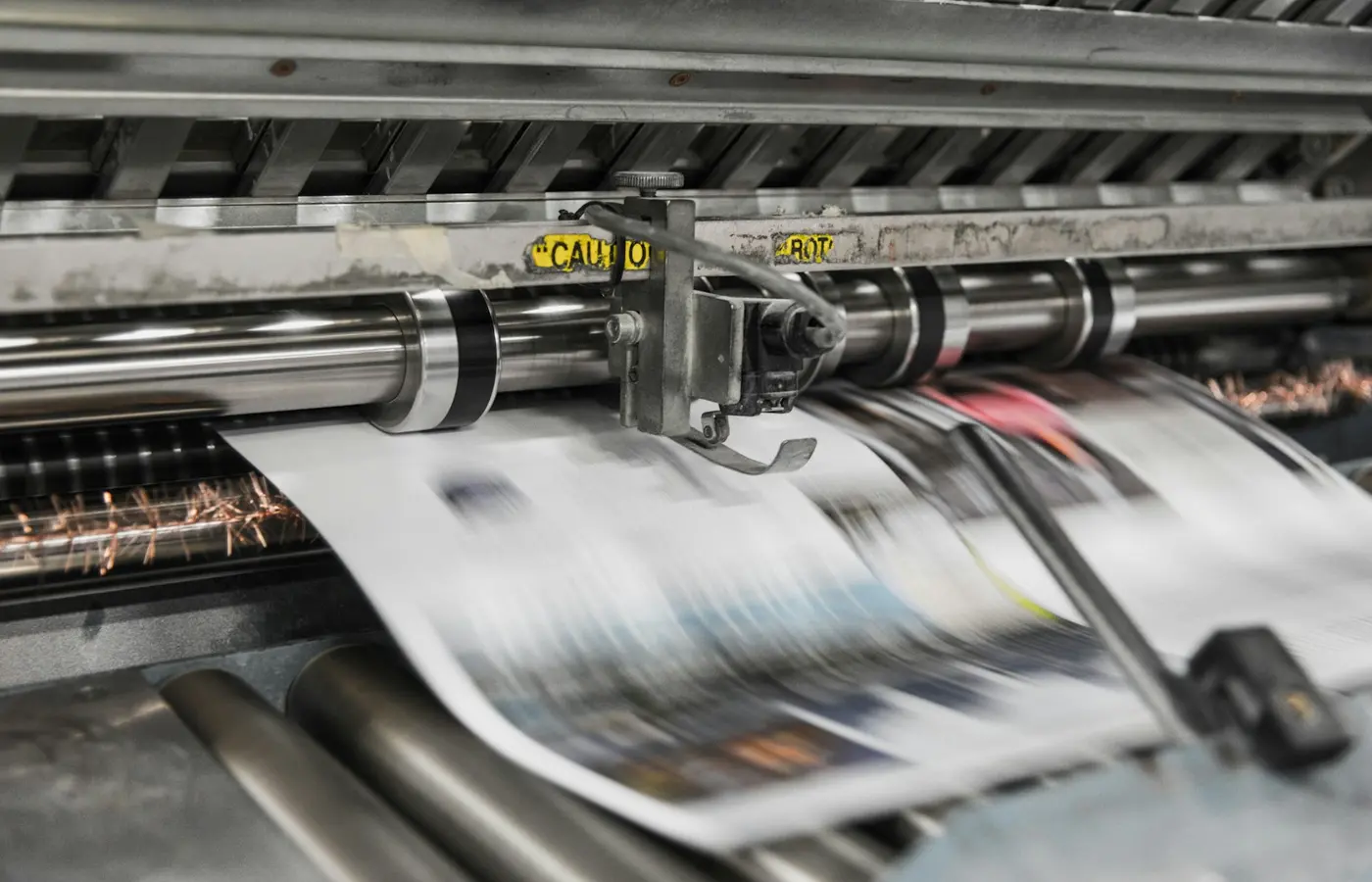
Flexographic label printing is a web-printing and converting process built around controlled ink transfer. A raised-image plate receives a measured film of liquid ink from an anilox roll, transfers that image to a moving labelstock web, and is followed by drying or curing and, often, inline finishing and die-cutting.
That description is simple, but a production result depends on a connected system: plate and mounting tape, anilox condition, ink properties, impression, web tension, drying or curing capacity, registration, die tooling, and rewind control. A label that looks acceptable at the print station can still fail later through poor matrix stripping, damaged liner, incorrect roll direction, inadequate cure, or inconsistent dispensing.
The useful question is therefore not whether flexographic label printing is suitable in general. It is whether the specified press, label construction, artwork, ink, finish, die, and inspection plan can produce the required label consistently.
What a narrow-web flexographic label press does
Flexography is a relief-printing process. Image areas stand above the non-image areas on a flexible rubber or photopolymer plate. The plate is mounted on a plate cylinder, ink is applied to the raised image, and the image transfers to the substrate under light, controlled impression.
A conventional flexographic unit includes an ink supply arrangement, an applicator or transfer roller, an anilox roller, a plate cylinder, and an impression roller. The exact arrangement varies by press. Some machines use different ink-delivery and doctoring arrangements; drying, curing, web inspection, embellishment, and converting modules also vary by configuration.
The basic sequence described in Label and Narrow Web’s flexographic process guide is:
- Ink is supplied to the inking system.
- The anilox roll meters ink for transfer to the plate.
- Raised plate areas receive ink.
- The plate prints onto the moving web against the impression cylinder.
- The printed web is dried or cured before the next operation where the job requires it.
A label press commonly performs more than printing. Depending on the machine and job, the web may also receive a varnish, laminate, cold foil, adhesive layer, overprint, die-cut pattern, inspection step, slit, and rewind. Each added operation changes the number of controls that must remain stable across the web path.
Start with the job specification and web construction
Press setup should begin with the label specification rather than a preferred plate, anilox, or ink combination. The physical labelstock construction determines how the web handles, how it accepts ink and finish, and how it behaves at the die station and during application.
Confirm the specified construction, including the facestock, adhesive, release liner, total caliper, and any stated storage or application limits. A paper facestock, film facestock, coated surface, unsupported film, and multilayer construction can respond differently to tension, heat, moisture, static, and converting loads. These differences should not be assumed from a generic material name.
Before a trial or production release, establish the following items in writing:
- Facestock, adhesive, liner, and labelstock product designation
- Web width, repeat length, label dimensions, gap, and die layout
- Number of colours, spot colours, opaque areas, reverses, fine text, linework, and halftones
- Barcode, QR code, sequential numbering, or other variable-data requirements where applicable
- Ink system and any coating, varnish, laminate, or special-effect requirements
- Required print orientation and finished-roll unwind direction
- Core size, maximum roll diameter, label count or roll length, and splice policy
- Label application environment, where this is part of the functional requirement
- Written acceptance criteria for print and converted-roll quality
These inputs expose constraints early. For example, a dense solid may require a different ink-film approach from fine positive type; a delicate liner may constrain die-cutting and stripping; and a tight label geometry may make waste-matrix removal more sensitive to die condition, adhesive behaviour, and rewind tension.
The artwork file should also be checked against the converting layout. Print-to-cut alignment, repeat, label gap, minimum clear areas around codes, and any die-line restrictions need to be agreed before plates and tooling are finalized. A visually complete design is not necessarily a production-ready label layout.
Plates, mounting tape, and image transfer
The flexographic plate carries the printable image in relief. Rubber and photopolymer plates are both used in flexography, but plate selection should be based on the approved ink system, image content, substrate, press configuration, prepress workflow, and converter procedure.
The plate is mounted to the plate cylinder using double-sided mounting tape. This part of the process deserves attention because plate mounting affects both printing and registration. Plate position, seam treatment, cylinder cleanliness, tape selection, and mounting accuracy can influence repeatability across the run.
The plate, tape, and impression setting operate as a system. Too little effective contact may leave incomplete solids or weak transfer. Too much impression can distort dots, broaden fine features, increase edge gain, or create uneven printed areas. The suitable operating window depends on the actual plate geometry, tape construction, ink, substrate surface, and press mechanics. It should be established through the converter’s setup method and confirmed on the job.
Plate choice is therefore not a simple hierarchy of better and worse materials. A plate that supports the required halftone and linework may not be the only factor governing solid coverage. Likewise, a plate capable of fine detail does not eliminate the need to control anilox condition, ink behaviour, mounting, impression, and web stability.
Useful prepress and pressroom checks include:
- Is the plate material compatible with the intended ink and cleaning process?
- Has the plate thickness and cylinder repeat been confirmed for the press?
- Are mounting positions and plate seams documented for repeat work?
- Has the artwork been checked for printable positive and negative features?
- Is the selected mounting tape approved for the plate and job conditions?
- Are registration marks and cut marks positioned for the press and inspection workflow?
Any claim about a particular plate family’s screen capability, solvent resistance, processing route, or ink compatibility should be checked against that manufacturer’s current technical documentation rather than inferred from the term “photopolymer plate.”
Anilox selection and controlled ink metering
The anilox roll is the metering element in a flexographic unit. Its engraved cells hold a controlled quantity of ink, which is then transferred to the raised plate image. Labels & Labeling describes the anilox roll as the component that carries fluid ink from the ink supply toward the printing cylinder.
Anilox selection affects the ink film available to the plate, but it is not a standalone setting. Cell volume, line screen, engraving design, roll wear, doctoring arrangement, ink rheology, and cleaning condition all influence the delivered ink film. The practical consequence can appear in solid coverage, colour strength, dot reproduction, fine reverses, pinholing, or run-to-run variation.
It is not responsible practice to assign universal anilox values for label work. The appropriate engraving depends on the ink, plate, substrate, artwork, print target, and press. A value used successfully for one opaque white, for example, should not be treated as a general specification for process colour, fine type, or a different substrate construction.
Anilox condition also matters. Dried ink, coating residues, mechanical damage, or cell wear can alter the roll’s effective ink-delivery behaviour. An anilox-management programme should identify the roll, its intended use, cleaning history, inspection status, and any measured condition data retained by the converter. A flexographic process-control article from Label and Narrow Web similarly emphasizes documentation, cleaning, inspection, and standardization as foundations for repeatable operation.
For each job, ask the converter to confirm:
- Which anilox roll and engraving is provisionally selected
- How that roll’s identity and condition are controlled
- Which doctoring or ink-metering arrangement the press uses
- Which ink properties must be monitored during the run
- What cleaning procedure applies before and after the job
- Whether a prior job provides relevant evidence for the same construction and artwork type
From ink transfer to a stable printed web
Once ink transfers from anilox to plate and from plate to web, the printed web must remain stable through the remaining stations. This is where individual process settings become linked.
Web tension must be sufficient for controlled transport and registration, but excessive tension can damage a sensitive web, stretch some materials, or affect converting performance. Insufficient or unstable tension can contribute to wandering, registration variation, wrinkling, or inconsistent die-cutting. Unwind condition, splices, roll build, web guiding, and rewind control should all be considered alongside nominal tension settings.
Drying or curing is similarly job-dependent. Water-based, solvent-based, UV, LED-UV, and other ink or coating systems have different control requirements. The relevant question is whether the configured press and process can achieve the required dry or cured condition at the intended production conditions without damaging the substrate or compromising downstream operations. Do not infer rub resistance, adhesion, migration suitability, or chemical resistance merely because a label uses a particular ink category.
Interstation registration matters where colours, varnishes, foils, die-cuts, or other operations must align. Registration is not only a print appearance issue. A shift between print and die can affect border consistency, text placement, barcode quiet zones, tamper-evident features, or label shape.
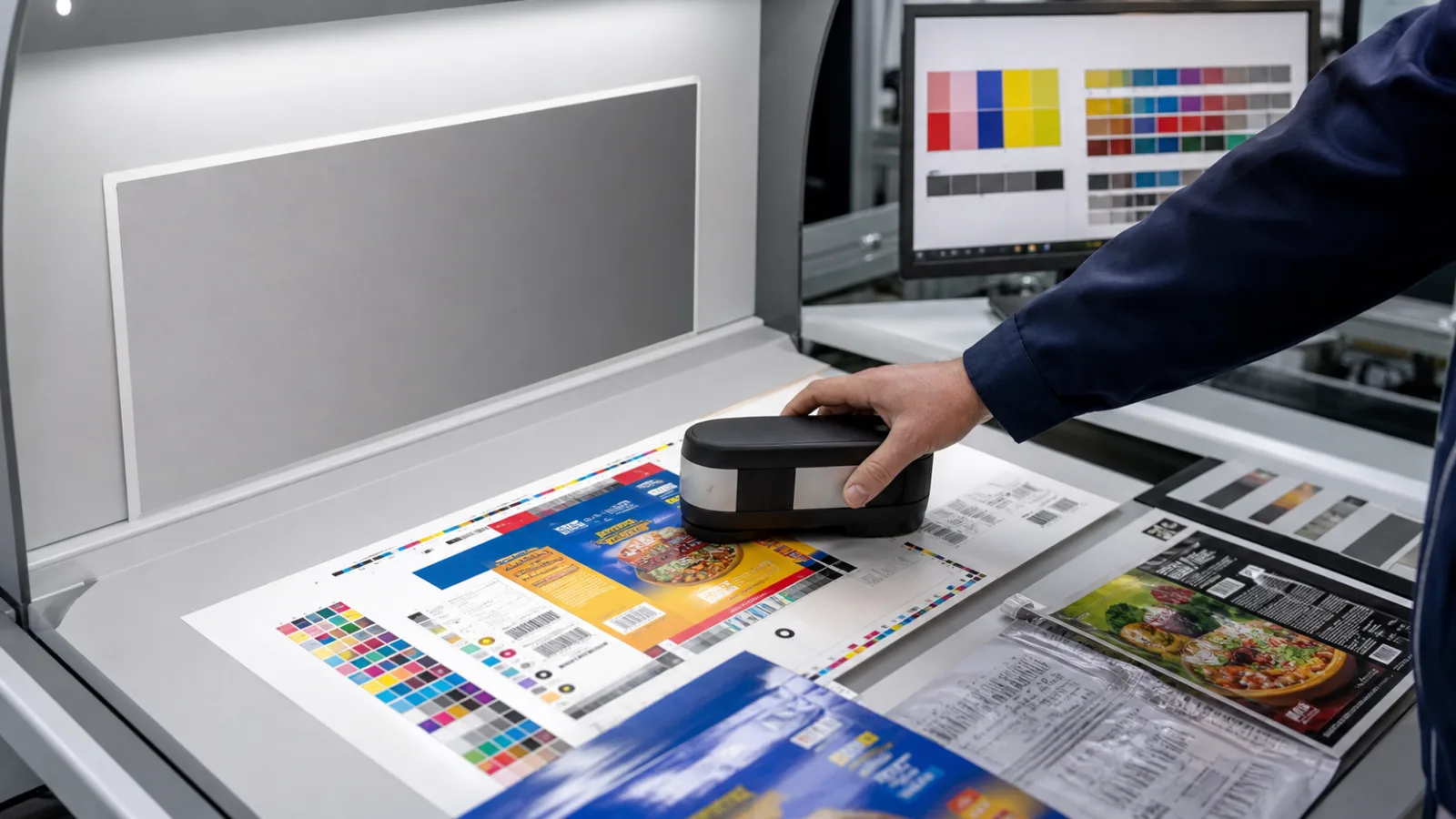
Checks should be based on the approved quality plan. Depending on the job, they may include colour against an agreed target, visual defect inspection, registration, dry or cure status, barcode verification, variable-data verification, and adhesion or rub checks. The test method, sampling plan, and acceptance limit should be named in the specification where these attributes are critical.
Inline converting: finishing, die-cutting, matrix removal, and rewind
Printed labels commonly move directly into converting operations. A coating or laminate may be applied before a rotary die cuts the label shape through the facestock and adhesive layer while leaving the release liner intact. The surrounding waste material, known as the matrix, is then removed. The web may be slit and rewound into application-ready rolls.
The die station is a functional control point, not just a finishing step. Die type, repeat, tooling condition, material compatibility, pressure setting, liner construction, adhesive behaviour, and label geometry can all affect the result. Insufficient cutting may leave labels difficult to dispense; excessive cutting can score or weaken the liner. Neither condition can be judged reliably from printed appearance alone.
Matrix removal is especially sensitive for small labels, sharp corners, narrow gaps, complex shapes, and constructions with challenging adhesive or liner behaviour. A label that strips cleanly at one speed or roll condition may require confirmation across the intended operating range. The right response is a controlled trial and documented release criteria, not an assumption based on similar-looking work.
Inspect finished rolls for more than print quality:
- Correct label shape and print-to-die alignment
- Clean matrix removal and absence of unintended lifting
- Liner integrity and absence of die strikes through the liner
- Finished roll direction, core, diameter, and label count or length
- Splice position and splice policy compliance
- Rewind quality, telescoping, edge damage, and web tension effects
- Required barcode or variable-data performance after conversion
- Any stated dispensing or application check for the intended label applicator
A practical trial plan before release
A representative trial is the most useful way to identify constraints that are specific to the press, materials, and label design. It should not be treated as proof for a different substrate, machine, ink, or finished construction.
Use a staged workflow:
- Confirm the controlled inputs. Review approved artwork, labelstock documentation, ink and coating information, die drawing, roll requirements, and end-use requirements.
- Select provisional process components. Document the proposed plate, tape, anilox, ink system, finish, die, and press configuration. Record any assumptions that still need validation.
- Run a representative web trial. Include relevant artwork features, intended print sequence, finishing steps, die-cutting, matrix stripping, and rewind conditions.
- Inspect printed and converted output. Use the agreed checks for print quality, registration, cure or dry status where applicable, die-cut quality, waste stripping, roll build, and coded information.
- Record settings and observations. Retain the setup sheet, anilox identification, plate and tape details, ink-control records where applicable, press conditions, inspection results, and samples under the converter’s normal quality procedure.
- Release only against written criteria. If the job requires barcode grade, colour tolerance, adhesion, rub resistance, dispensing performance, or another measurable property, name the method and acceptance requirement rather than relying on a general visual approval.
Flexographic label printing works best as a controlled sequence rather than a collection of independent stations. Specify the complete label construction and the required finished-roll performance first, then confirm that the selected press, plate, anilox, ink, drying or curing system, die, and inspection plan can meet those requirements on the actual job.