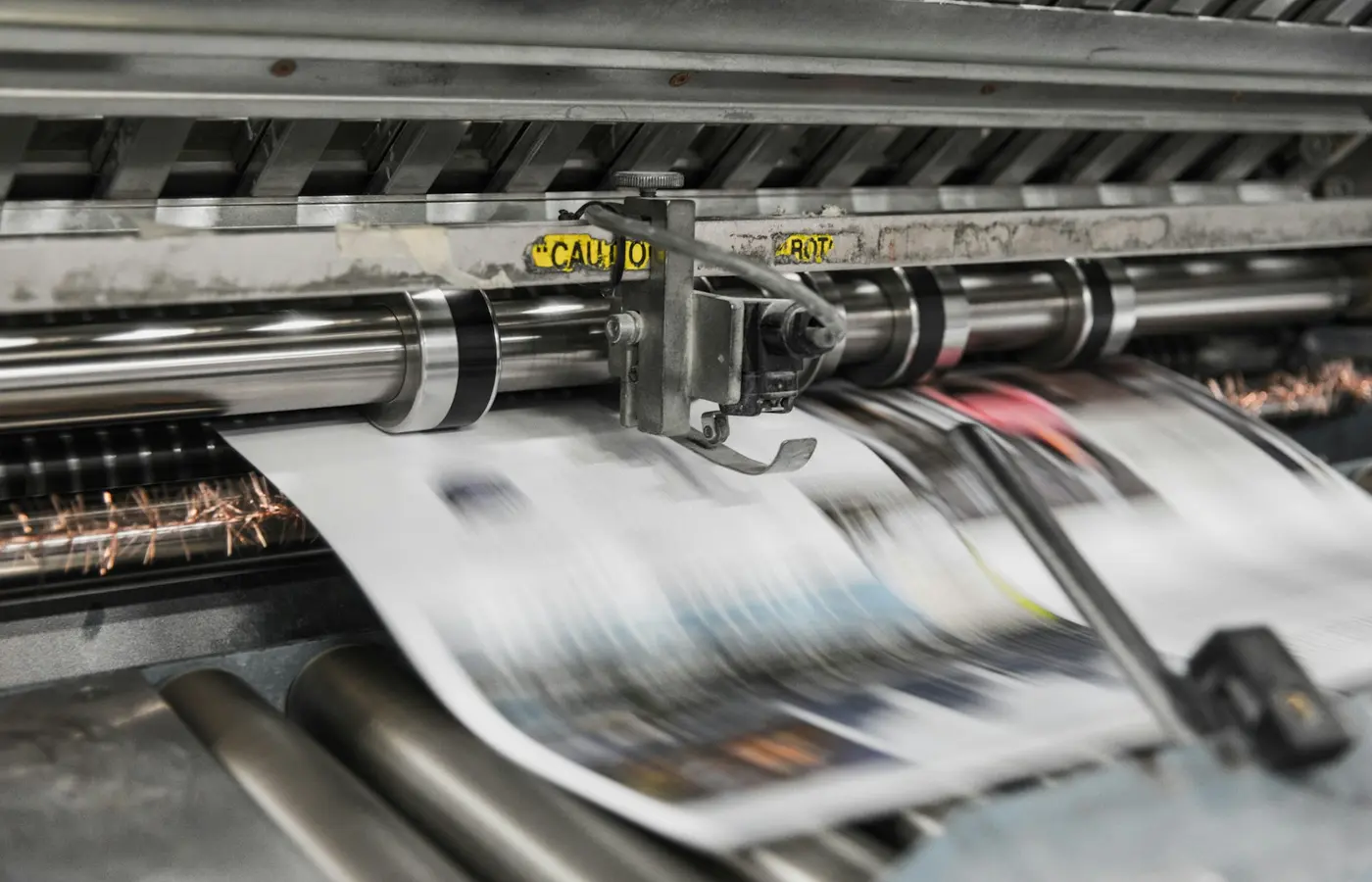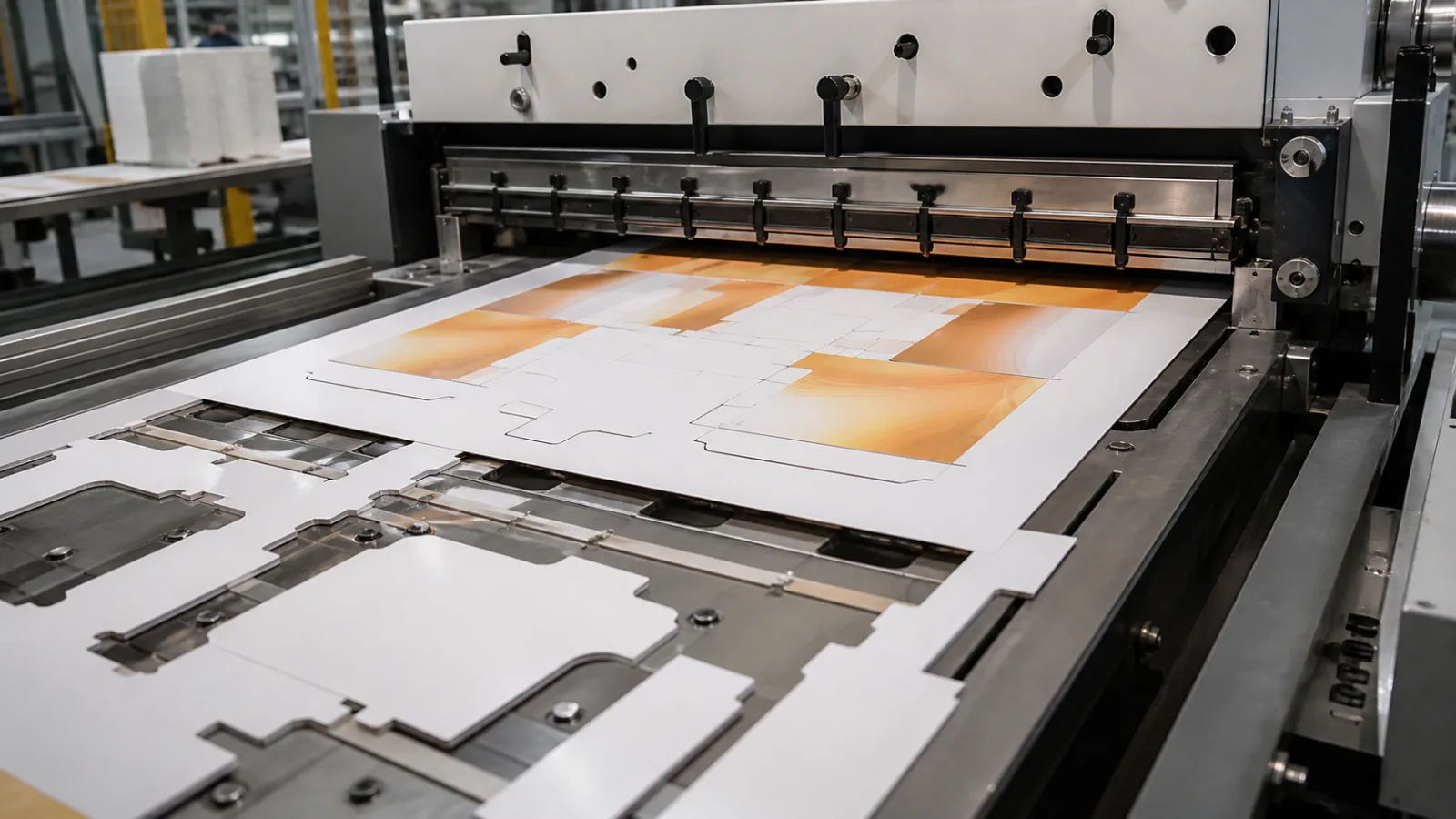

Flexography is a relief process: raised image areas on a flexible plate receive ink and transfer it to a moving substrate. It prints films, paper, corrugated liner, foil and labels at high production speeds.
Ink metering and transfer
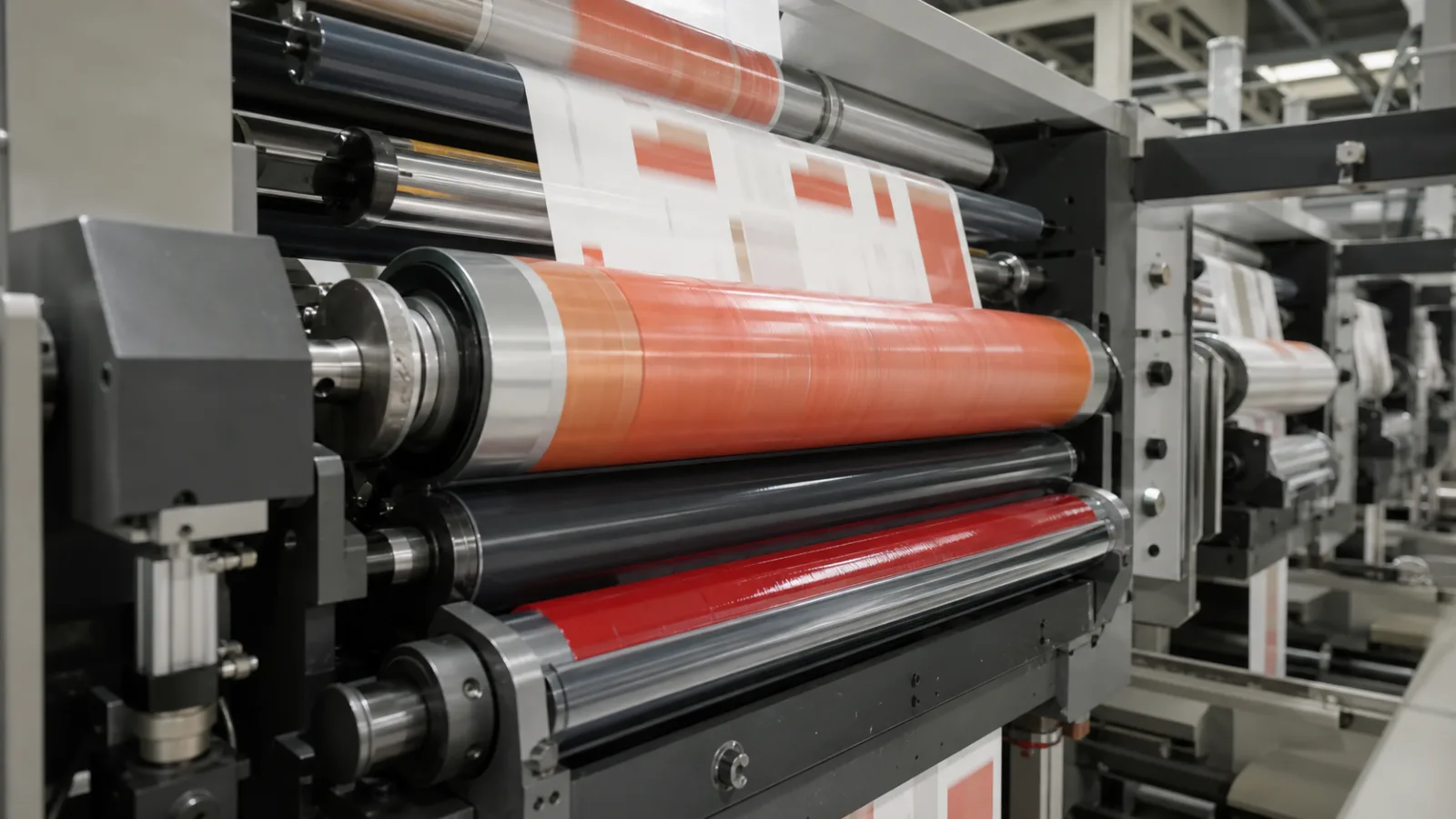
An engraved anilox roll carries a controlled ink volume in microscopic cells. A doctor blade removes excess ink, the plate picks up the metered film and the impression transfers it to the web. Cell volume, plate surface, pressure, ink viscosity and substrate treatment all influence the result.
Because each colour uses its own station, registration and drying must remain stable through the press. Expanded-gamut sets can reproduce many designs from a fixed ink sequence, reducing wash-ups when workflow and colour control are mature.
Where flexography fits
The process is productive for repeated packaging and label work, especially where inline coating, cold foil, lamination or die-cutting adds value. Plate cost and setup must be balanced against run length and repeat orders. Fingerprinting the real press on target materials gives prepress teams the tonal curves, trapping and minimum-feature limits needed to design work that is both printable and consistent.
The ink path in one print station
Each flexographic colour station repeats the same controlled transfer. Ink enters an open pan or enclosed chamber. A doctor blade meters the surface of the engraved anilox so that ink remains in its microscopic cells. The anilox delivers that film to raised areas of a photopolymer plate. The plate then contacts the moving substrate against an impression cylinder.
Anilox cell volume influences how much ink is available; cell count and geometry influence transfer and support for fine detail. More volume is not automatically better. Excess ink can increase dot gain, dirty fine type and reduce tonal separation. Solids, process colour, opaque white and coatings often require different engravings, selected with the ink, plate and substrate suppliers.
Plates, mounting and impression
Artwork is separated by colour and imaged onto flexible plates. Those plates are mounted to cylinders or sleeves with controlled position and cushioning. Plate thickness, surface pattern, tape hardness and mounting accuracy affect impression and register.
Flexography should run with the lightest pressure that produces stable transfer. Too much impression spreads raised elements, thickens positive type, closes reversed detail and accelerates plate wear. Poorly staggered graphics can also produce bounce as large image areas enter and leave contact. Prepress therefore adapts screening, minimum lines, traps and distortion to the real press condition.
Inks, drying and substrates
Water-based, solvent-based, UV-curable and other ink systems are used according to application and equipment. Paper and corrugated surfaces absorb differently from non-porous films. Films may require surface treatment so ink wets and adheres; that treatment can change during storage, making incoming measurement and a production test important.
Every colour must dry or cure sufficiently before the web enters the next station or rewinds. Trapped solvent, blocking, weak adhesion and heat distortion are not visible in the digital artwork. Food and pharmaceutical packaging also require application-specific compliance and migration controls supplied by qualified specialists.
Web handling and register
Unwind tension, steering, nip pressure, dryer heat and rewind tension must keep a thin web stable through several colour stations. Stretch creates register errors and changes repeat length. Foil, paper, film and laminate constructions respond differently to heat and tension, so a setup proven on one material cannot simply be copied to another.
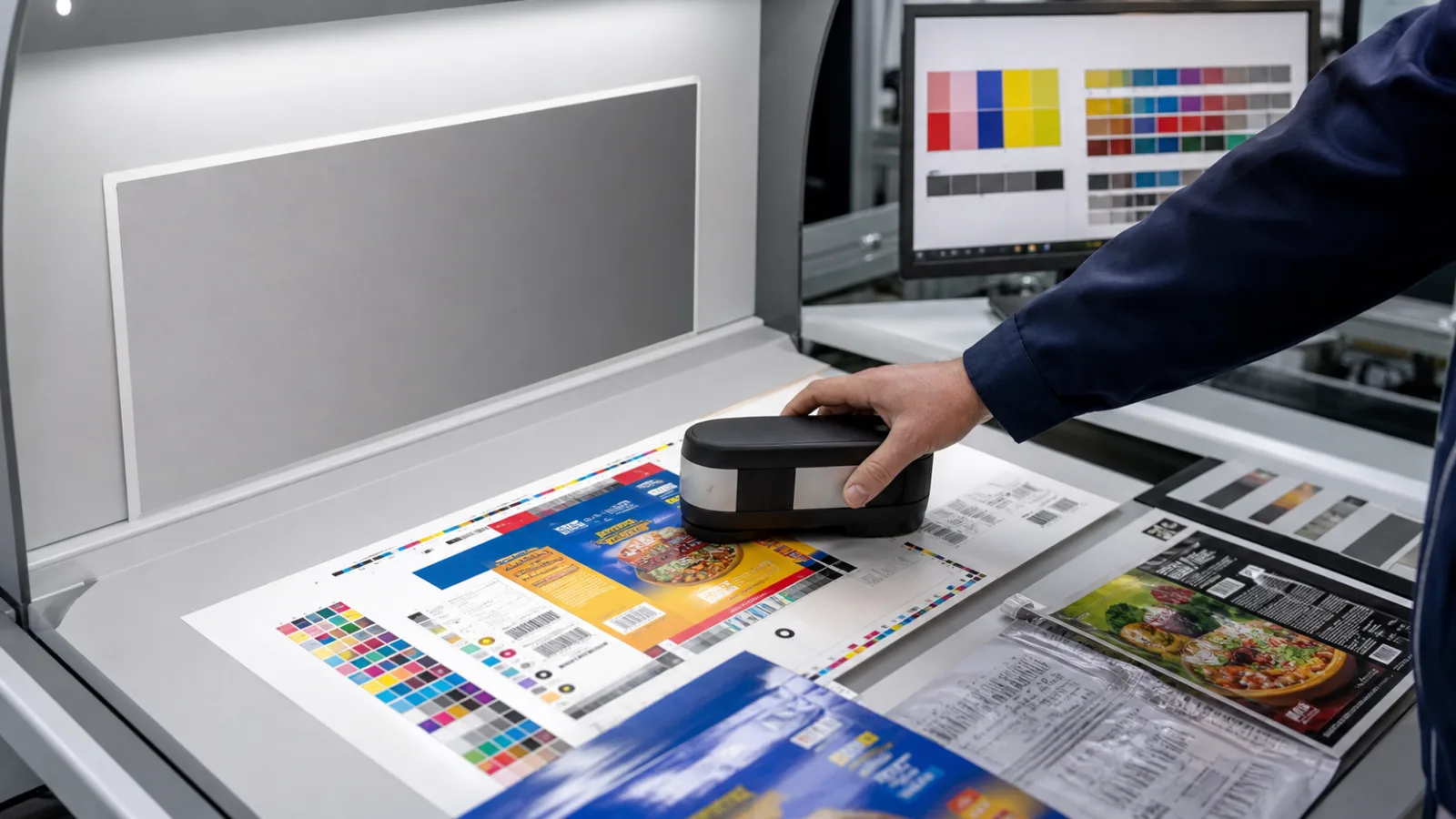
Camera inspection systems can monitor register, colour and defects, but the press must first be brought to a controlled condition. A press fingerprint printed on target materials establishes tonal curves and achievable limits for designers.
Where flexography is strongest
- pressure-sensitive labels and shrink sleeves;
- flexible packaging films, papers and laminates;
- corrugated board, either direct printed or as preprint liner;
- sacks, tissue and other continuous-web products;
- work that benefits from inline varnish, coating, lamination or converting.
Plate and setup effort favour repeat and medium-to-long production, while digital label and packaging presses are attractive for short runs, many versions and rapid changes. The best route depends on the complete order rather than a single crossover number.
See how flexible packaging is printed for the relationship between print, lamination and pouch making, and how label printing works for die-cutting and matrix removal.
Artwork questions before plate making
Confirm minimum positive and reversed type, line widths, screening, trap values, barcodes, white ink, varnish and distortion with the converter. Keep critical content clear of seals, folds and cut tolerances. For transparent film, decide whether work is surface printed or reverse printed and view separations in the correct order.
Packaging colour also needs a defined substrate, backing and viewing condition. A spot colour approved on white coated paper may look different over clear film, metallised material or brown kraft. The colour-management guide explains how to establish a measurable approval chain.
Buyer checklist
- Identify the exact structure, print side and surface treatment.
- State run length, number of versions and repeat-order expectations.
- Agree colour targets, tolerances and inspection method.
- Confirm plate, anilox and ink choices for solids, screens and opaque white.
- Approve a press proof or production proof on the actual substrate.
- Test rub, adhesion, lamination, sealing and other downstream operations.
- Retain proofs and settings for repeat work.
Flexography is not merely rubber-stamp printing at industrial speed. It is a controlled chain of metering, plate imaging, impression, web transport and drying. When those variables are fingerprinted and maintained, the process combines high productivity with demanding packaging reproduction.
Common defects and starting checks
Dirty print or filled reverses can come from excessive impression, ink film, plate contamination or drying. Pinholes in solids can involve surface energy, transfer or substrate texture. Gear marks and banding point toward repeating mechanical components. Colour drift may follow viscosity, pH, temperature, anilox condition or inconsistent measurement.
Do not correct every defect by adding pressure or ink. Identify its repeat, colour and direction, then compare retained control output. Change one variable at a time and verify at normal speed. Strong troubleshooting starts with a stable fingerprint and measurable press standards.