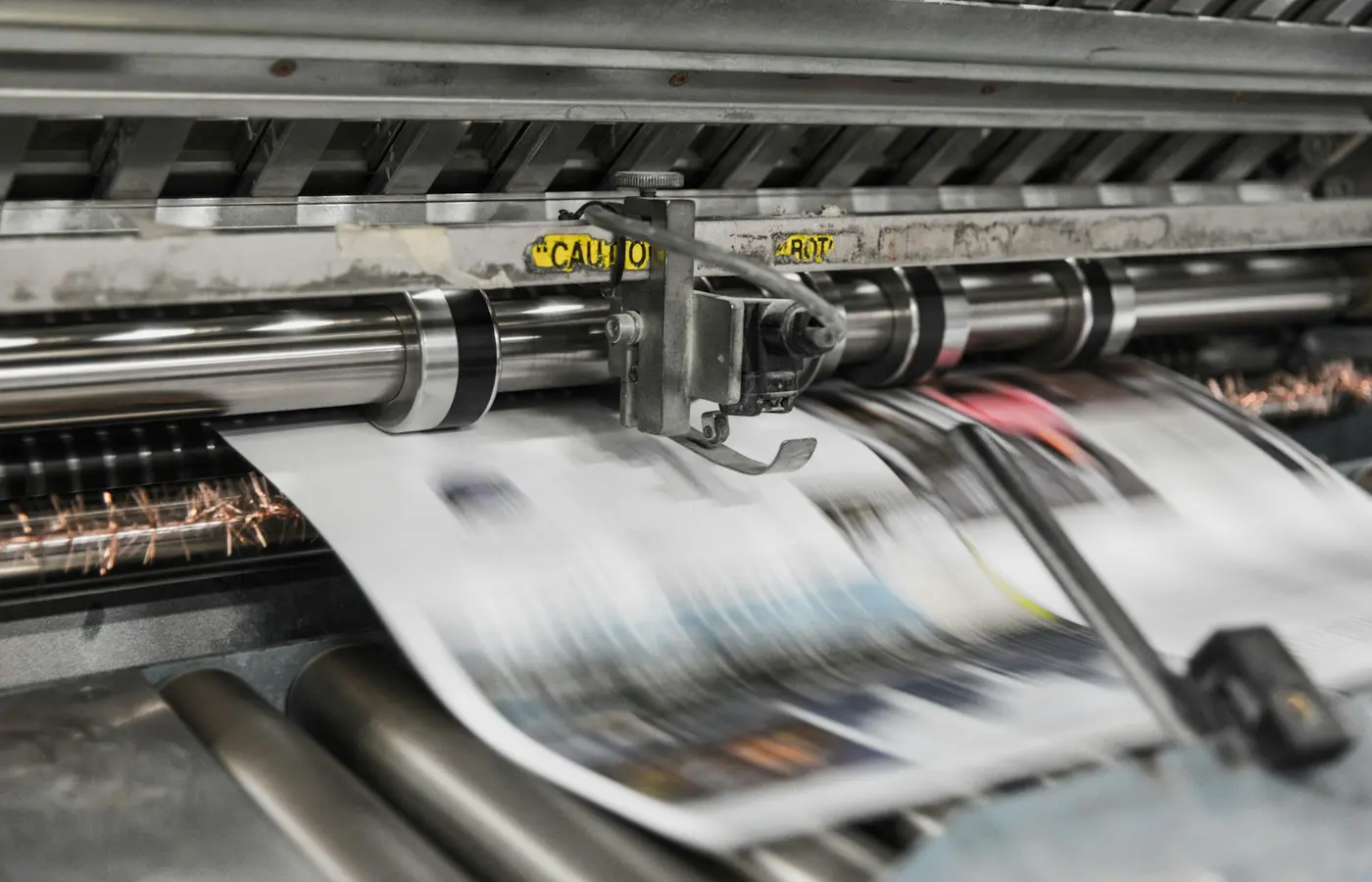

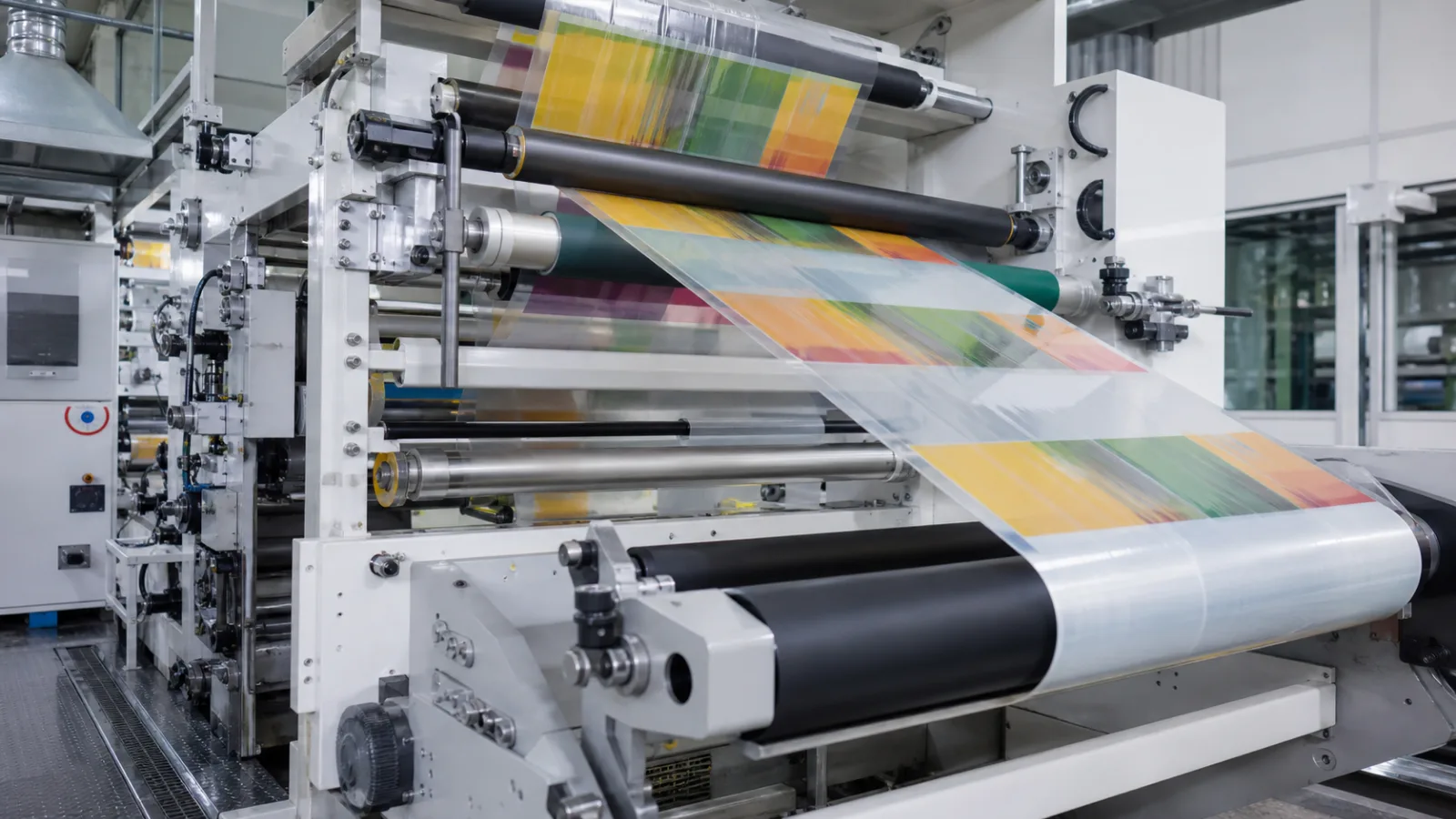
Flexible packaging is commonly printed in webs before the material is laminated, coated, slit and formed into packs. The image must tolerate web tension, subsequent converting and the handling conditions of the finished structure.
Three main imaging routes
Flexography uses raised plates and fast-drying inks and is widely used across films, papers and foils. Gravure carries ink in engraved cells and can provide consistent high-volume reproduction. Digital web presses avoid fixed image carriers and make shorter runs, multiple versions and rapid design changes practical.
Non-absorbent films require controlled surface energy for reliable wetting and adhesion. Treatment can decay with storage, so converters measure the actual web rather than relying only on the supplier’s initial value.
Print is part of the structure
Ink may sit on the outside surface or be reverse printed and protected inside a transparent laminate. Designers must account for white ink, trapping, distortion, seal areas, repeat length and registration through converting. The appropriate process is the one that meets colour, resistance, food-contact, run-length and changeover requirements across the complete pack, not merely at the printing unit.
Begin with the package structure
A flexible pack is often a laminate rather than one material. One layer may provide printability and stiffness, another an oxygen or moisture barrier, and another reliable heat sealing. Paper, aluminium foil and several polymer film families can appear in different combinations. The product’s shelf life, filling method, distribution temperature and recovery route determine which functions are necessary.
Print is specified against that structure. Surface printing places ink on the exposed face and may need a protective varnish. Reverse printing puts ink on the inner face of a transparent outer web, then protects it within the laminate. The artwork is mirrored and the colour sequence changes; opaque white may sit behind process colours so they remain vivid over a clear or metallised background.
Preparing a non-absorbent web
Films have no fibre pores to accept ink. Surface energy must support wetting and adhesion, often with corona or another treatment. Treatment can decay with time and storage, so converters measure the actual roll rather than relying only on its initial certificate. Dust, slip additives and contamination can still weaken adhesion.
Web tension is controlled from unwind to rewind. Too much tension can stretch thin film and disturb repeat length; too little can create wrinkles and register instability. Dryer heat must remove solvent or water without shrinking or distorting the substrate.
Choosing the print process
Flexography uses raised plates and anilox-metered inks. It is productive for established packaging work and integrates well with wide-web production. Read the flexographic process guide for plate, anilox and impression details.
Gravure images from engraved cylinder cells. Cylinder preparation is a substantial fixed step, but the process is suited to stable, high-volume work requiring consistent reproduction.
Digital printing avoids fixed image carriers. It supports shorter runs, many versions and rapid artwork change, although substrate range, ink set, web width and finishing route depend on the platform.
The quote should account for total material, setup waste, cylinders or plates, colour stations, changeovers, curing, lamination and minimum order—not print price alone.
Lamination and curing
Printed webs may be bonded to the sealant or barrier layer with an adhesive or extrusion process. Bond strength depends on treatment, ink, adhesive, coat weight and cure. Residual solvents, poor mixing or insufficient cure can cause odour, delamination or migration concerns. Food packaging requires qualified materials, documented process control and application-specific compliance; a generic statement that an ink is “food safe” is not an adequate specification.
The laminate is tested after the required cure, not only immediately off the laminator. Seal strength, bond strength, rub, blocking and product-resistance tests should represent the intended filling and distribution conditions.
From printed reel to finished pack
Wide printed reels are slit into narrower rolls. Registration marks guide pouch-making or form-fill-seal equipment. The web may then be folded, gusseted, fitted with a zipper or valve, sealed and cut. Seal areas should stay free of incompatible ink, varnish or contamination. Small dimensional changes accumulated through print and lamination can shift a design relative to seals and cuts.
Designers need the converter’s final technical drawing, not a generic pouch outline. Keep barcodes, legal text and critical graphics away from tolerances, folds and areas distorted by forming.
Approval and quality controls
- confirm substrate identities, thicknesses, treatment and print side;
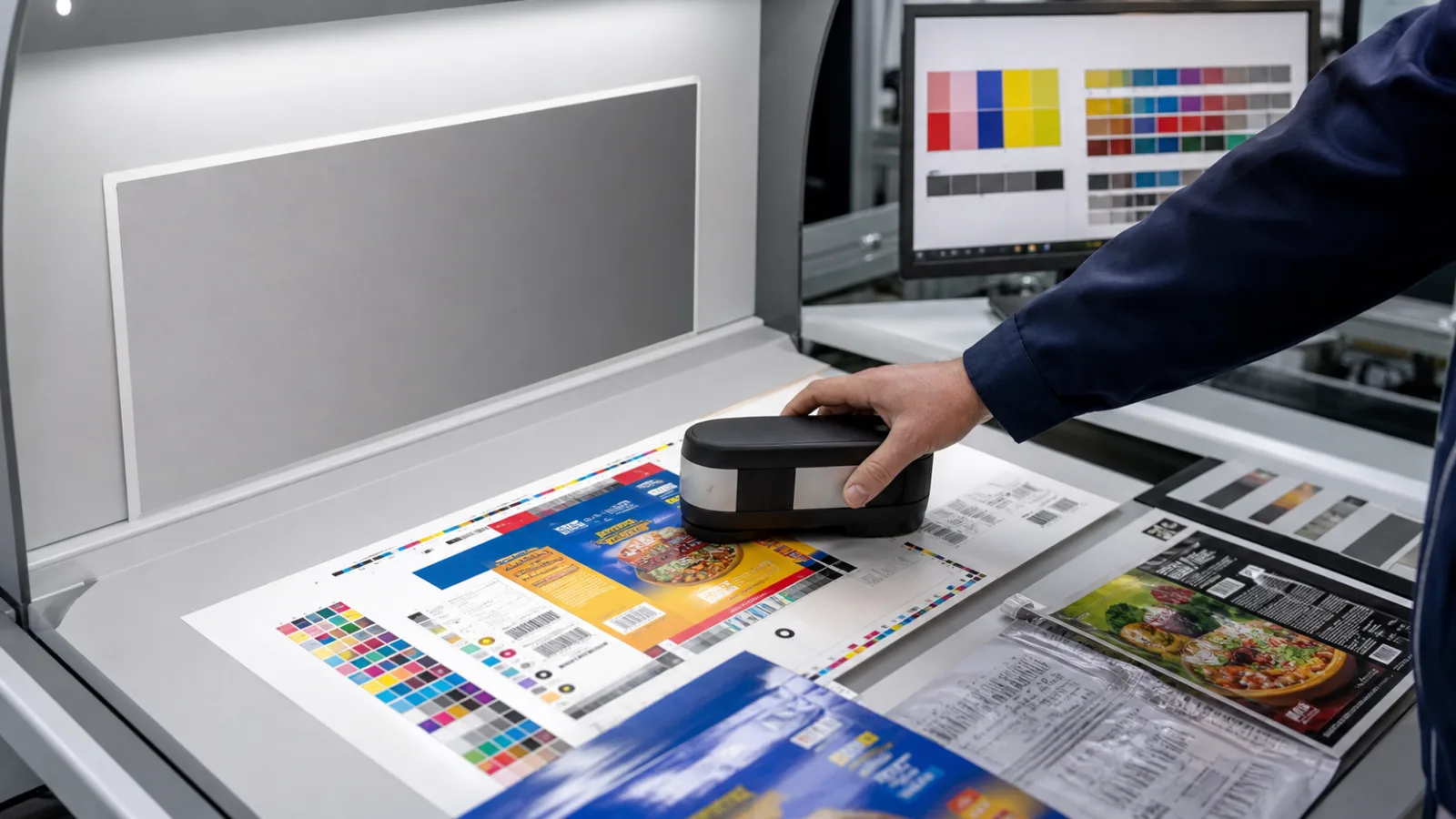
- agree colour targets on the actual backing and viewing condition;
- test ink adhesion before and after lamination;
- measure register, repeat length and web defects at production speed;
- verify residual solvent or cure requirements where applicable;
- test seals, bond, barrier and resistance after conditioning;
- run finished rolls on the intended packing equipment.
Packaging colour moves across devices and substrates, so the packaging colour-management guide should be part of the approval plan.
Design for recovery without sacrificing protection
Simpler structures can improve recyclability in some collection systems, but the pack must still protect its contents and seal reliably. Barrier coatings, metallisation, inks and adhesives may change sorting or reprocessing. Claims should be based on the finished structure and the markets where it will be sold. Sustainable packaging materials explains how to compare those trade-offs.
Flexible packaging print succeeds when graphics are treated as one layer in a controlled structure. Specify from product and pack performance backwards, then approve print, lamination and converting as a single production chain.
Questions for a packaging converter
- What is the complete layer structure and which surface receives ink?
- Is the artwork surface printed or reverse printed?
- Which treatment level is required at press and lamination?
- How are opaque white, spot colours and trapped areas specified?
- What cure time is required before slitting, pouch making or filling?
- Which tests cover bond, seal, barrier, rub and product resistance?
- Which tolerances apply at seals, folds, zippers and cuts?
Use one controlled construction code on quotation, proof and delivery documents. Seemingly minor film or adhesive substitutions can change colour, sealing and recovery, so they require technical review.