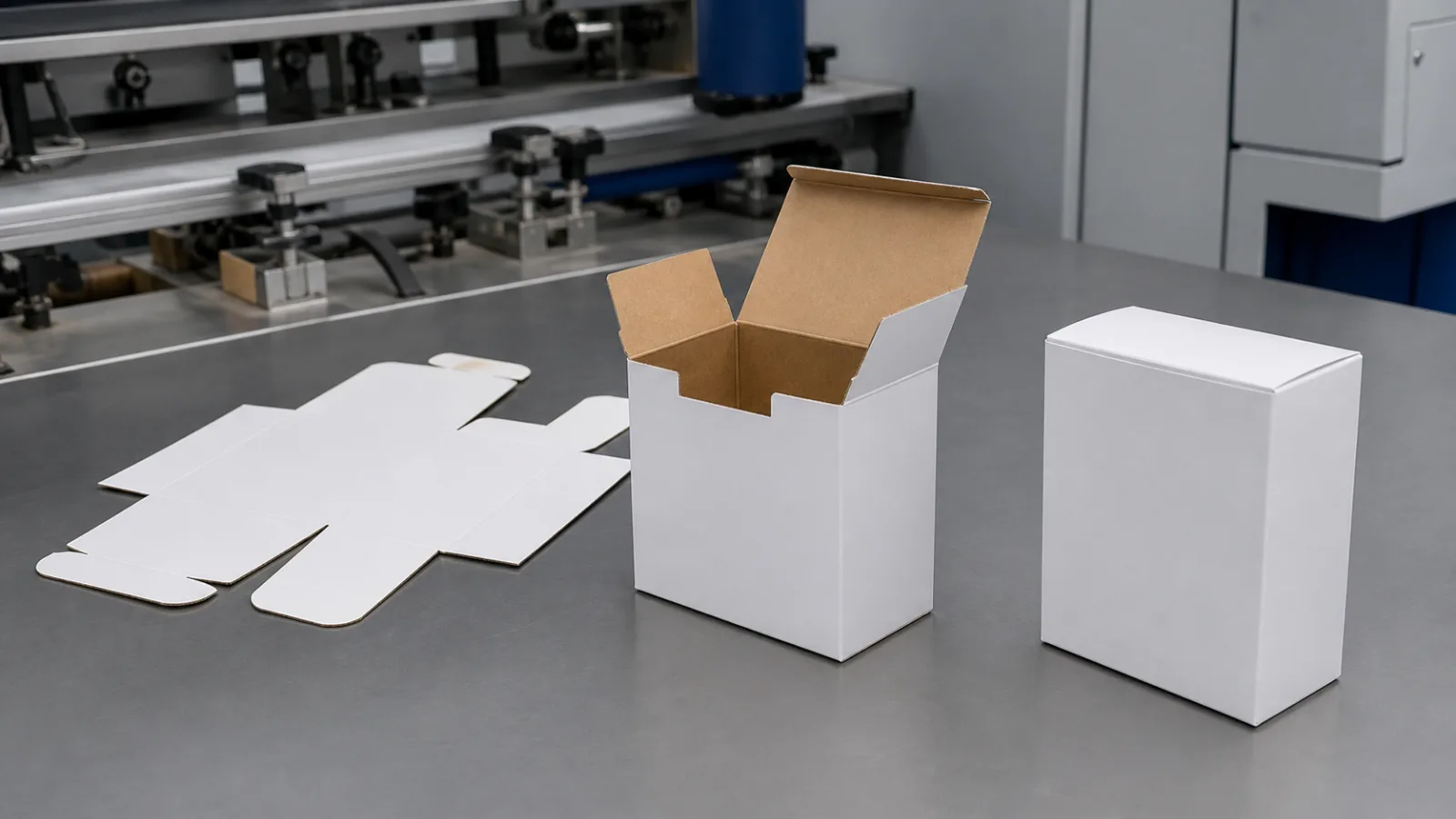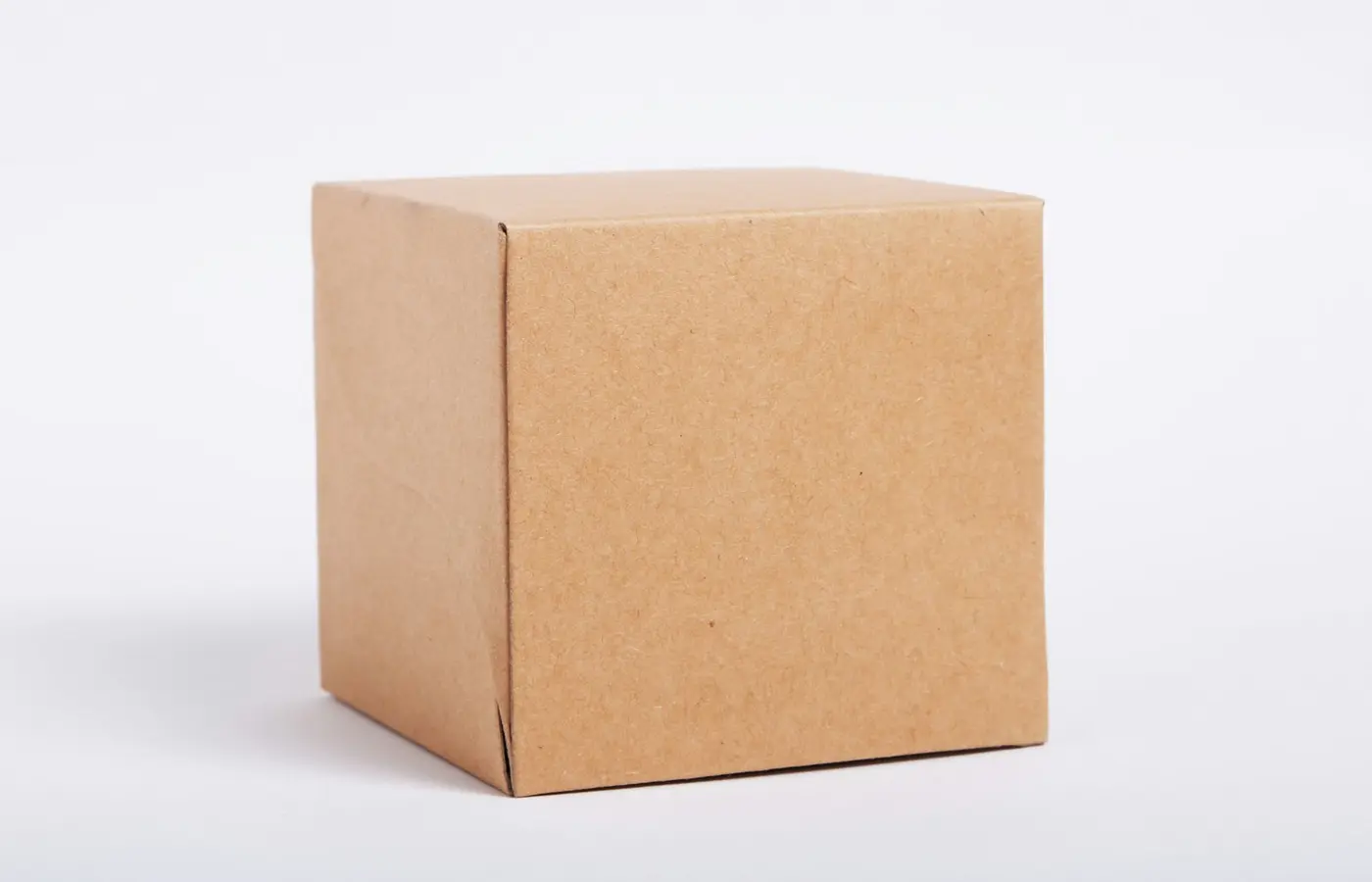

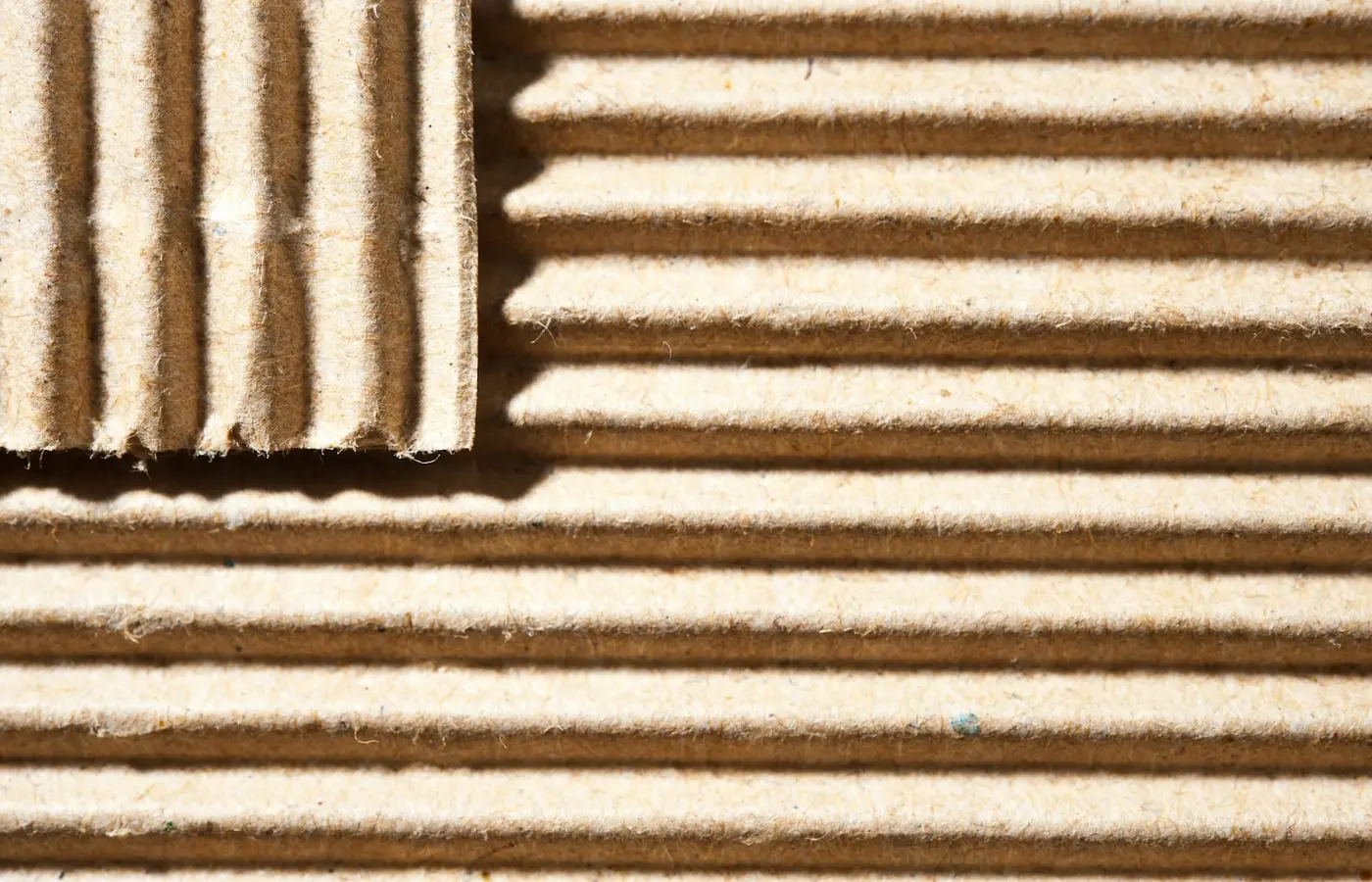
Corrugated flute profiles affect more than the apparent thickness of a shipping box. The shape of the fluted medium influences board caliper, liner separation, cushioning space, panel behaviour, print surface and how the blank performs during converting. It does not, however, define box performance by itself.
A flute letter is therefore a starting point, not a complete board specification. A suitable construction depends on the product, box dimensions, paper combination, wall construction, closure, pallet pattern, moisture exposure and distribution route. The practical question is not whether one flute is universally stronger or better printed than another. It is whether the complete board construction controls the credible failure modes for the specific pack.
Start with protection and distribution requirements
Define the packaging job before comparing flute profiles. This prevents a common specification error: choosing a familiar flute letter first, then trying to make the product and distribution requirement fit it.
Record the variables that affect the package load and protection requirement:
- Product mass, dimensions and centre of gravity.
- Product fragility, including damage modes such as abrasion, fracture, denting or component movement.
- Product orientation in the box and the amount of clearance around it.
- Internal fitments, dividers, pads, trays or void-fill materials.
- Box style, outside dimensions and maximum permitted pack size.
- Expected pallet pattern, stack height and stacking duration.
- Manual handling, automated handling, transfer points and likely impacts.
- Storage and transport climate, especially conditions that may affect board moisture.
- Distribution route, including direct shipment, parcel networks, retail replenishment or warehouse handling.
A compact consumer pack with high-quality graphics may have very different priorities from a large transit case holding dense industrial components. The first may need a board construction that supports close folding, small panels and a consistent print surface. The second may need more separation between liners, better control of panel deformation or a different wall construction.
Existing information is valuable at this stage. Review damage claims, current box failures, product-return observations, pallet specifications and prior package-test reports. If the route or product is changing, treat previous box performance as useful context rather than proof that the same construction will remain suitable.
How flute geometry changes the board
Corrugated board is a composite material. A fluted paper medium is bonded between flat linerboards. The arches of the medium hold the liners apart and create the board structure that gives corrugated packaging its characteristic stiffness and cushioning capacity.
Flute geometry changes the distance between linerboards and the number and form of medium arches within a given area. In practical terms, profile geometry can influence:
- Caliper: the overall board thickness.
- Cushioning space: the capacity for controlled deformation under an impact or compressive event.
- Panel stiffness: resistance to bending or bowing in a box panel.
- Surface support: how consistently the liner is supported during printing and conversion.
- Crush response: how the board deforms when loaded across or through its structure.
- Converting behaviour: scoring, folding, die-cutting, gluing and machine handling.
Larger flute profiles generally create more space between liners. That can be useful where the pack needs a more substantial protective structure, but it may also increase board thickness, affect folding geometry and require more consideration of blank handling or pallet efficiency. Finer profiles generally provide a more compact construction and may give a more uniformly supported print surface, particularly where fine graphics or small-format die-cut features matter.
Those are tendencies, not guarantees. Linerboard properties, medium properties, adhesive bond, flute formation, moisture content and manufacturing control can materially change the result. A packaging-industry overview of corrugated flute types similarly notes that flute direction alone does not define finished-box performance.
Do not assume that nominal profile dimensions are interchangeable between suppliers or markets. Available profiles, paper combinations and stated calipers may vary by converter, machine capability and production conditions. Confirm the actual construction available from the proposed converter.
Compare common corrugated flute profiles by job requirement
A, B, C, E and F are common commercial flute designations. Their exact dimensions should be obtained from the converter supplying the board, rather than copied from a generic reference table. The comparison below is intentionally relative: it helps frame questions for the converter without presenting a universal strength ranking.
| Profile | Relative board character | Where it may be considered | Questions to resolve |
|---|---|---|---|
| A flute | Typically a more open, higher-profile construction | Packs where cushioning space and a more substantial board structure are important | Does the box geometry, pallet cube and converting process accommodate the caliper? |
| B flute | Typically a lower-profile construction than larger shipping flutes | Boxes needing a compact structure, reasonable panel support or relatively tight folds | Is the proposed paper combination sufficient for the actual stacking and handling load? |
| C flute | A widely used general-purpose profile in many markets | General shipping cases where protection, board thickness and conversion need balancing | Is it appropriate for the product and route, or simply familiar to the supply chain? |
| E flute | A finer profile often considered for retail-facing packs and print-sensitive applications | Small boxes, die-cut formats and applications needing a compact, more refined surface | Can the chosen construction provide the required transit protection and stacking performance? |
| F flute | A very fine profile used where compactness and detailed presentation are priorities | Small-format packaging, fine die-cuts or designs with limited folding space | Does the pack need additional protection through another board construction or internal design? |
This table should not be used to select board without samples. A profile that appears suitable in a generic comparison can behave differently when paired with a particular liner grade, medium, printing process or box style.
For example, a fine flute may support a smoother visual result for a printed pack, but the achievable image quality still depends on liner surface, ink system, printing method, artwork, plate or print-form condition, and press settings. Similarly, a larger flute may provide more internal structure, but it does not independently establish compression performance or damage prevention.
Choose wall construction with the flute profile
Select the number of board walls at the same time as the flute profile. Single-wall board has one fluted medium between two liners. Double-wall board has two fluted mediums and three liners. The latter is not merely a thicker version of a single-wall board; it is a different composite construction with its own material, converting and handling implications.
A job may justify double-wall construction when pack dimensions are large, stacked loads are substantial, the product is heavy, handling is severe, or the design needs greater structural margin. Conversely, moving to a larger single flute is not automatically a substitute for changing the wall construction. The appropriate answer depends on the complete board, box geometry and load path.
Ask the converter to review alternatives as complete constructions. Useful comparisons may include:
- The proposed single-wall construction and paper combination.
- An alternative flute profile within the same wall construction.
- A double-wall option where size, load or protection risk suggests it.
- The effects on outside dimensions, pallet utilisation, blank storage and machine compatibility.
- The change in printing, die-cutting and closure performance.
The comparison should be tied to the actual box style. A regular slotted case, a die-cut mailer and a self-locking retail pack distribute loads and stresses differently. Board data alone cannot fully represent finished-box behaviour.
Account for printing, die-cutting and packing-line constraints
Board selection must work through the intended conversion and packing process. A construction that performs adequately in a compression test may still create problems if it cracks at scores, crushes during die-cutting, feeds inconsistently, glues poorly or does not run reliably through automatic erection and packing equipment.
Review the following with the converter and packer:
- Intended print method, graphics coverage and image-detail requirement.
- Liner surface and any print, coating or finish requirement.
- Small panels, narrow flaps, close score lines and detailed die-cut features.
- Fold direction, score design and closure geometry.
- Glue areas, adhesive type and any need for tape or mechanical closure.
- Blank thickness limits and feed requirements for the packing line.
- Erected-box tolerances, especially where boxes run through guides, conveyors or case packers.
- Product insertion method and whether the product can crush panels or distort the box during packing.
Do not rely on an assumption that a finer flute will always run better or that a larger profile will always give a more robust pack. Obtain production-representative blanks made with the proposed board construction and artwork. Inspect score quality, fold accuracy, print appearance, glue application and pack-line behaviour before approving the construction.
Specify measurable board and box requirements, not only a flute letter
“C flute” or “E flute” is incomplete procurement language. It identifies one element of the board, but leaves important variables unresolved. A durable specification should define what is being supplied, how it will be converted and how acceptance will be assessed.
Include, where relevant:
- Flute profile and wall construction.
- Liner and medium grades, basis weights or other agreed paper descriptions.
- Target caliper and permitted tolerance, with the agreed measurement condition.
- Box style, internal dimensions, dimensional tolerances and score layout.
- Print method, colour requirements, coverage, coatings and finish.
- Closure method and adhesive requirements.
- Moisture or conditioning requirements where relevant to the application.
- Handling, palletisation and storage assumptions.
- Acceptance criteria, sampling plan and responsible parties.
Strength metrics should also be stated carefully. Edge Crush Test (ECT) measures a board’s resistance to edgewise crushing under defined test conditions. Box Compression Test (BCT) evaluates compression behaviour of a finished box under its stated conditions. Burst and puncture measures examine different material responses. They are not interchangeable descriptions of package performance.
An ECT target may be useful in a board specification, while BCT may be relevant to a stacking requirement. Neither result alone proves that the packed product will survive all distribution hazards. The relevance of any measure depends on the board construction, box dimensions, closure, conditioning, product support, load pattern and test method. Confirm the applicable method, sample conditioning, tolerances and acceptance limit before placing the requirement in a purchase specification.
Approve the selected construction through samples and package testing
Final approval should combine converter samples with tests that reflect credible failure modes. The right test plan is specific to the pack; a generic sequence of tests can create activity without answering the important risk question.
A practical approval workflow is:
- Document the pack brief. Define product, box style, dimensions, product orientation, internal protection, pallet pattern, route and known hazards.
- Request converter samples. Obtain samples from the proposed construction, not a visually similar substitute. Include representative print and finish where these affect conversion or use.
- Check physical quality. Verify dimensions, score placement, fold quality, glue areas, visible flute crush, liner damage and print appearance.
- Run packing-line trials. Confirm blank feeding, erection, product loading, closure and downstream handling at the intended operating conditions.
- Test the packed product. Use a documented plan relevant to likely hazards such as stacking, impacts, vibration, compression, temperature or humidity exposure. Confirm the exact method and conditioning requirements before interpreting results.
- Review failures by mechanism. A panel buckle, product movement, corner crush and print scuff are different failures and may require different design changes.
- Retain the approved specification. Keep the board construction, sample reference, artwork version, dimensions, test conditions and approval records together.
Repeat the review when a significant variable changes: paper source, board construction, converter, box size, product mass, pallet pattern, route, print coverage or handling system. A change that appears minor to purchasing may alter converting behaviour or package performance.
Frequently asked questions
Is C flute always the best choice for shipping boxes?
No. C flute is commonly used for general shipping applications, but it is not a universal answer. The suitable profile depends on the product, required protection, box dimensions, paper combination, stacking exposure, printing needs and distribution conditions. Compare it with alternatives using converter samples and relevant packed-product tests.
Should a fragile product use a larger corrugated flute?
Possibly, but not automatically. A larger profile may create more cushioning space, yet fragility is also controlled by product fit, internal packaging, clearance, orientation, box geometry and the expected impacts in distribution. Start by identifying how the product is likely to fail, then select board and internal protection together.
Does a finer flute profile improve print quality?
A finer profile may provide a more compact and consistently supported liner surface, which can be useful for print-sensitive applications. Print quality still depends on the liner, printing process, inks, artwork, press condition and finishing. Approve representative printed samples rather than specifying a flute solely for appearance.
Is flute type enough to specify corrugated board?
No. Specify the flute profile alongside wall construction, paper combination, caliper, box style, dimensions, print and finish requirements, test conditions and acceptance criteria. Confirm that the finished box performs in the actual packing and distribution system.
Choose the flute profile only after defining the load, protection and conversion requirement. Then specify the complete board construction and approve it through converter samples and package testing that match the product and route.
Sources
- Corrugated Flutes: Types, Thickness, and Durability
- Corrugated Flute Types: A, B, C, E, F & Double-Wall
- What is Corrugated Board? Flute Profiles, ECT, Performance Affects
- VTT Technology 378: Progress in Paper Physics Seminar
- Corrugated Boxes: How to Pick the Right Board Grade
- Corrugated 101: Board Styles, Flutes, Dimensions & Testing