
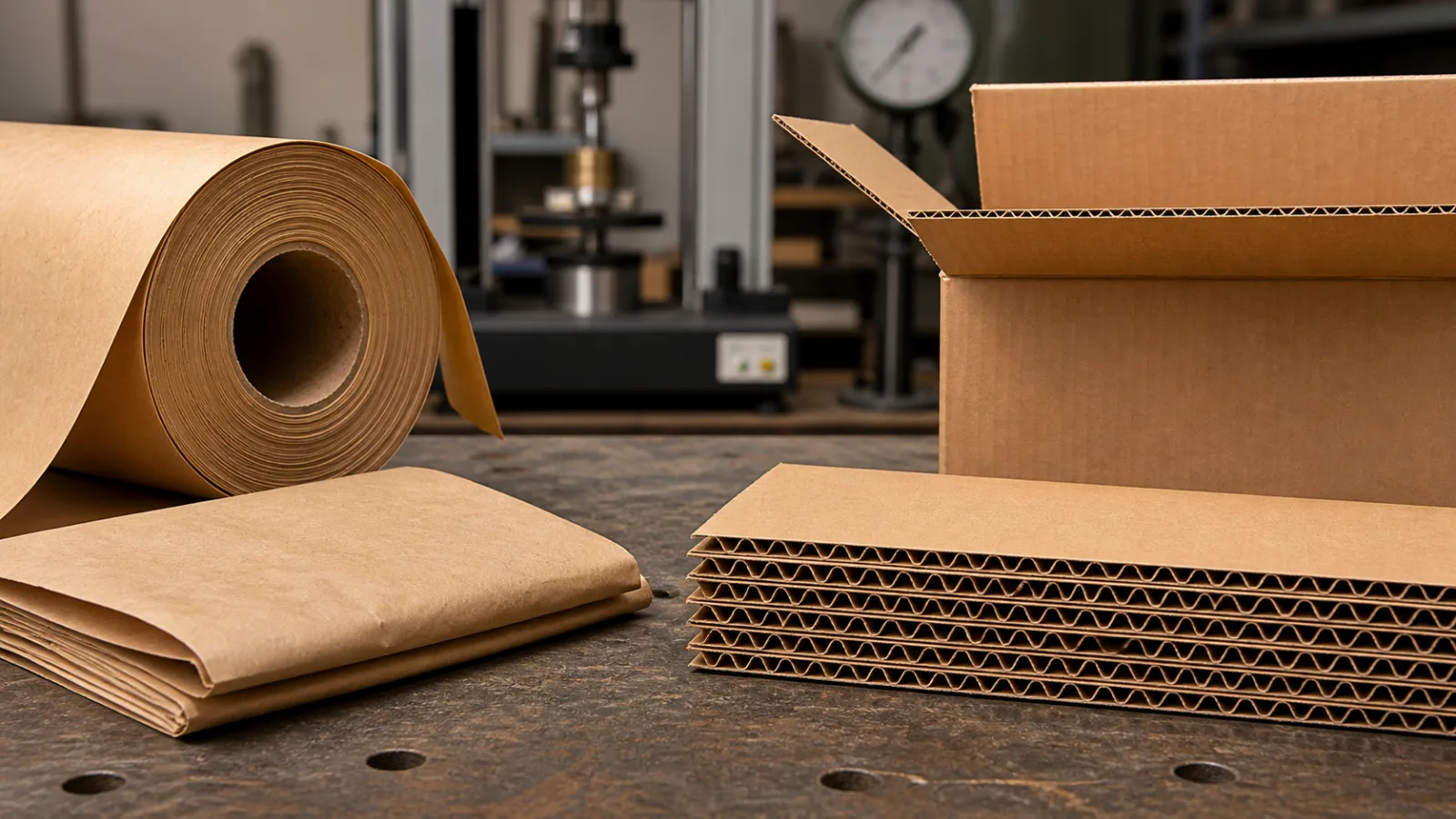
Kraft paper is a paper grade made with strong fibres, commonly associated with an unbleached brown appearance. Corrugated board is a multi-layer structure in which a fluted medium is bonded between one or more flat liners. Those liners may themselves be kraft grades.
Sheet versus structure
Kraft paper can be converted into bags, wraps, sacks, protective interleaving and the liner components of board. Its performance depends on fibre quality, basis weight, moisture and any coatings. Corrugated board gains much of its stiffness and cushioning from geometry: the arches of the flute resist compression and separate the liners.
Board specifications therefore include flute profile, liner and medium weights, construction and strength targets. Simply calling a box kraft does not describe those variables.
Making the right comparison
Use kraft paper where flexibility, wrapping or a direct paper surface is needed. Use corrugated board where a pack must create shape, stack, protect and absorb distribution loads. For either option, assess recycled content, recovered-fibre quality and local collection systems alongside material weight. The lightest viable structure is the one that still protects the product through its real journey.
What “kraft” actually describes
The kraft pulping process produces strong fibres, and unbleached kraft paper commonly retains a brown shade. Bleached and coated kraft-based grades also exist. The word says little by itself about grammage, burst, tear, wet strength, coating or recycled content. A thin wrapping grade and a heavy sack paper can both be kraft while serving very different functions.
Kraft paper is a single flexible web or sheet. Common uses include bags, sacks, wraps, void fill, protective interleaving and the liner layers used to manufacture corrugated board.
Corrugated board is engineered geometry
Corrugated board bonds a fluted medium to one or two flat liners. Single-face material has one liner and exposed flute; single-wall board has two liners around one medium. Double-wall and other structures add layers for demanding loads. The arches separate the faces and create bending stiffness, compression strength and cushioning without making the entire section solid.
Flute profile affects thickness, print surface and cushioning. Liner and medium properties, adhesive, moisture, converting scores and box style all contribute to performance. Calling a carton “kraft corrugated” therefore does not define a testable specification.
| Requirement | Kraft paper | Corrugated board |
|---|---|---|
| Wrap around irregular objects | Strong fit | Usually too rigid |
| Form a stacking shipping case | Cannot create enough section stiffness alone | Designed for this role |
| Void fill or interleaving | Light, flexible and easy to convert | Useful as pads or partitions but bulkier |
| High-quality graphics | Printable with process-dependent limits | Direct print, litho-lamination or preprint options |
| Cushioning | Limited without crumpling or layering | Flutes provide inherent separation and resilience |
| Storage space before use | Compact rolls or sheets | Flat cases still occupy more volume |
Strength is application-specific
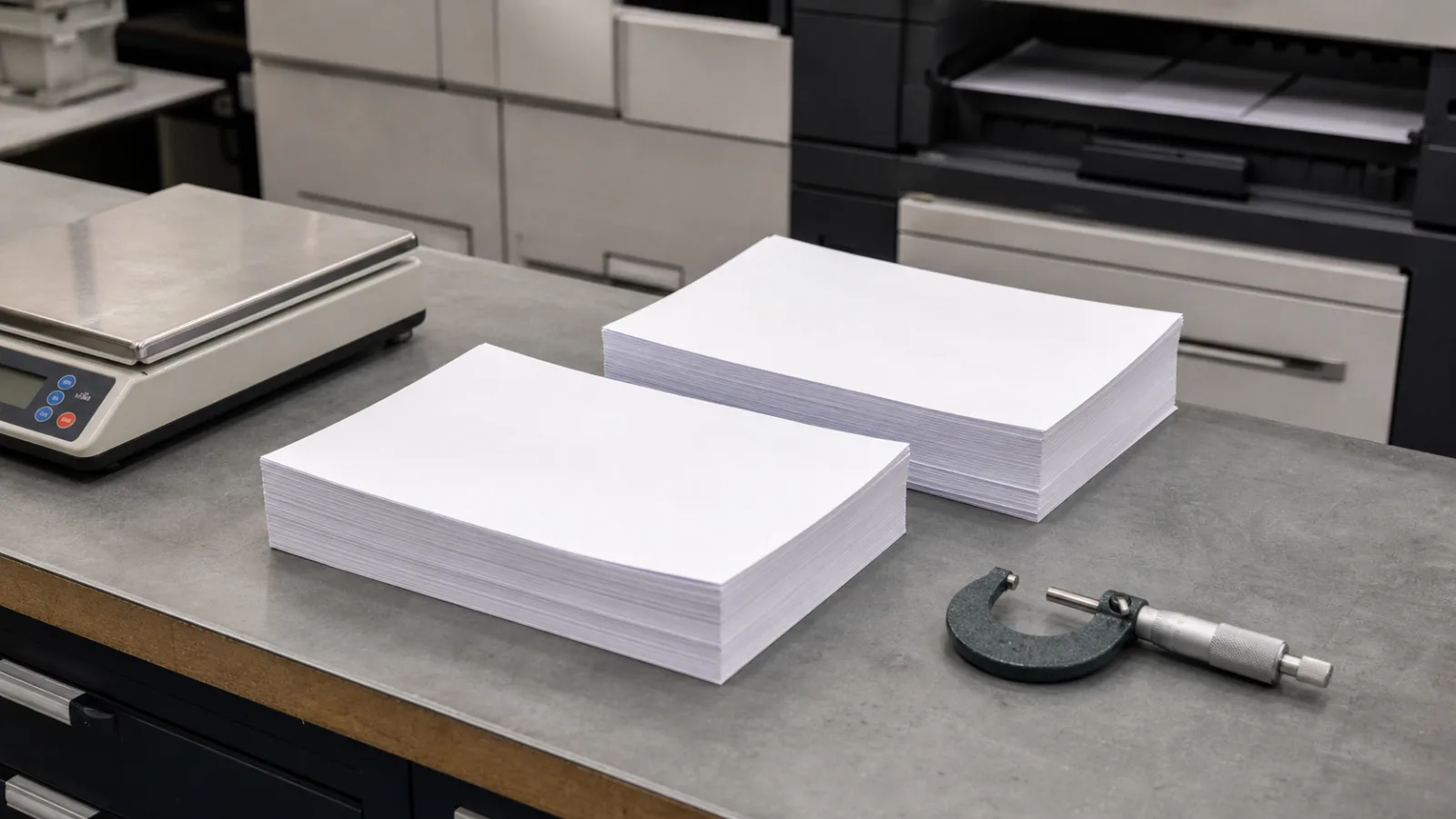
For kraft paper, tensile, tear, burst, stretch and porosity may matter. For corrugated cases, edgewise compression, puncture, box compression and water absorption can matter, depending on transport. No single number predicts every package.
Humidity weakens and changes fibre structures. A case tested in a dry laboratory may perform differently in refrigerated, tropical or long-storage conditions. Define the route and use a test plan appropriate to product mass, stacking, pallet pattern and handling.
Printing options
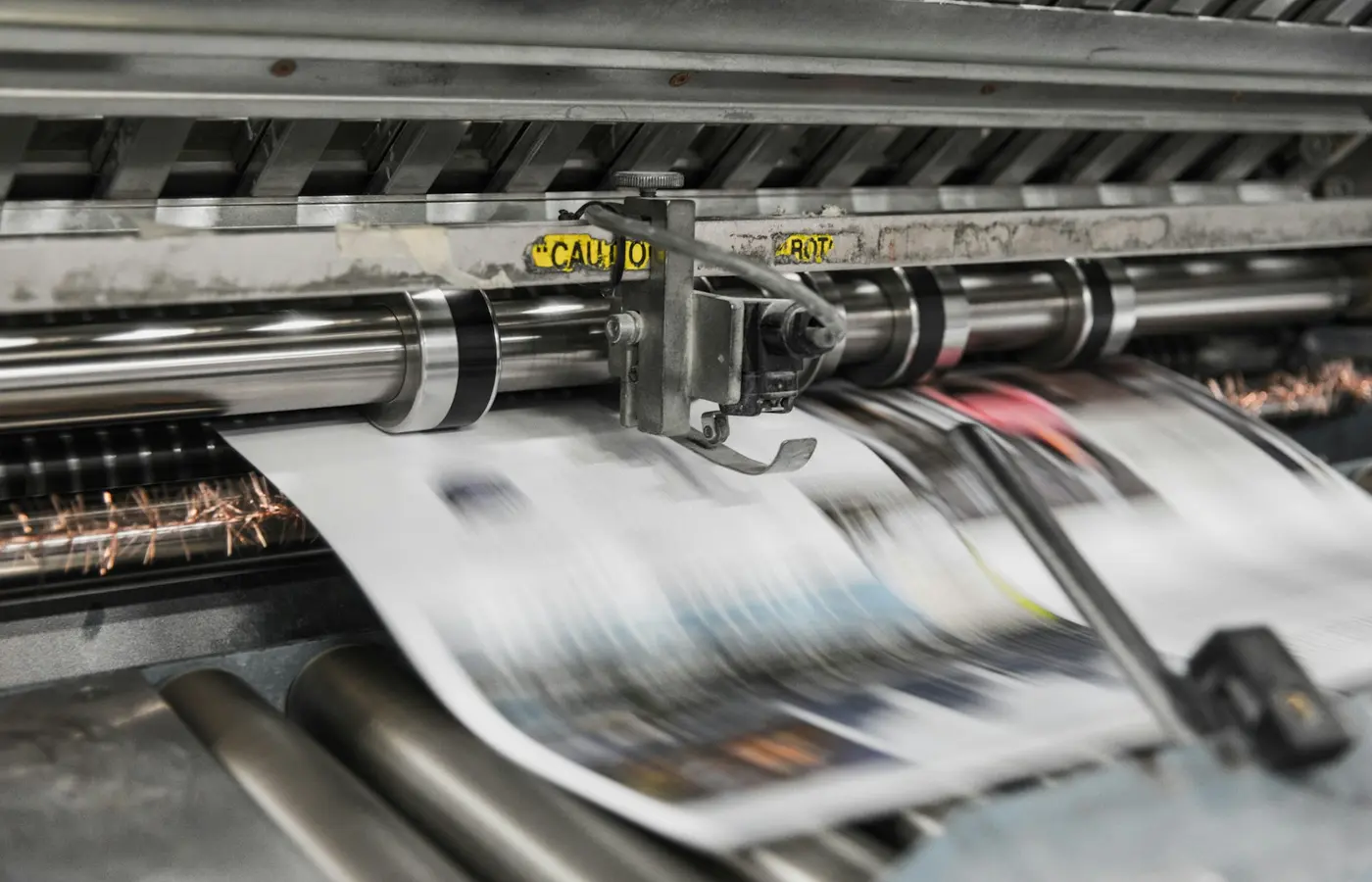
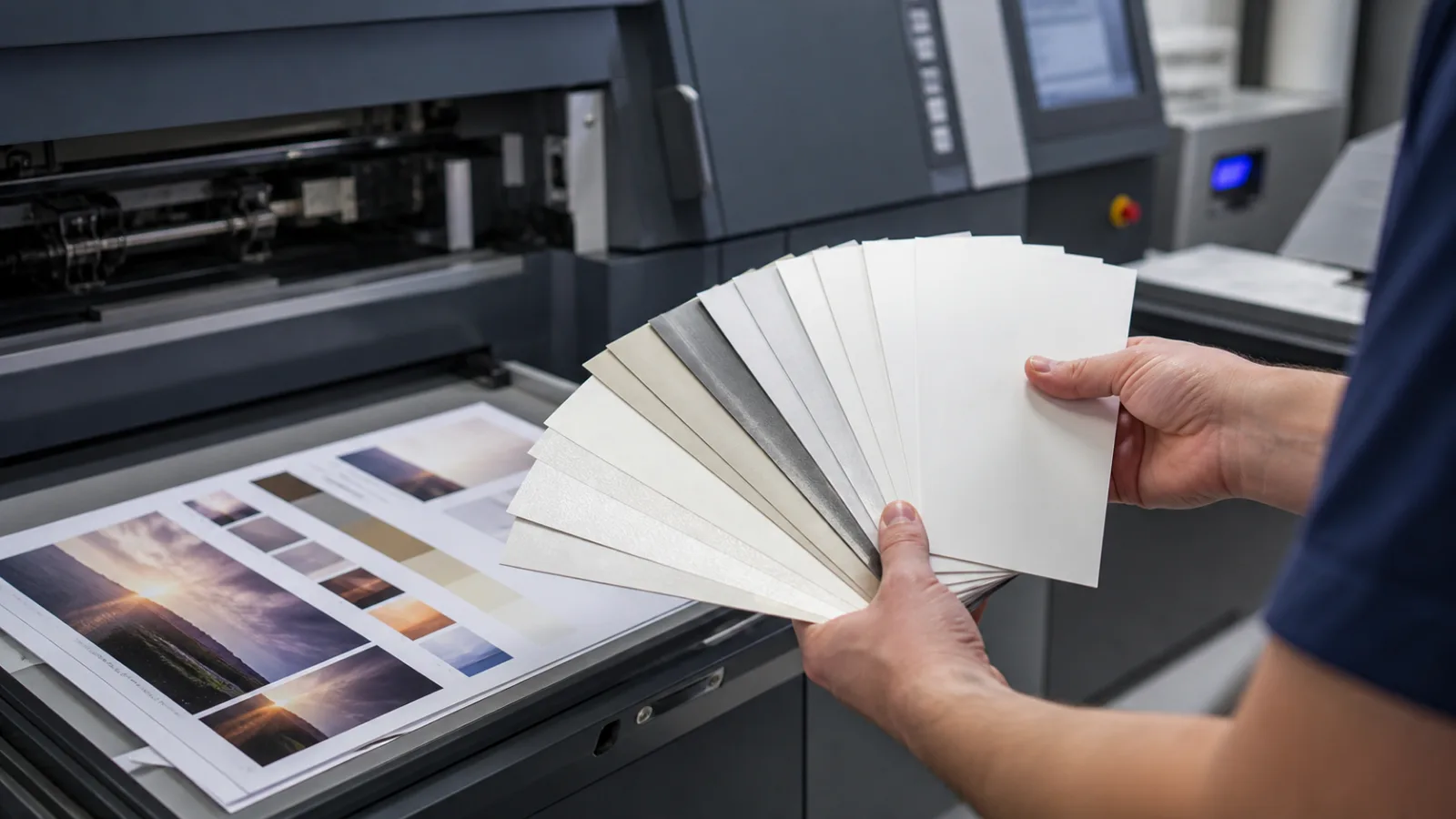
Kraft paper can be flexographically printed in a web, offset or digitally printed where equipment and grade allow. Its brown shade reduces contrast and changes colour appearance; opaque white may be required for bright graphics.
Corrugated board can be direct flexo printed, preprinted on liner before corrugating, or faced with a separately printed lithographic sheet. Each route balances graphic detail, setup, quantity and crushing risk. Heavy impression damages flute structure, so direct printing needs controlled pressure.
For process details, see what flexographic printing is.
Converting and packing
Kraft wraps are cut, folded, twisted, heat-sealed or glued according to grade. Corrugated blanks are cut, scored, slotted, folded and joined. Score position and depth determine box dimensions and erection. Handles, perforations and large print areas may reduce strength.
A packaging trial should use the real product and closure. Drop, vibration, compression and climatic conditioning may be relevant. The goal is not to choose the strongest material in isolation, but the lightest controlled construction that keeps damage within the accepted level.
Sustainability without shortcuts
Both materials are fibre based, but coatings, adhesives, wet strength, contamination and local collection affect recovery. Recovered fibre can reduce virgin input, while strong virgin kraft fibres may enable lightweight structures and support later recycling loops. Compare complete packaging systems rather than relying on colour or fibre source as a virtue signal.
The sustainable packaging materials guide sets out a decision method. For consumer cartons made from solid paperboard rather than fluted board, use the paperboard grades guide.
Kraft paper and corrugated board are not competing names for brown packaging. One is a paper material; the other is a structural assembly that may use kraft liners. Choose from the protection, handling, printing and recovery requirements of the actual pack.
Do not confuse corrugated with solid cardboard
“Cardboard” is an imprecise everyday term. A cereal carton is usually solid paperboard; a shipping case is usually corrugated board. They differ in thickness, bending behaviour, cushioning and converting. Ask whether a quote is for liner, solid board, single-wall corrugated or another construction.
Questions for a distribution pack
- What product mass and dimensions must the pack support?
- Will cases be palletised, stacked or shipped individually?
- Which humidity, temperature and storage duration are realistic?
- Is the box hand erected or run on automatic equipment?
- Does print need photographic detail or only identification?
- Are partitions, void fill or a separate consumer carton included?
- Which performance test and acceptance level apply?
The answers allow an engineer to choose flute, liners, box style and closures without overspecifying material. Lower paper grammage may work when geometry is improved; a heavier sheet may still fail when dimensions, scores or pallet pattern are wrong.